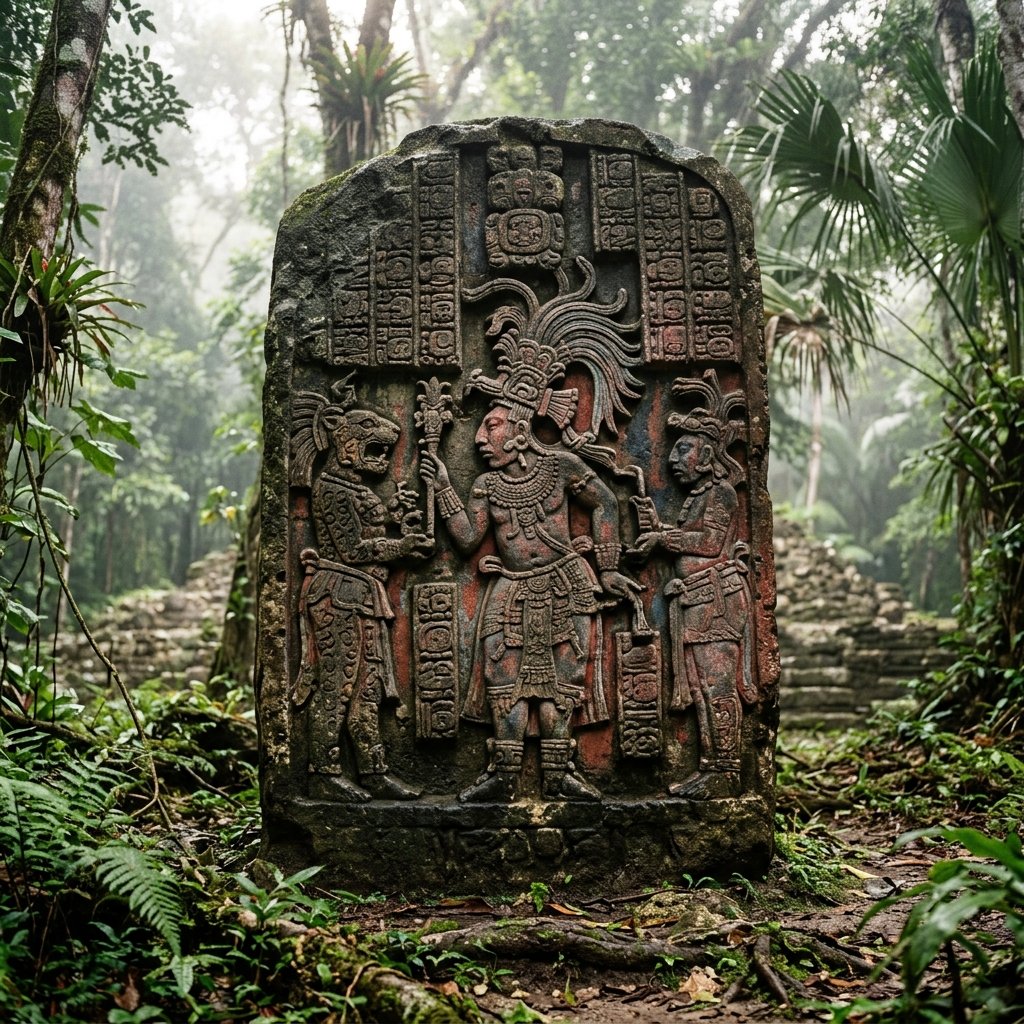
The Maya Pantheon at a Glance
"The Maya did not simply believe in gods. They lived with them — built cities for them, fed them with blood and incense, measured time by their movements, and understood every rainstorm, eclipse, and harvest as a divine conversation between human need and cosmic will."
Understanding the Maya Divine: Not a Pantheon Like the Greeks
The most important thing to understand about Maya religion is that it does not resemble the tidy, anthropomorphic pantheon familiar from Greek or Roman mythology. Maya deities were fluid, shape-shifting, and multidimensional. The same god could appear as a young man, an old woman, a serpent, a bird, a jaguar, or a skeletal corpse — depending on context, time, and ritual purpose.
The Mayanist Karl Taube, whose The Major Gods of Ancient Yucatan (Dumbarton Oaks, 1992) remains the standard reference on Maya deities, emphasizes that Maya gods existed along a spectrum rather than as discrete personalities: "It is clear that the Maya gods were far more complex than the simple categories into which they have been placed. Many are aspects of one another, and virtually all have associations with death and the underworld" (Taube, 1992, p. 7). A single deity might inhabit multiple domains simultaneously — the sun god was also a jaguar, the maize god was also a sacrificial victim, and the rain god was also a serpent.
This fluidity makes Maya theology frustrating for those who want a clean list — but it also made it extraordinarily powerful as a way of understanding the world. Nothing in nature was isolated. Everything connected to everything else. And the gods were the connective tissue.
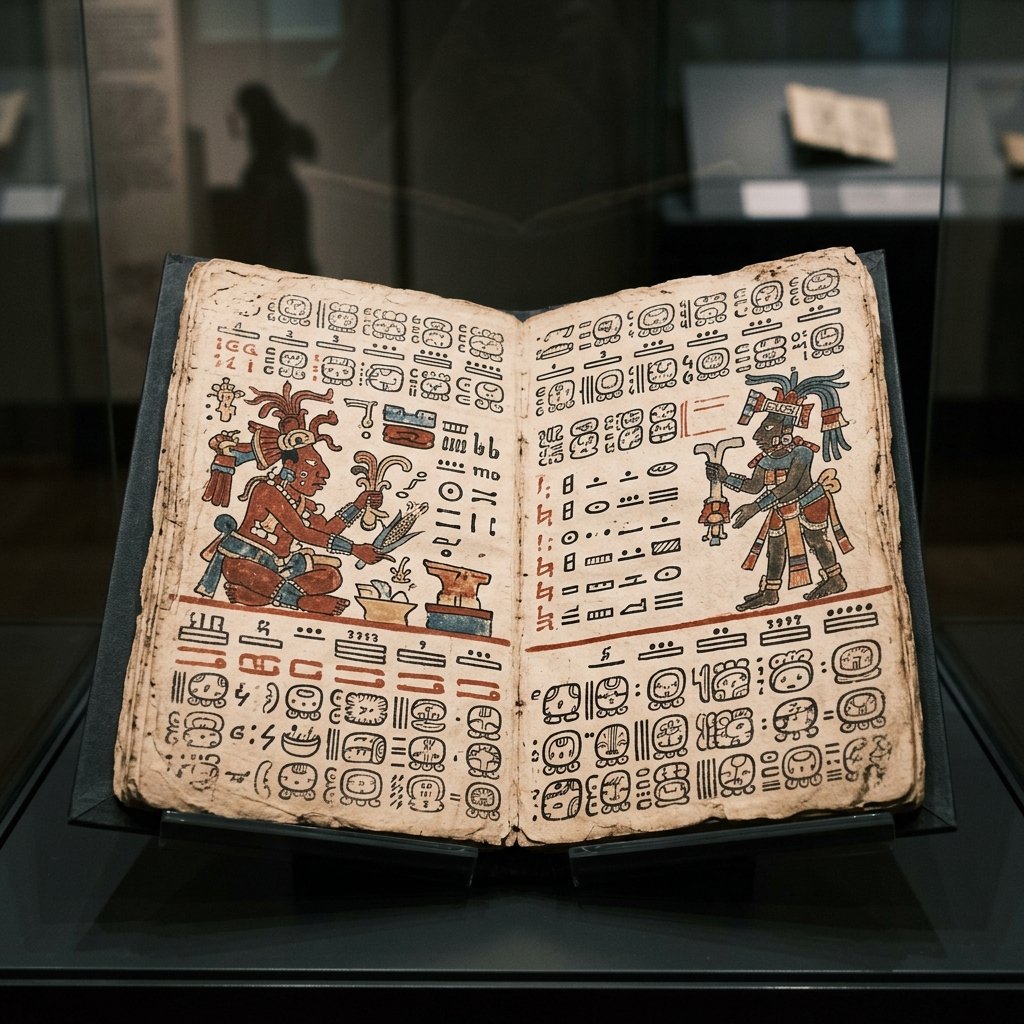
A page from the Dresden Codex — one of only four surviving pre-Columbian Maya books. This precious document, now in the Saxon State Library in Dresden, Germany, contains detailed almanacs, astronomical tables, and deity portraits that form our primary epigraphic source for understanding Maya religion. The Schellhas letter classification system (God A, God B, etc.) was derived from studying these codex images.
The Schellhas Classification: How We Name the Gods
Modern knowledge of Maya deities owes an enormous debt to the German scholar Paul Schellhas, who in 1904 published a systematic analysis of the deity figures depicted in the three surviving Maya codices (the Dresden, Madrid, and Paris manuscripts). Since the hieroglyphic names of most of these figures could not yet be read, Schellhas assigned them letter designations: God A (Death), God B (Rain/Chaac), God C (personification of sacredness), God D (Itzamná), and so on through God P (Schellhas, P., Representation of Deities of the Maya Manuscripts, Harvard University, Peabody Museum Papers, Vol. 4, No. 1, 1904).
Although later epigraphic breakthroughs — particularly the decipherment of Maya script by Yuri Knorozov, Tatiana Proskouriakoff, and others in the second half of the twentieth century — have revealed the actual Maya names for many of these deities, the Schellhas letter system remains in widespread scholarly use because it provides a stable reference framework that transcends regional variation and dialectical differences. When a scholar writes "God B," any Mayanist in the world knows they mean the rain deity we call Chaac.
The Major Deities of the Maya World
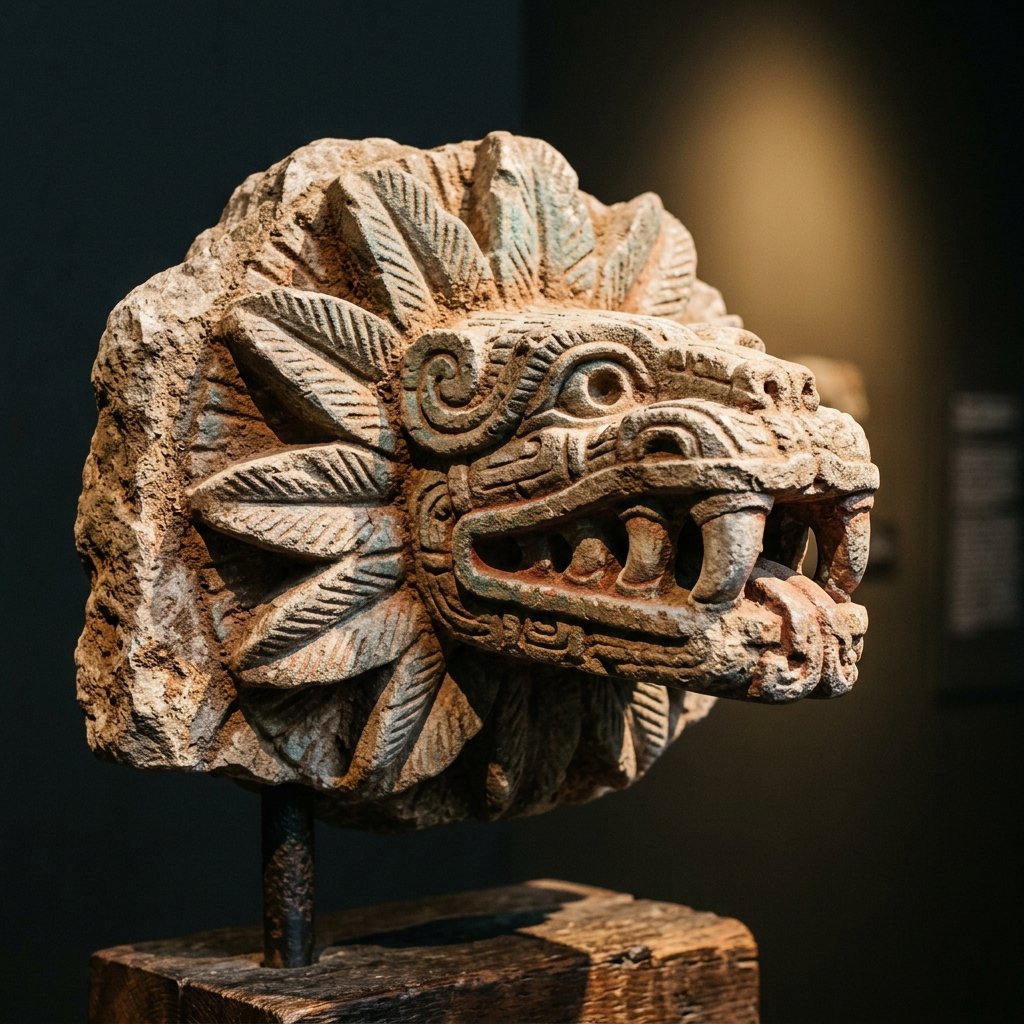
Kukulkán
The Feathered Serpent
Wind, Rain, Creation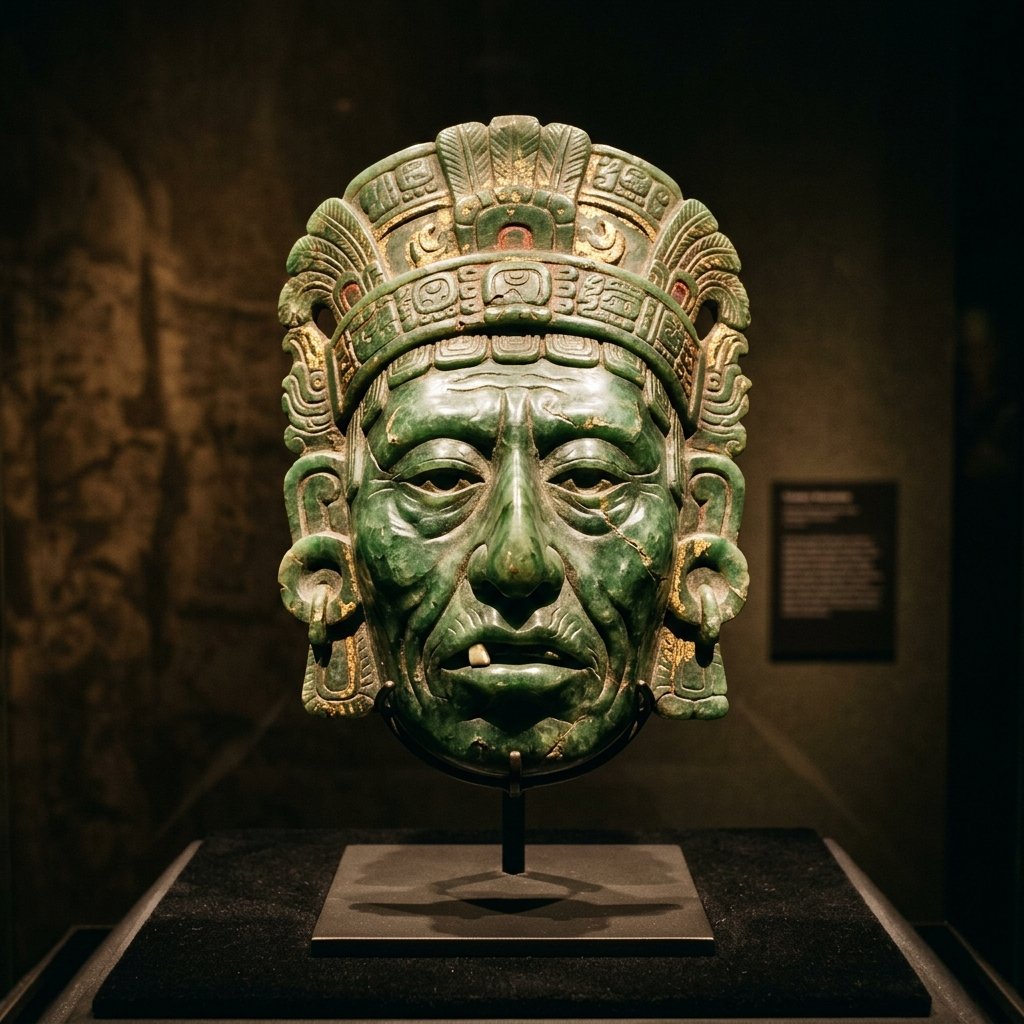
Itzamná
Lord of the Heavens
Creator, Knowledge, Healing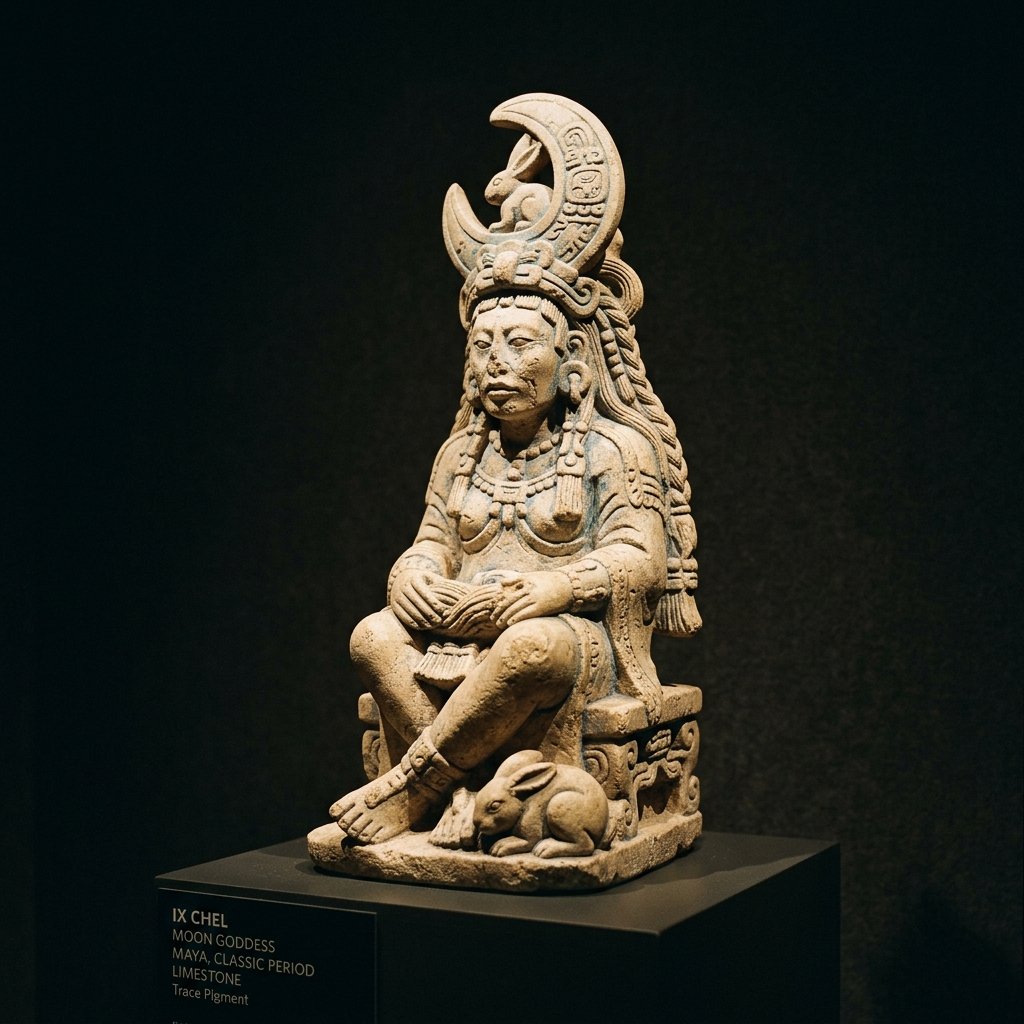
Ix Chel
Lady Rainbow
Moon, Fertility, Medicine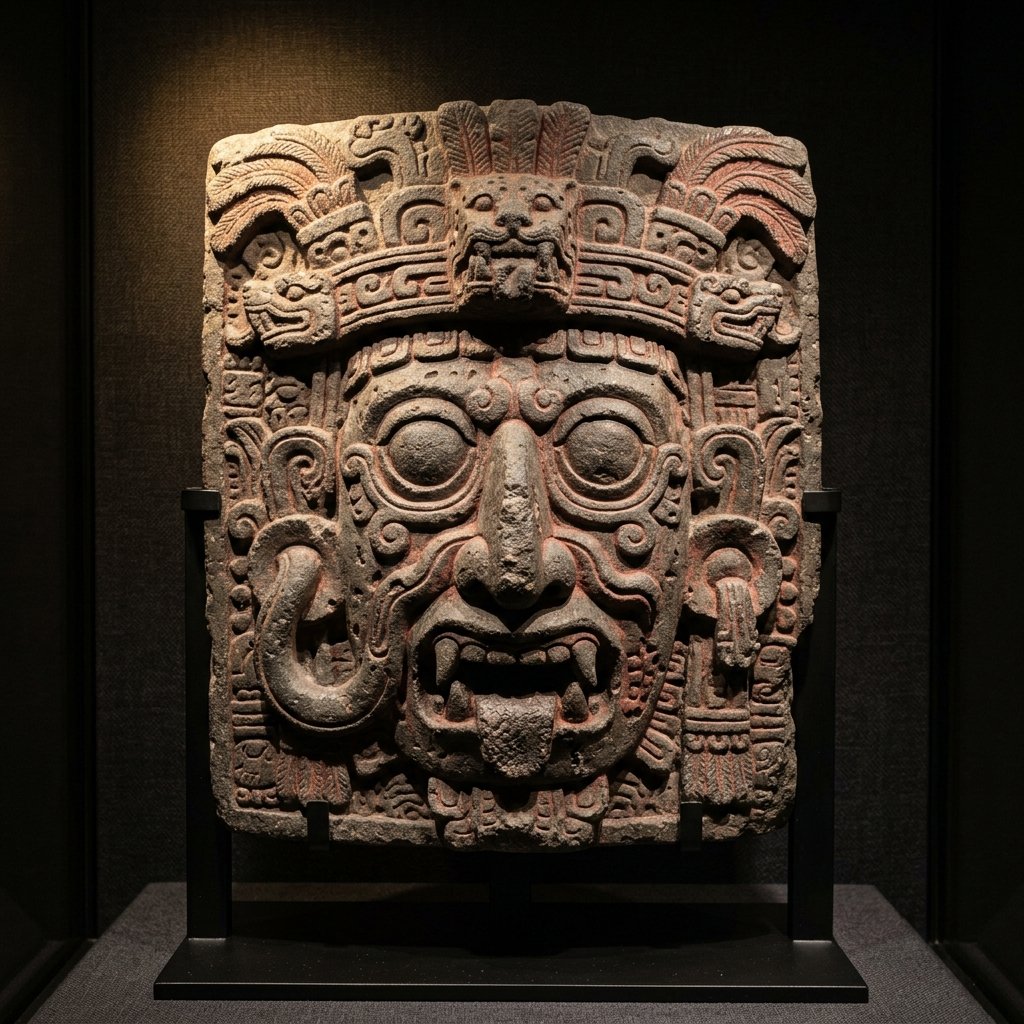
Chaac
Lord of Storms
Rain, Thunder, Agriculture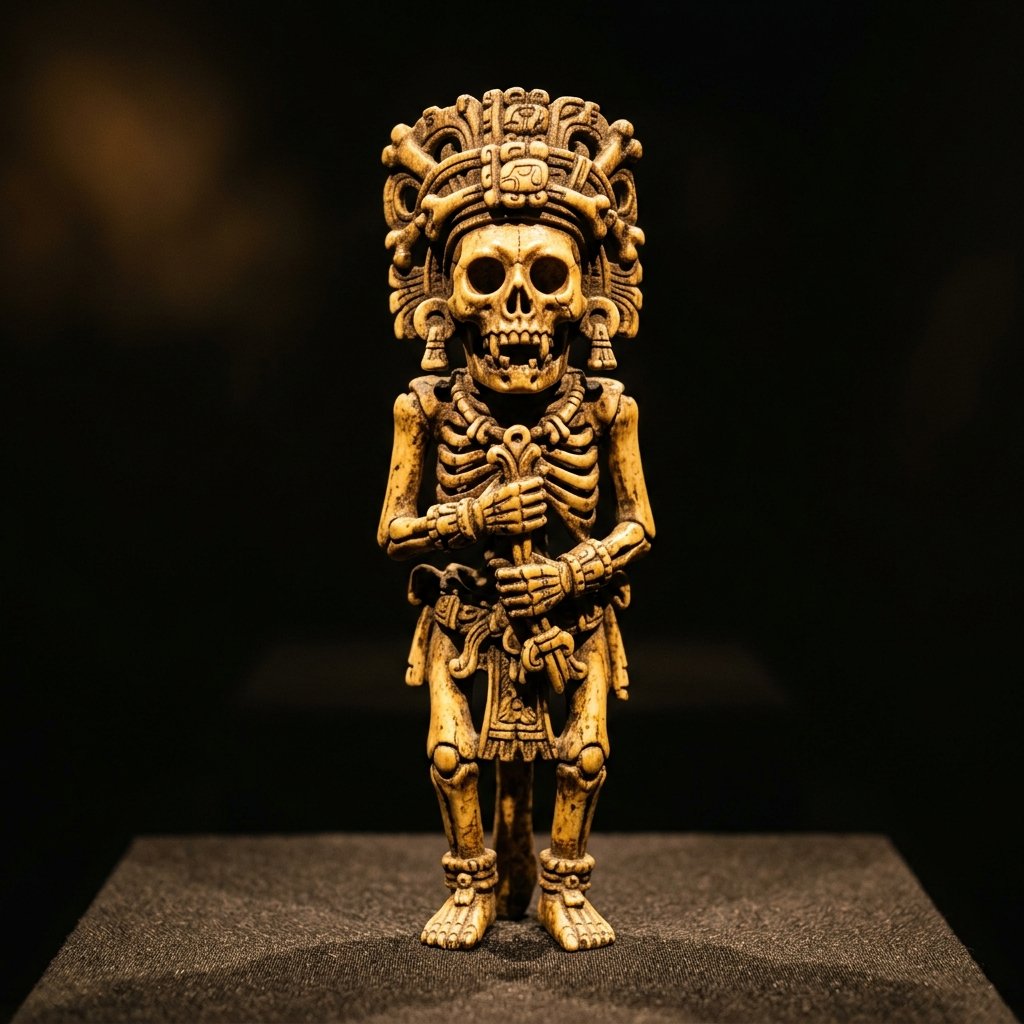
Ah Puch
Lord of Death
Death, Xibalba, Rebirth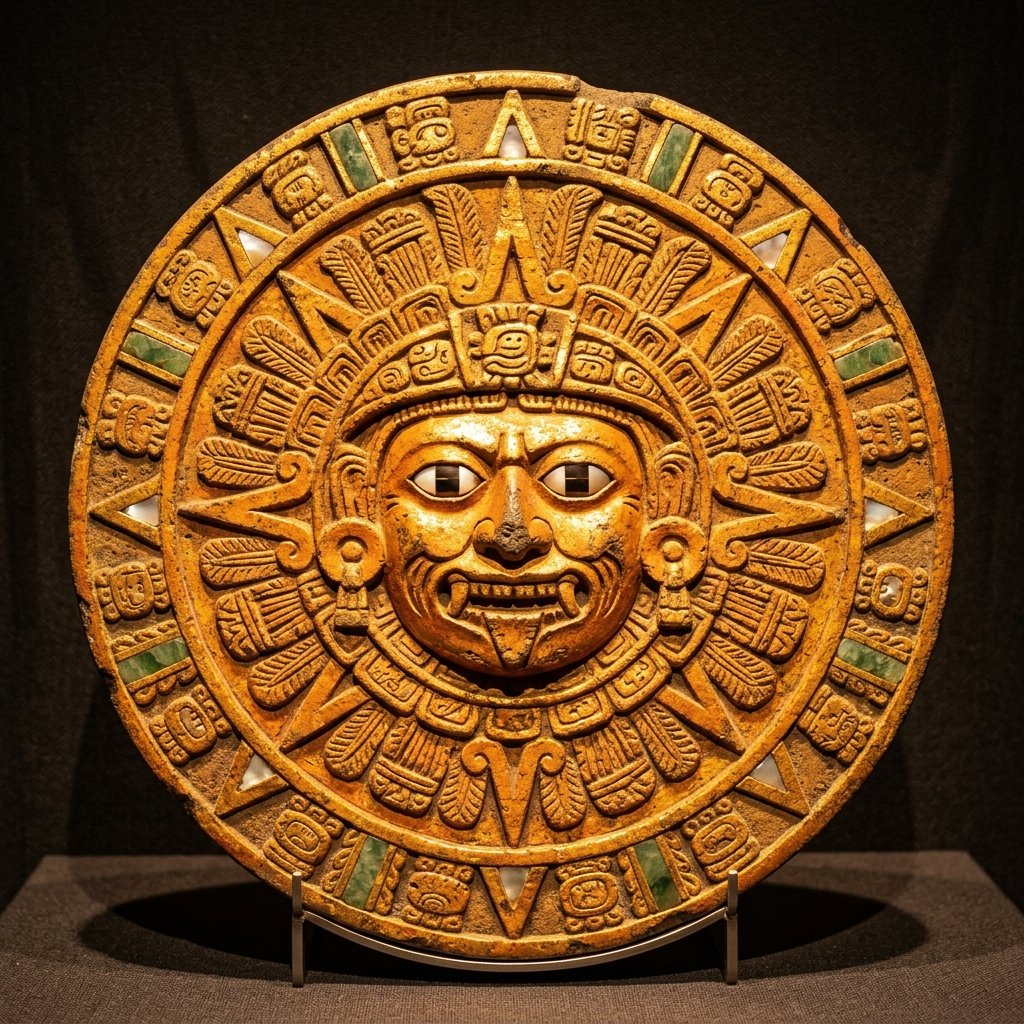
Kinich Ahau
The Sun God
Sun, Fire, Kingship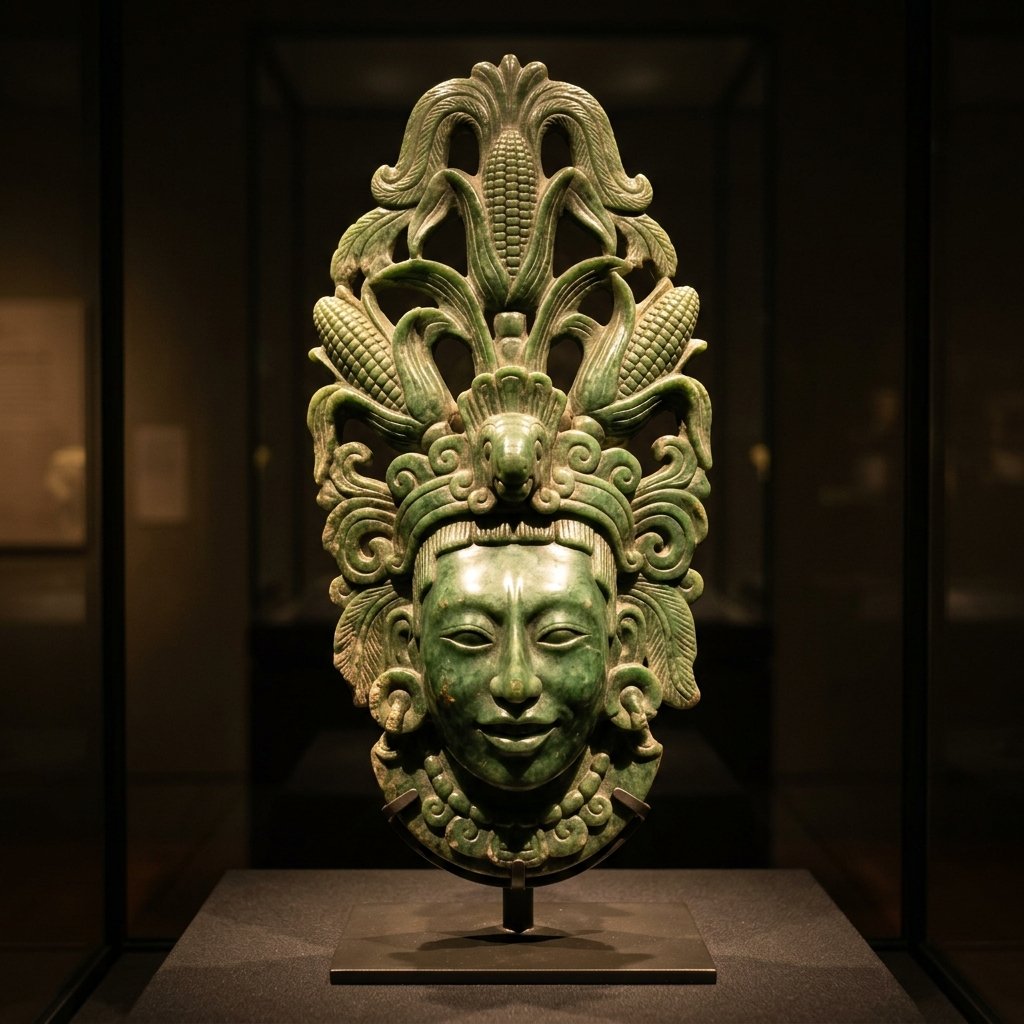
Yum Kaax
The Maize God
Corn, Agriculture, Rebirth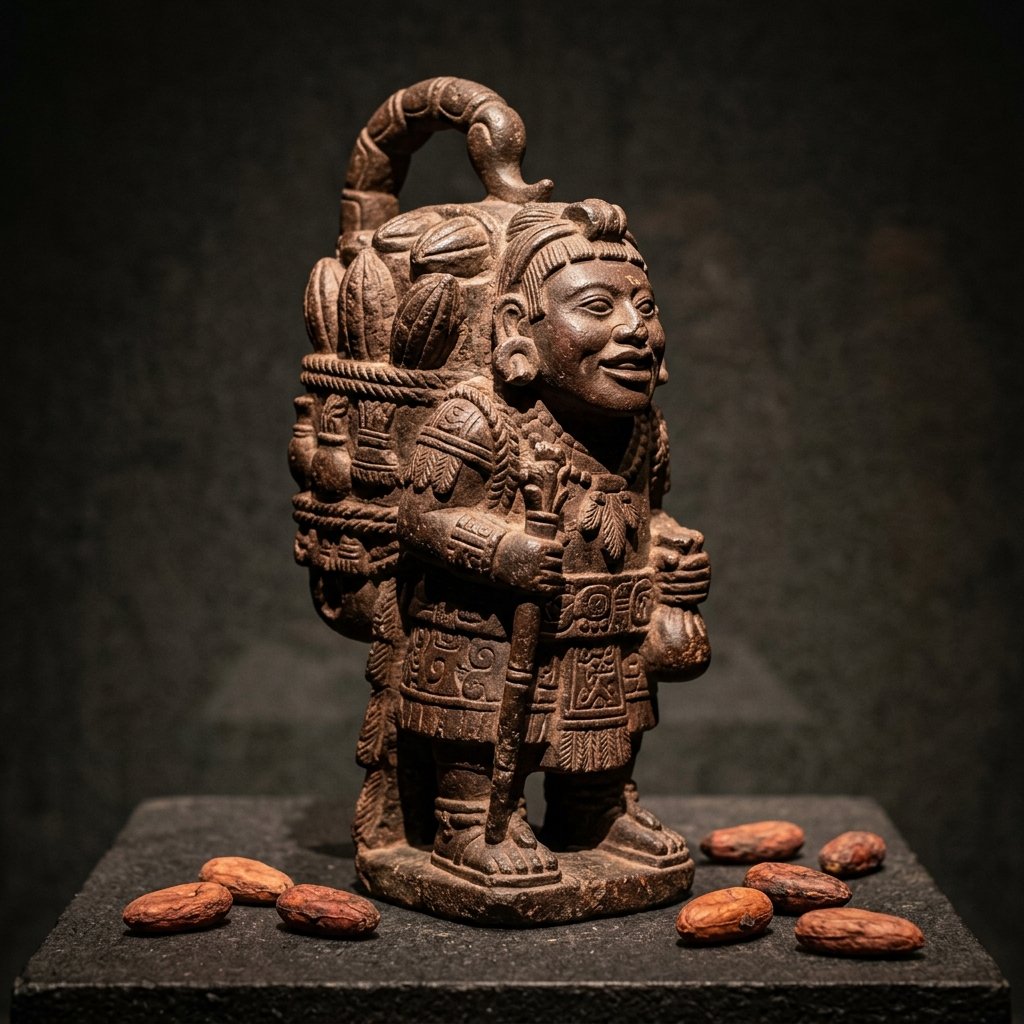
Ek Chuaj
God of Commerce
Trade, Cacao, Merchants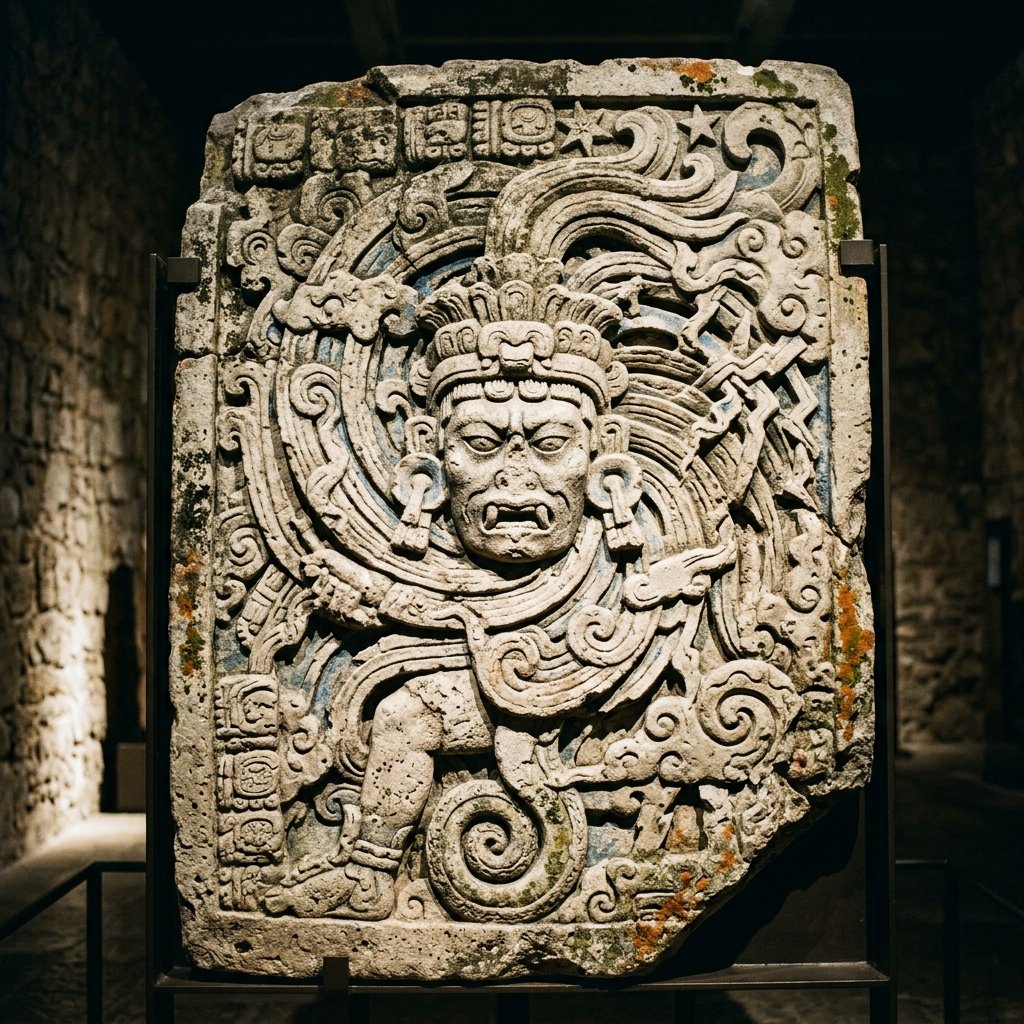
Huracan
Heart of Sky
Creation, Storms, Lightning
K'awiil
God of Lightning
Royal Power, Lightning, Scepters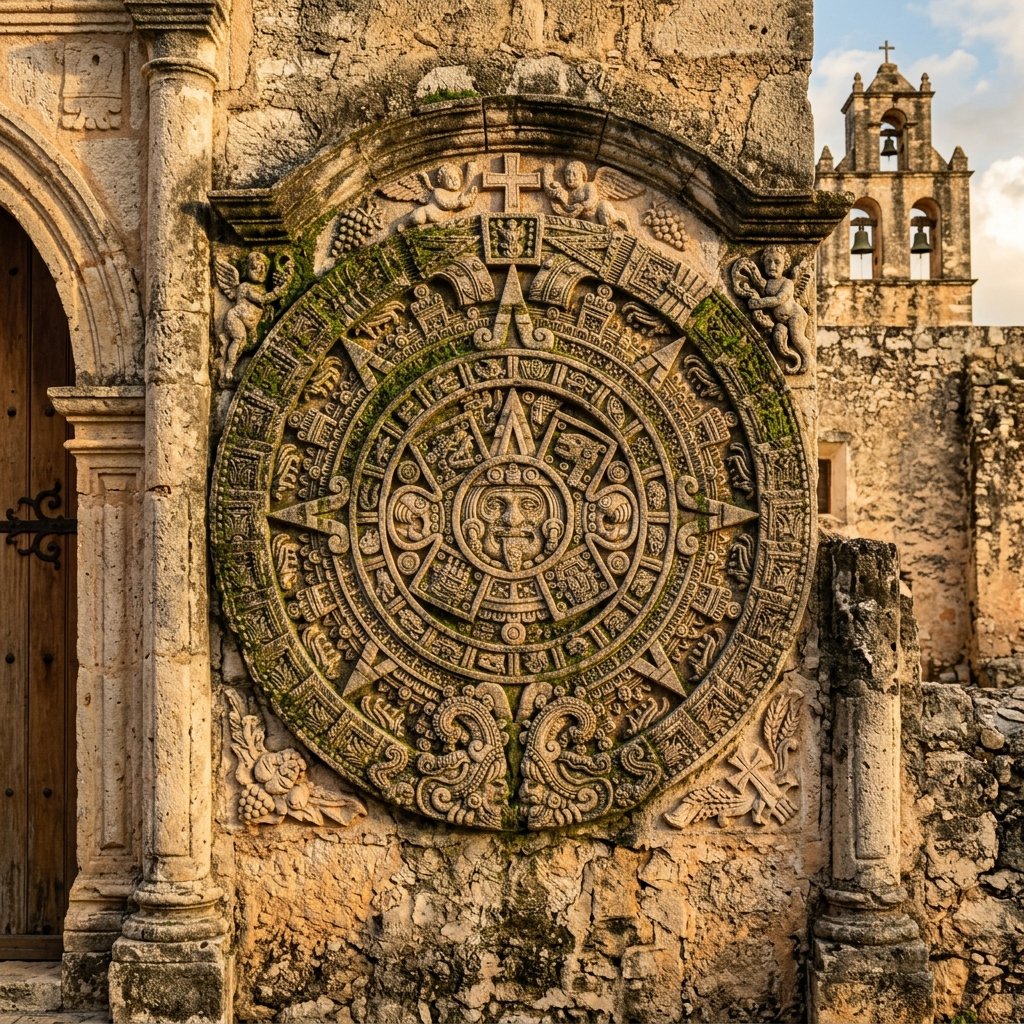
Hunab Ku
The Controversial One God
Monotheism Debate, Colonial Era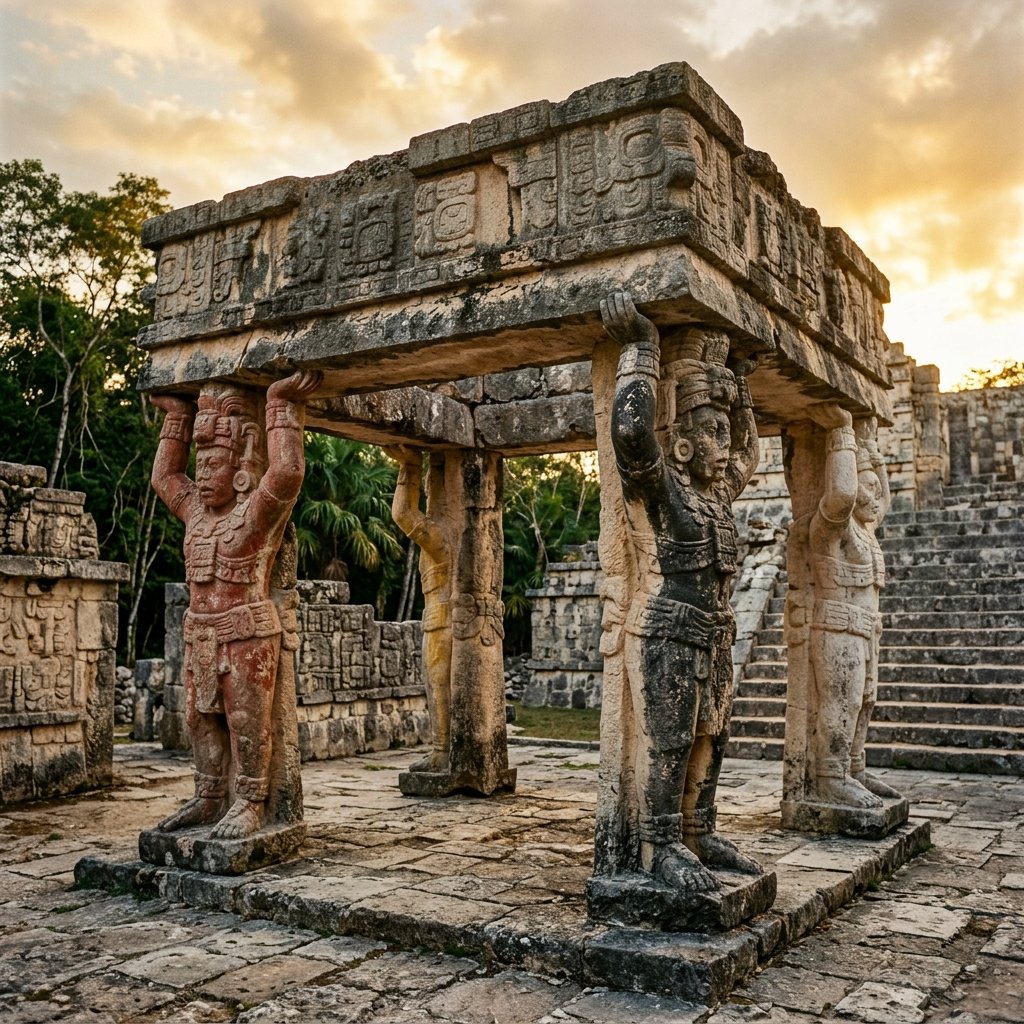
The Bacabs
Four Sky Bearers
Cosmic Structure, Directions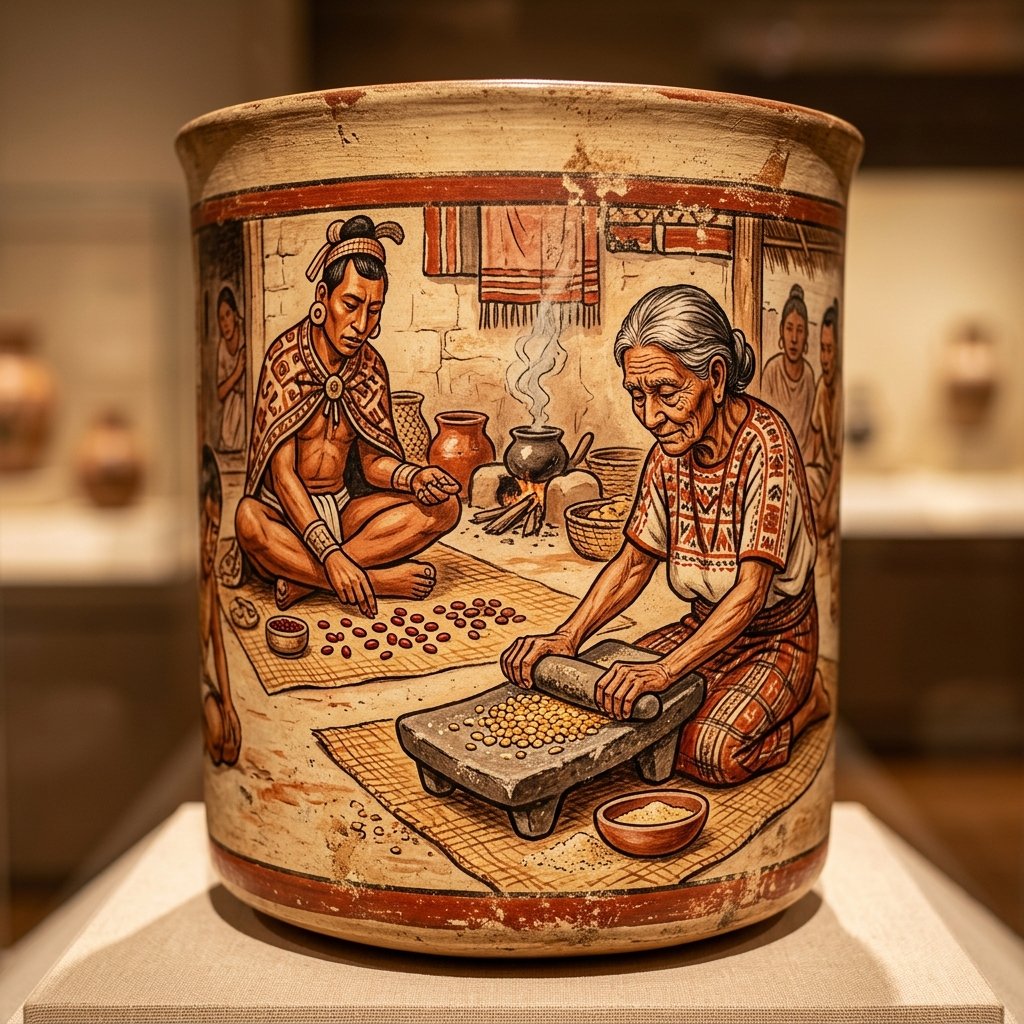
Xmucane & Xpiacoc
Creator Grandparents
Creation, Corn, Divination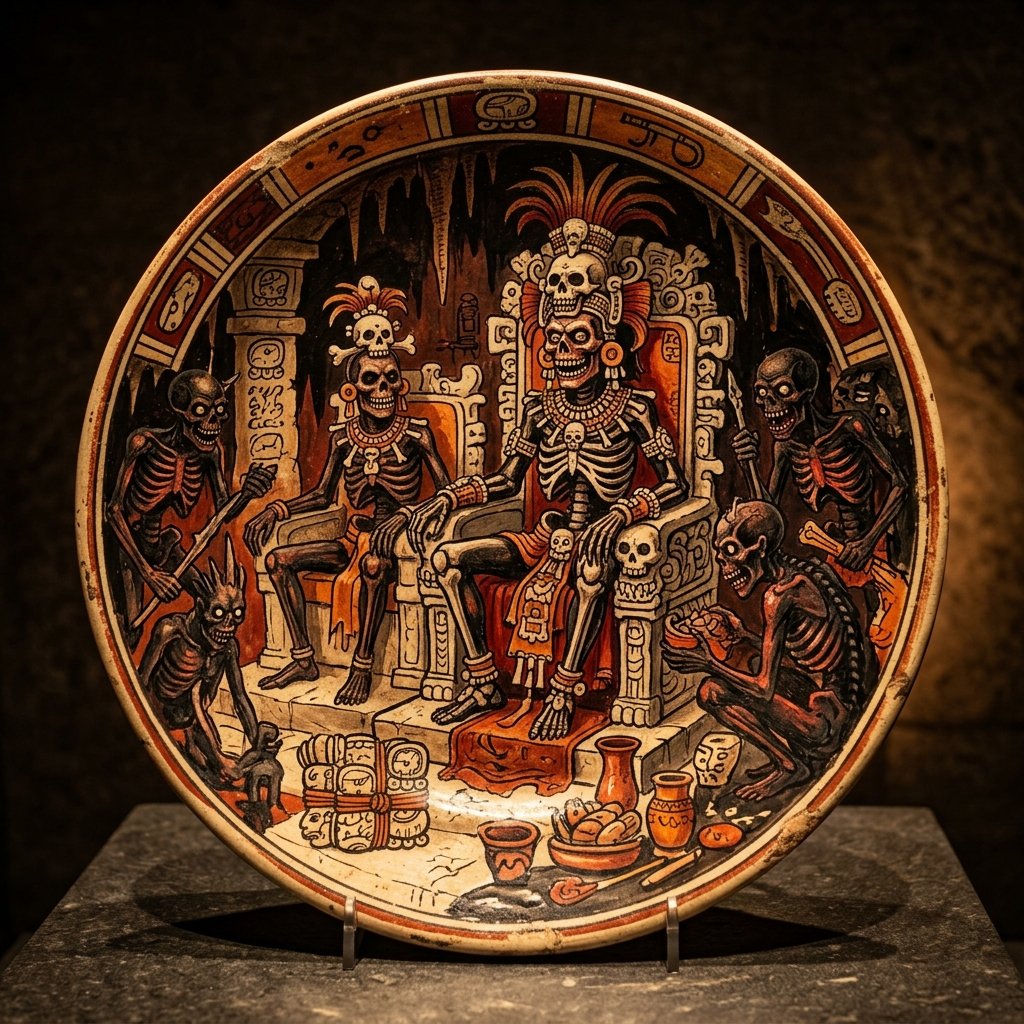
Lords of Xibalba
Death Lords
Underworld, Disease, Death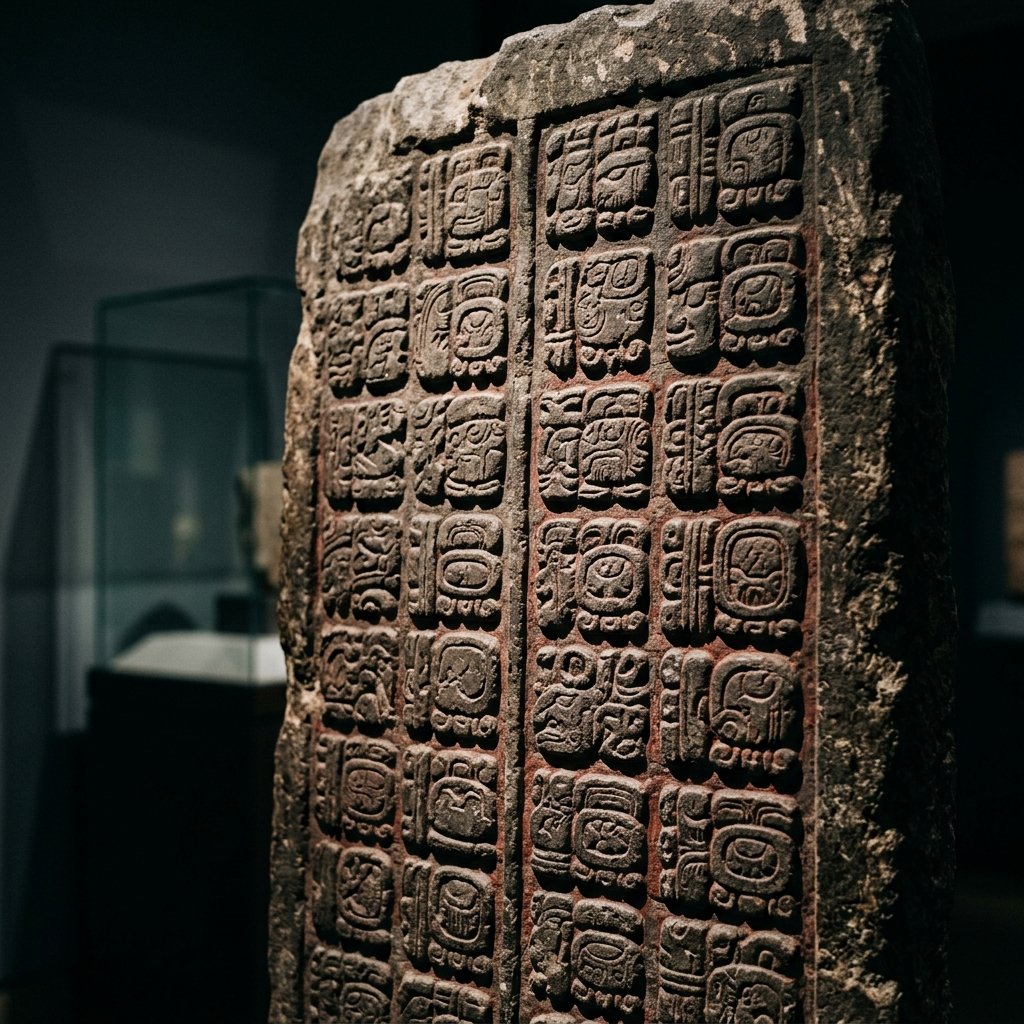
Bolon Yokte'
The 2012 Deity
Period Endings, Transitions
Ah Muzen Cab
The Bee God
Bees, Honey, Medicine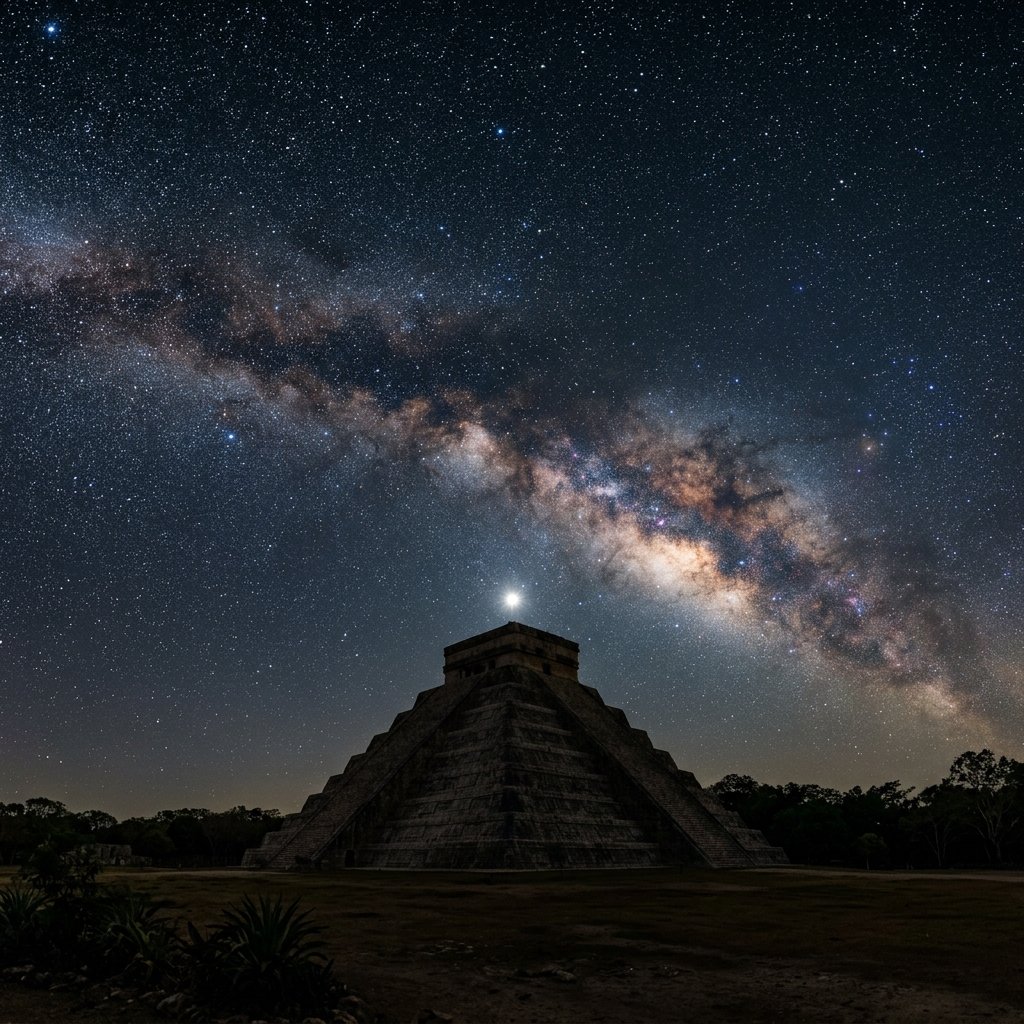
Xaman Ek
North Star God
Navigation, Merchants, Travel
Vucub Caquix
Seven Macaw
False Sun, Popol Vuh Villain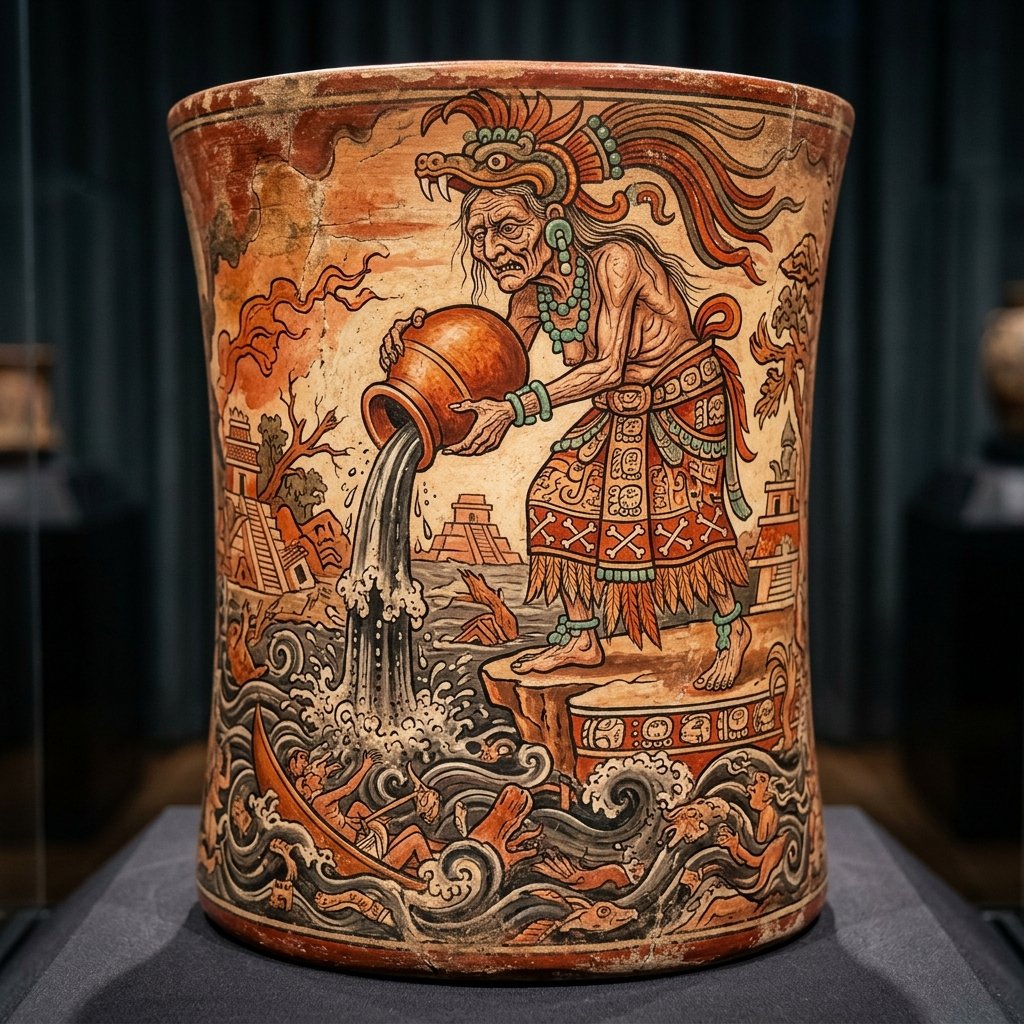
Chak Chel
Old Moon Goddess
Floods, Destruction, Renewal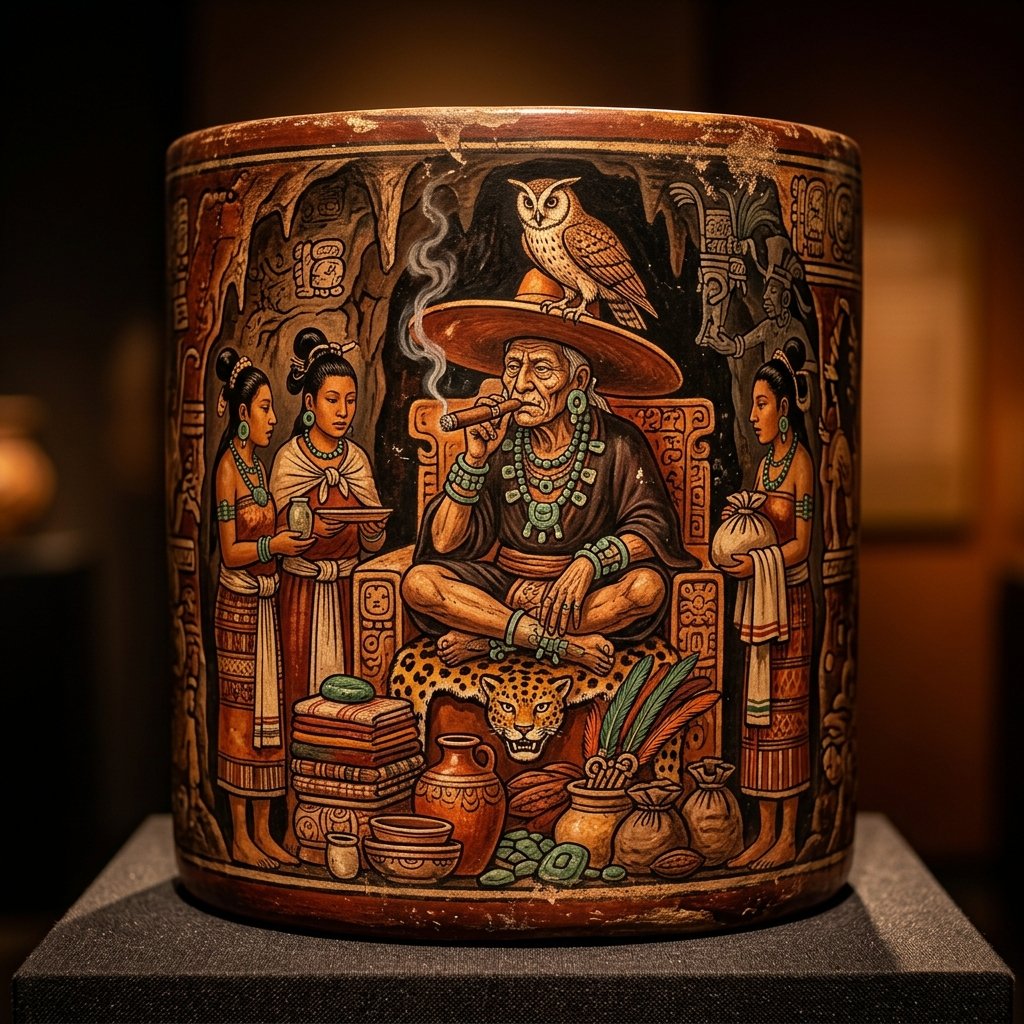
God L
Underworld Merchant Lord
Wealth, Darkness, Trade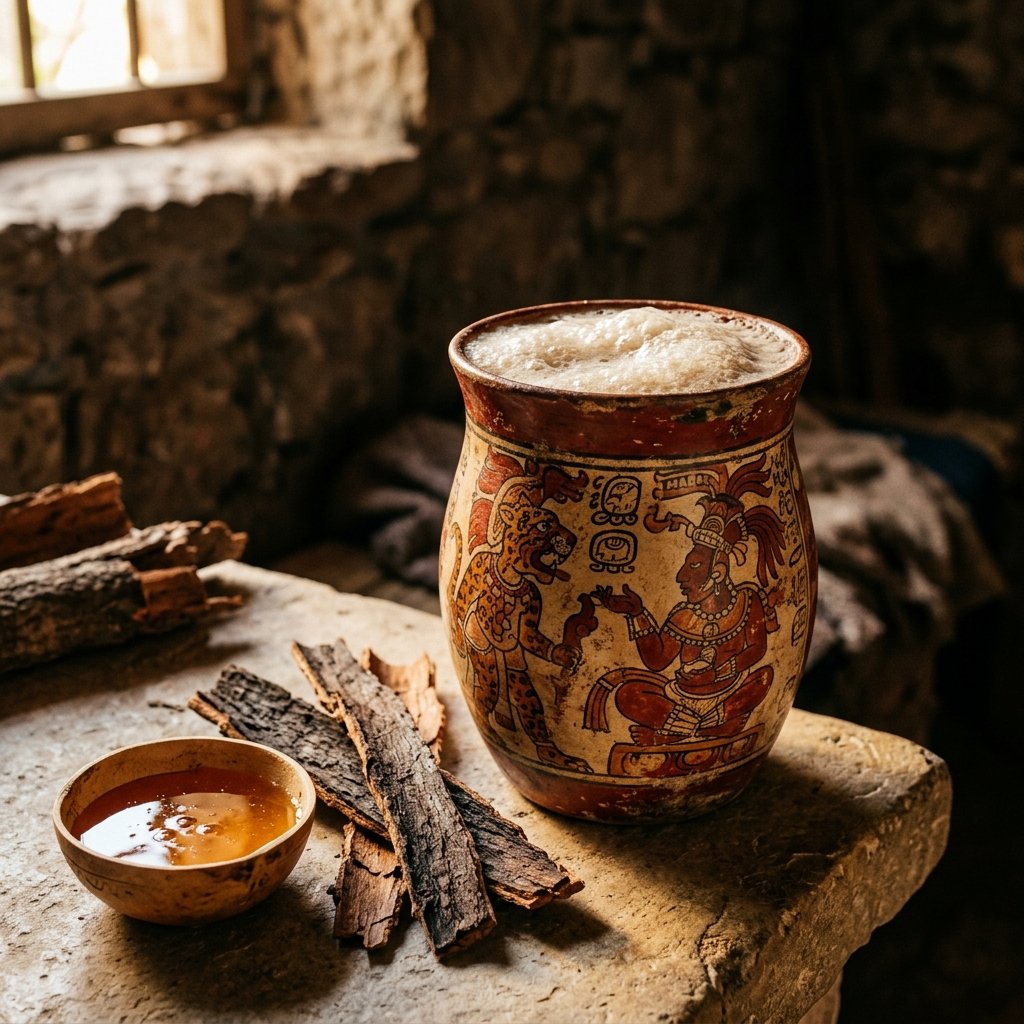
Acan
God of Wine
Intoxication, Balché, Trance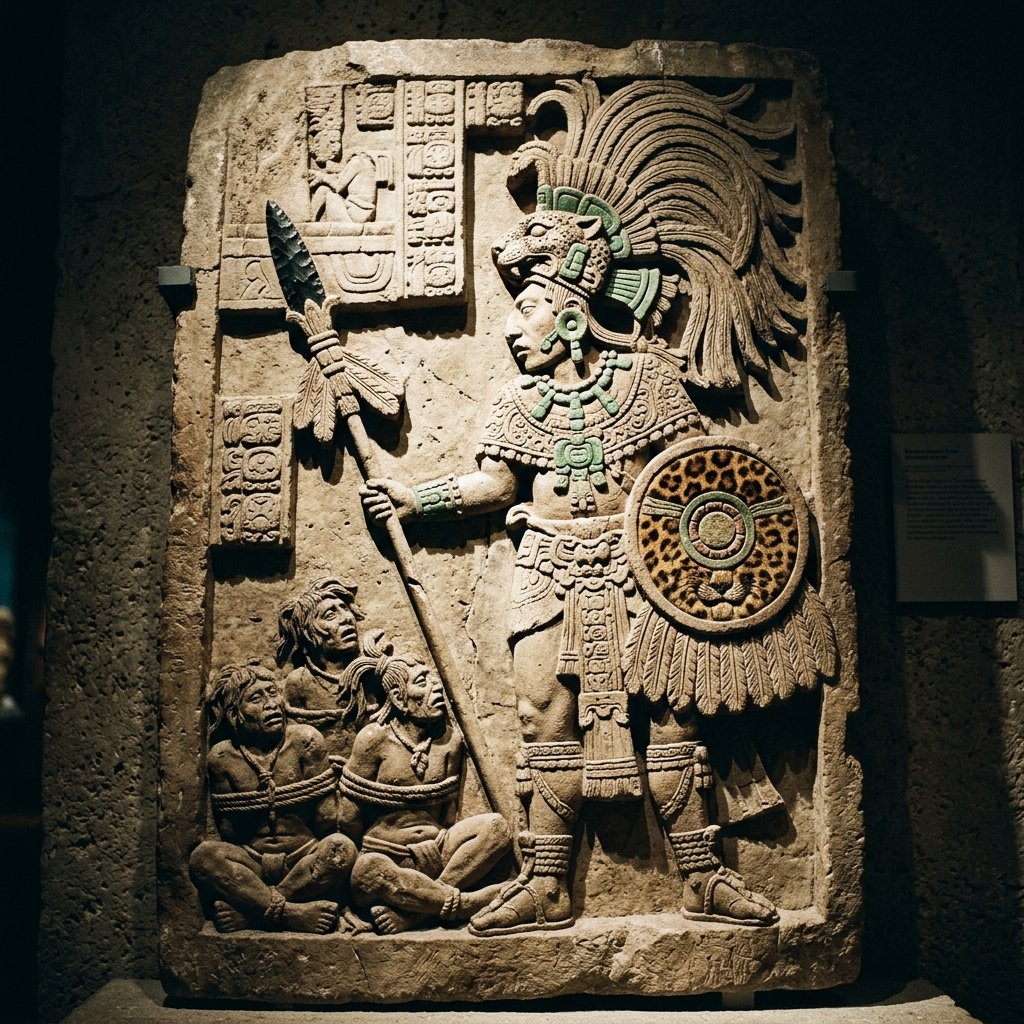
Buluc Chabtan
God of War
War, Sacrifice, Sudden Death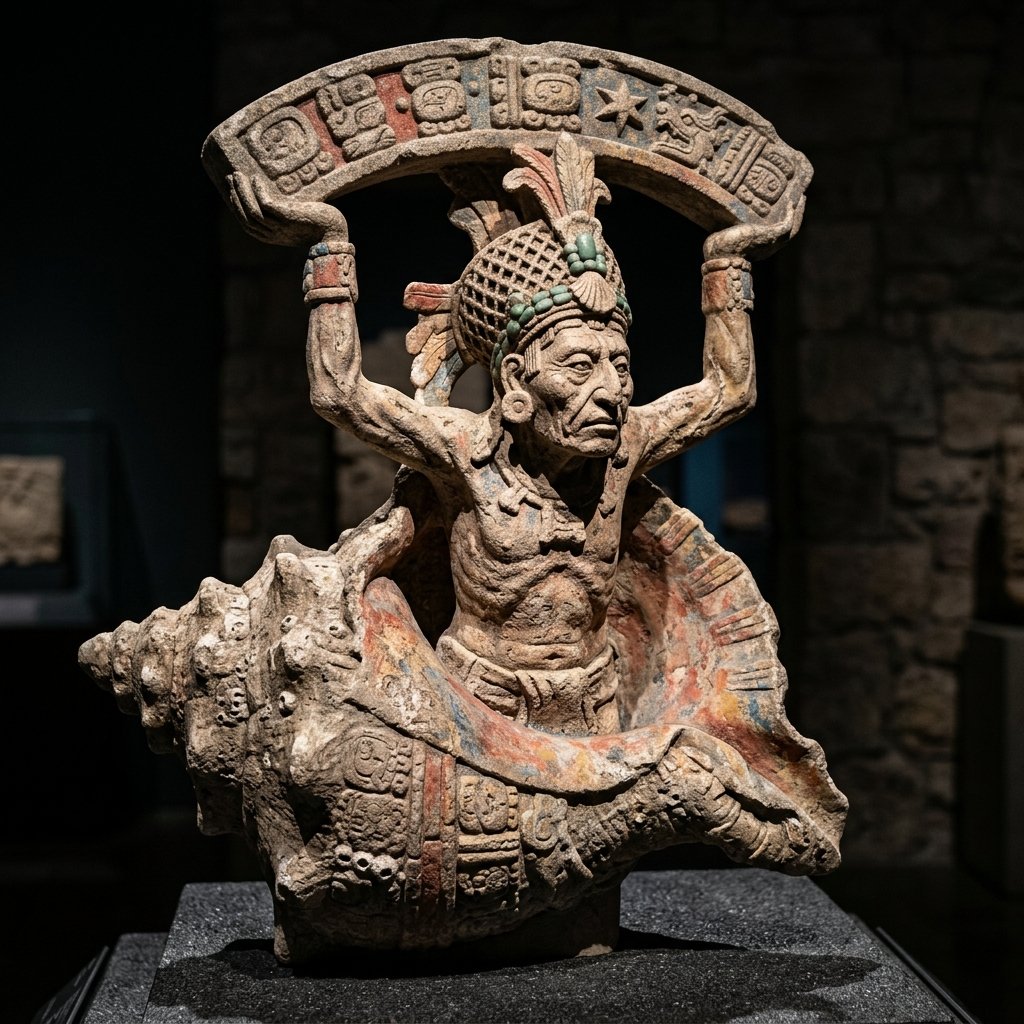
Pawahtun
Patron of Scribes
Sky-Bearer, Writing, ArtisansItzamná: The Supreme Creator (God D)
Itzamná (also spelled Itzam Na, meaning "Iguana House" or "Lizard House") was the supreme creator deity of the Maya — a god so old and so high above the other divinities that he was sometimes barely visible in the artistic record, overshadowed by more dramatic figures like Chaac and Kukulkán. Yet his theological importance was unmatched. He was the inventor of writing, the patron of learning, the lord of the sky and day cycle, and the divine source of all knowledge and culture.
In the codices, Itzamná is depicted as an elderly man with a large, Roman-style nose, sunken cheeks, and a single prominent tooth. His decrepitude was not a sign of weakness but of unimaginable antiquity — he was the oldest of all beings, the first consciousness in the cosmos. As the archaeologist David Stuart has shown, Classic Maya kings derived their legitimacy from their claim to channel Itzamná's creative knowledge (Stuart, D., "Hieroglyphs on Maya Vessels," in The Maya Vase Book, Vol. 1, Kerr Associates, 1989, p. 153).
Kukulkán: The Feathered Serpent
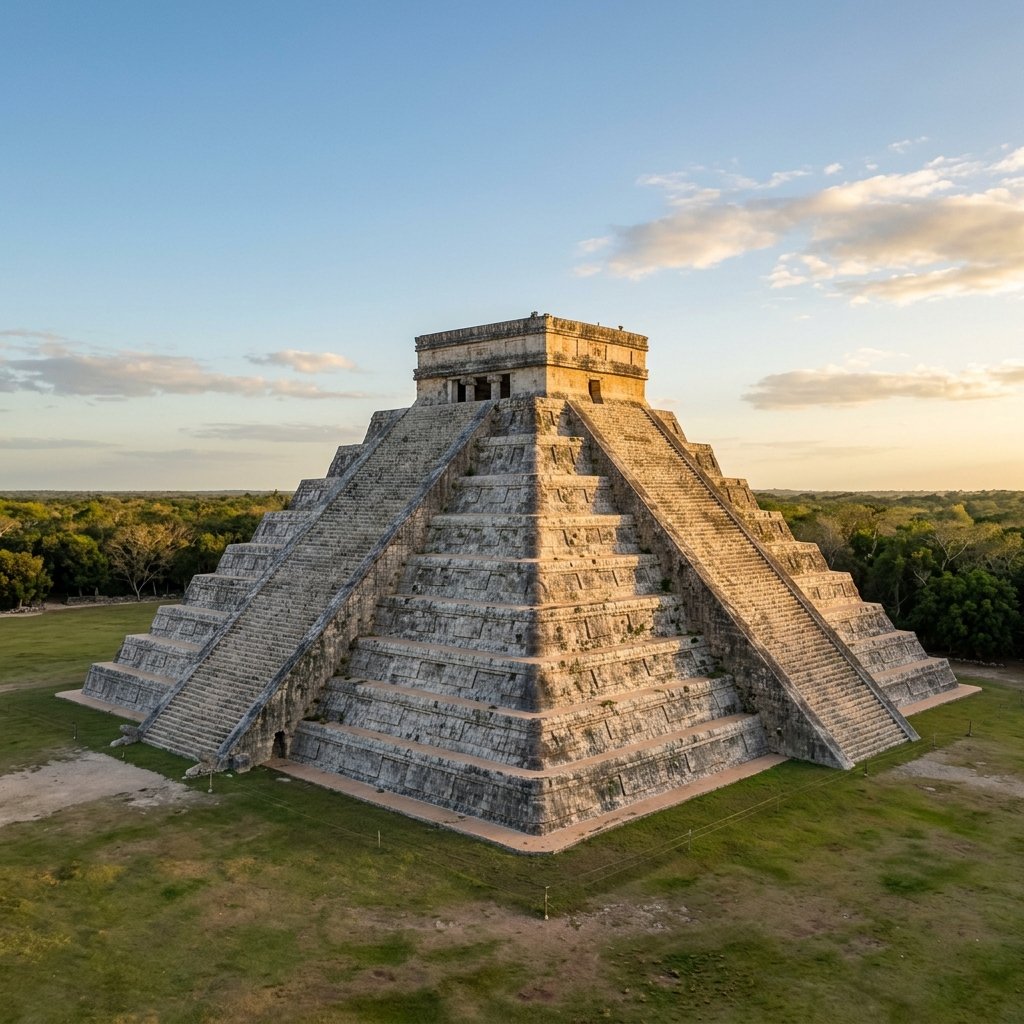
The Temple of Kukulkán (El Castillo) at Chichén Itzá during the equinox. The descending serpent shadow — an alignment of light and architecture that occurs only twice a year — demonstrates the profound integration of astronomy, engineering, and theology in Maya civilization. The feathered serpent was one of the most powerful and enduring religious symbols in all of Mesoamerica.
Kukulkán (from the Yucatec Maya k'uk'ul, "feathered" or "plumed," and kaan, "serpent") is the Maya name for the Feathered Serpent — one of the most ancient and widely distributed religious symbols in Mesoamerican civilization. The concept of a divine serpent adorned with the plumage of the quetzal bird can be traced back to Olmec predecessors (c. 1200–400 BC) and appears prominently at Teotihuacan (c. 200–600 AD) long before reaching the Maya world.
Kukulkán's most spectacular monument is the Temple of El Castillo at Chichén Itzá, where the pyramid's geometry creates a serpentine shadow effect during the spring and autumn equinoxes — an undulating pattern of light and shadow that appears to descend the north balustrade as a feathered serpent visiting the earth. This architectural alignment, whether intentional or partially coincidental, has become the single most visited archaeological spectacle in the Americas, drawing over 30,000 visitors each equinox.
It is important to note that the relationship between Kukulkán and the Aztec Quetzalcoatl is complex. While both represent the feathered serpent motif, they are not simply the "same god with a different name." Each culture embedded the concept within its own theological, political, and historical framework. At Chichén Itzá, Kukulkán was particularly associated with political authority and the legitimation of rulership in the Postclassic period (c. 900–1200 AD) (Ringle, W.M., "On the Political Organization of Chichen Itza," Ancient Mesoamerica, 15, 2004, pp. 167–218).
Ix Chel: The Moon Goddess (Goddess O/I)
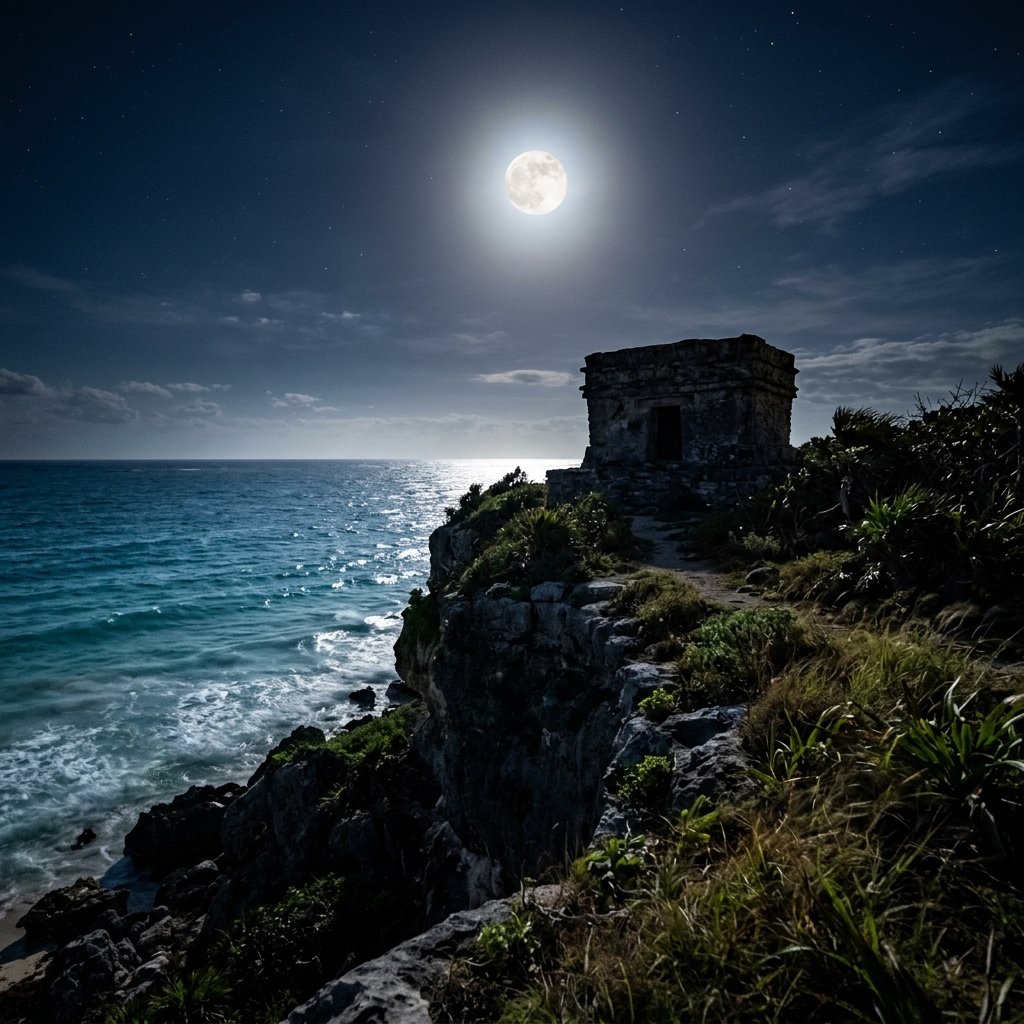
A Maya coastal temple at Tulum under the full moon. Tulum's Temple of the Frescoes and nearby isla of Cozumel were major pilgrimage destinations associated with Ix Chel, the moon goddess. Women from across the Maya lowlands traveled to Cozumel to petition Ix Chel for fertility, safe childbirth, and healing.
Ix Chel (pronounced "eesh-CHEL") is the most prominent female deity in the Maya pantheon. Her name likely derives from ix ("she/woman") and chel (possibly "rainbow" or "light") — hence her frequent designation as "Lady Rainbow." She was the goddess of the moon, of fertility, of weaving, of medicine, and of water in its life-giving (as opposed to storm-bringing) aspect.
Ix Chel appears in two contrasting forms: as a young, beautiful woman associated with sexual love, fertility, and the waxing moon (sometimes designated Goddess I in the Schellhas system); and as an old, wizened woman with jaguar ears and clawed hands, associated with floods, storms, and the waning moon (Goddess O). This duality was not a contradiction — it expressed the Maya understanding that the moon's cycle mirrors the arc of women's lives, from maiden to mother to crone, and that each phase carries its own power (Vail, G. & Stone, A., Representations of Women in Postclassic and Colonial Maya Literature and Art, in Ancient Maya Women, AltaMira Press, 2002, pp. 203–228).
The island of Cozumel, off the coast of present-day Quintana Roo, was the single most important pilgrimage destination dedicated to Ix Chel. Colonial sources record that Maya women from across the Yucatan and even Guatemala undertook dangerous sea voyages to Cozumel to petition the goddess at her oracle shrine — particularly for matters relating to fertility, pregnancy, and childbirth.
The Structure of the Maya Cosmos
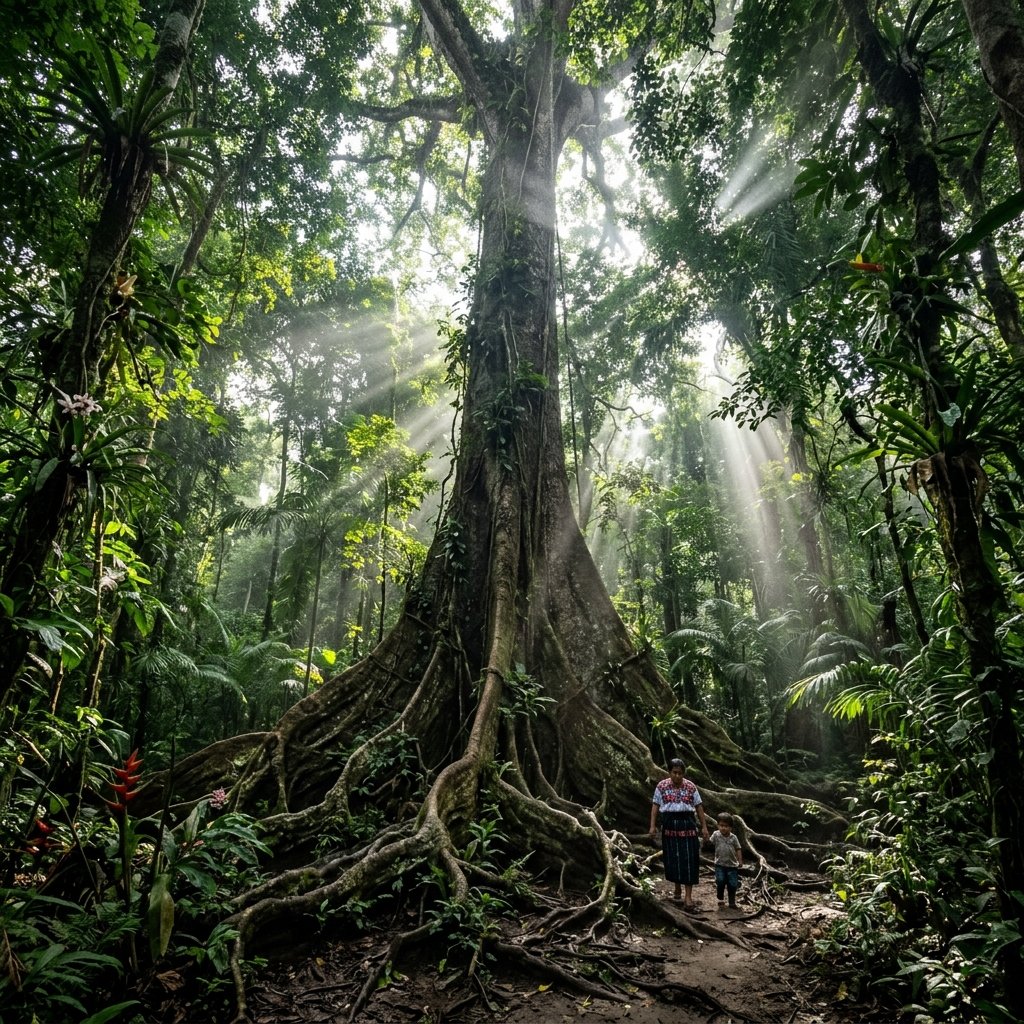
A ceiba tree (Ceiba pentandra) — the tree the Maya called Ya'axche' and revered as the cosmic axis mundi. Its buttress roots reach into the earth (Xibalba), its trunk spans the middle world (Cab), and its massive canopy stretches toward the heavens (Chan). The ceiba was so sacred that colonial records note the Spanish rarely succeeded in compelling Maya communities to cut them down.
To understand the Maya gods, you must understand the universe they inhabited. The Maya conceived of the cosmos as a tripartite vertical structure — three interconnected realms linked by a central axis called the World Tree (Wakah-Chan), which they identified with the sacred ceiba tree (Ya'axche').
The Upper World — Chan (13 Levels)
Ruled by the Oxlahuntiku — the thirteen gods of the heavens. The upper world was not a single "heaven" but a tiered structure of thirteen levels, each inhabited by specific celestial beings. The highest level was the domain of Itzamná. Below it resided the sun, moon, Venus, and the other planetary and stellar deities. Maya kings claimed to communicate with heavenly beings through bloodletting rituals that opened portals between the earthly and celestial realms.
The Middle World — Cab (the Earth's Surface)
The surface of the earth, conceived as the back of a great cosmic caiman or turtle floating on primordial waters. The earth was oriented to the four cardinal directions, each associated with a specific color (red/east, white/north, black/west, yellow/south), a specific tree, a specific bird, and a specific aspect of the rain god Chaac. At the center stood the ceiba tree — the Ya'axche' — its roots plunging into Xibalba and its branches reaching the thirteenth heaven.
Xibalba — The Underworld (9 Levels)
The watery underworld, ruled by the Bolontiku — the nine lords of the night and death. Xibalba (roughly translated as "Place of Fright") was not simply a punishment realm. It was the place of transformation and testing. The dead descended there, the sun traveled through it each night, and the maize god was sacrificed and reborn there in the great agricultural cycle. The Hero Twins of the Popol Vuh defeated Xibalba's lords through cleverness, establishing that death could be overcome through intelligence and sacrifice.
Xibalba: The Underworld and Its Lords
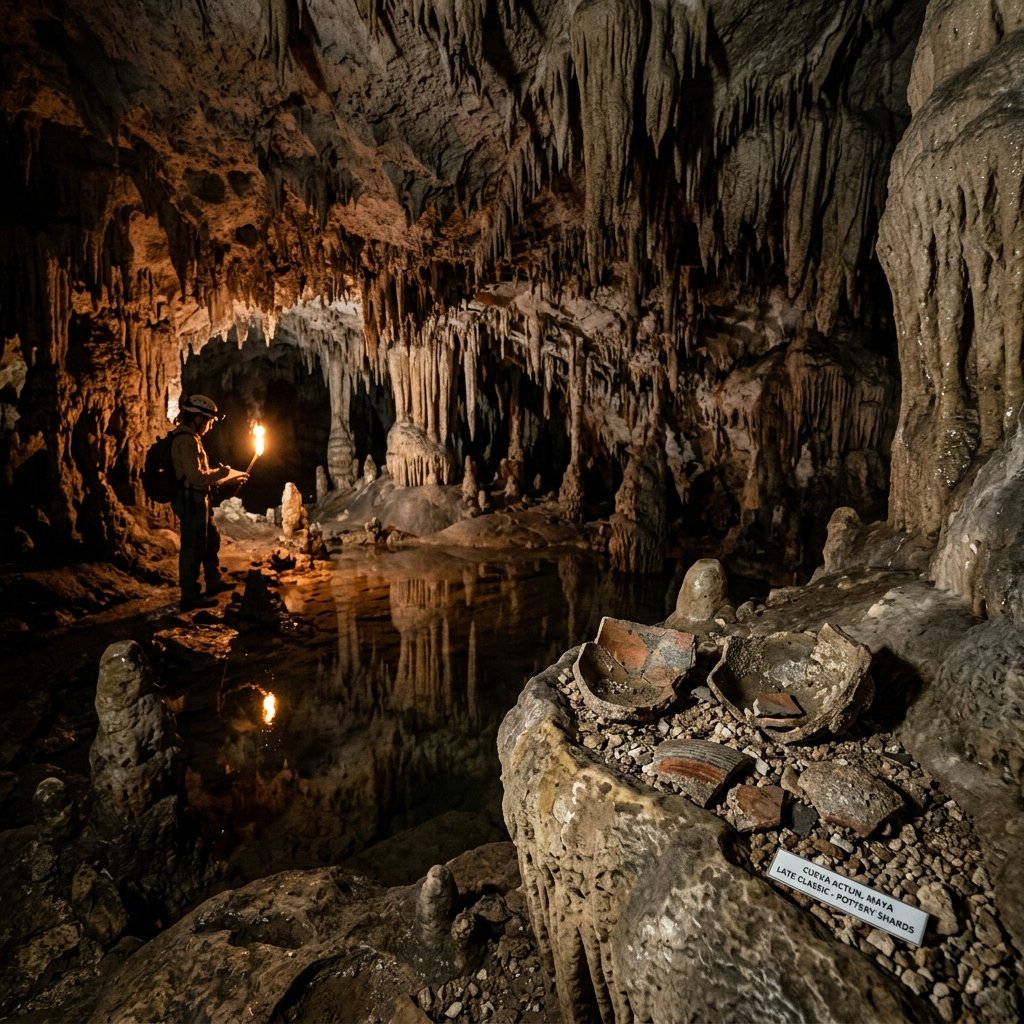
A cave in the Maya lowlands. The Maya understood caves and cenotes as literal entrances to Xibalba. Archaeological excavations of many Maya caves have revealed ritual deposits — ceramics, human remains, jade offerings — confirming that these underground spaces were sites of intense religious activity for centuries.
The Maya underworld — Xibalba (Shi-bal-BA) — is one of the most elaborately imagined afterlife realms in any world religion. Unlike the simple binary of heaven and hell, Xibalba was a nine-layered domain filled with specific challenges, specific lords, and specific tests. According to the Popol Vuh, the K'iche' Maya creation epic, Xibalba contained rivers of blood and pus, houses of cold, fire, jaguars, bats, and razor blades, each designed to test the worthiness of those who entered.
The lords of Xibalba — One Death (Hun Came) and Seven Death (Vucub Came) — along with their subordinate demons, governed disease, suffering, and mortality. But the Popol Vuh makes clear that Xibalba was ultimately conquerable. The Hero Twins, Hunahpú and Xbalanqué, descended into the underworld, allowed themselves to be killed, and then rose from the dead — tricking the lords of Xibalba through intelligence and reversing the power of death itself. This narrative provided the theological foundation for Maya beliefs about royal afterlife and agricultural resurrection: the corn seed buried in the earth was a metaphor for the maize god's descent into Xibalba, and the sprouting corn stalk was his triumphant return (Christenson, A.J., Popol Vuh: The Sacred Book of the Maya, University of Oklahoma Press, 2007, pp. 47–55).
The Popol Vuh: The Maya Creation Epic
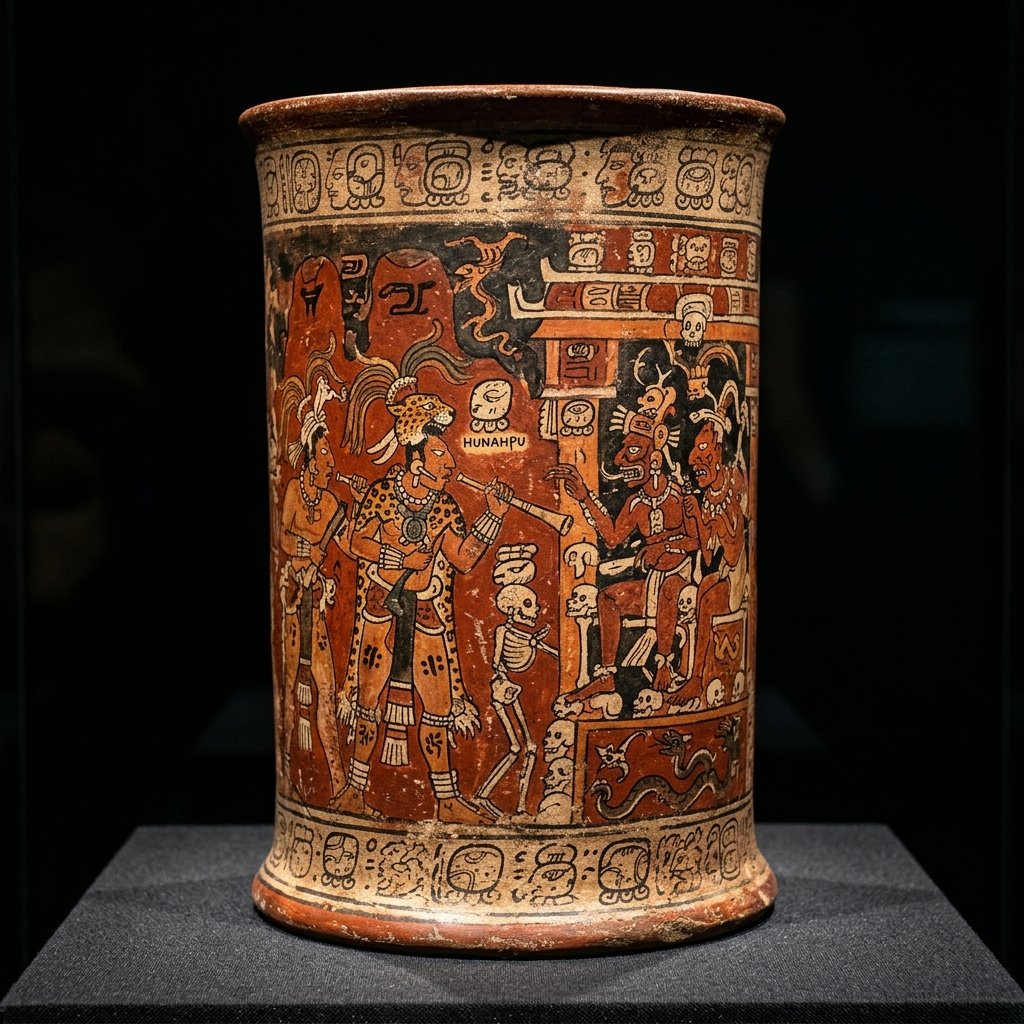
A Maya polychrome ceramic vessel depicting mythological narrative scenes. Painted pottery is one of our richest sources for understanding Maya mythology — hundreds of surviving vessels show scenes from the Popol Vuh and other mythological cycles, often depicting gods, the Hero Twins, and the lords of Xibalba in vivid detail.
The Popol Vuh is the single most important surviving text of Maya literature — and one of the great creation epics of world civilization. Originally an oral tradition of the K'iche' Maya of highland Guatemala, it was transcribed into the Latin alphabet in the mid-sixteenth century, shortly after the Spanish conquest, by unnamed K'iche' scribes who sought to preserve their sacred history.
The text tells three interlocking stories: the creation of the world (the gods' repeated attempts to create humanity — first from mud, then from wood, finally and successfully from maize); the saga of the Hero Twins Hunahpú and Xbalanqué (who defeat the lords of Xibalba through cunning and sacrifice); and the origins of the K'iche' people themselves. Its theological depth has led the scholar Dennis Tedlock, who produced the definitive English translation, to call it "nothing less than the Popol Vuh, the Dawn of Life," adding that it represents "a work of literature that stands beside the great national epics of the Old World" (Tedlock, D., Popol Vuh: The Definitive Edition of the Mayan Book of the Dawn of Life, Simon & Schuster, 1996, p. 21).
The Maize God: Death, Burial, and Rebirth
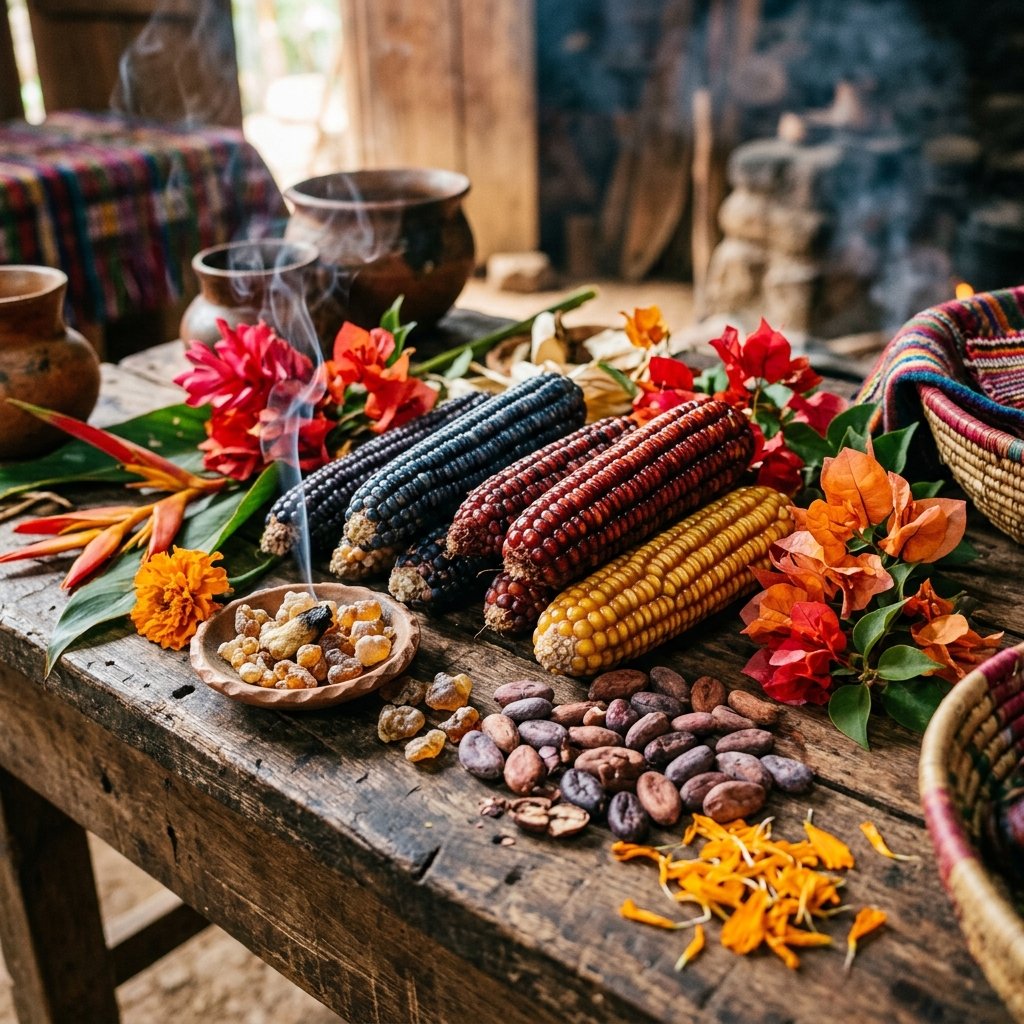
Heritage Mesoamerican maize varieties alongside traditional ritual materials — cacao beans, copal incense, and tropical flowers. For the Maya, maize was not merely food; it was the substance from which the gods created humanity. The Popol Vuh describes how the gods tried and failed to make humans from mud and wood before succeeding with maize dough — a narrative that elevated corn to the most sacred substance in the cosmos.
No deity more perfectly captures the Maya understanding of divinity than the Maize God — known by various names including Yum Kaax, Hun Hunahpu, and God E in the Schellhas system. The Maize God's story is the story of agriculture itself, understood as a divine cycle of death and resurrection.
In the Popol Vuh, the Maize God (Hun Hunahpu, the father of the Hero Twins) is lured into Xibalba, sacrificed, and buried — just as a corn seed is pressed into the earth. He descends into darkness and decomposition — just as the seed seems to die in the soil. And then, through the actions of his sons (the Hero Twins, who defeat the lords of death), he is resurrected — just as the corn stalk miraculously erupts from the earth as a living, fruit-bearing plant.
This agricultural theology was not a metaphor. The Maya literally understood the maize cycle as a divine drama re-enacted each growing season. The planting of corn was a reenactment of the gods' creation. The harvest was a reenactment of salvation. And the corn itself was the body of the god, consumed by humans to sustain the sacred cycle. As the art historian Mary Miller has observed, the Maize God was "the most beautiful figure in all of Maya art — eternally youthful, perpetually reborn, the promise that death is never final" (Miller, M.E. & Martin, S., Courtly Art of the Ancient Maya, Thames & Hudson, 2004, p. 68).
Blood and Sacrifice: Feeding the Gods
Maya religion was founded on the principle of reciprocity: the gods created humans and sustained them with rain, sun, and corn; humans, in return, were obligated to sustain the gods with offerings. The most powerful offering was blood — human life force, or ch'ulel, which the Maya believed was the substance that kept the cosmic machinery running.
Auto-sacrifice (self-bloodletting) was the most common form of ritual blood offering. Maya kings and queens pierced their tongues, earlobes, and genitals with obsidian blades or stingray spines to produce blood, which was then dripped onto bark paper and burned as an offering. The carved lintels of Yaxchilán — particularly Lintels 24 and 25, now in the British Museum — provide the most vivid depictions of this practice: Queen Lady Xoc pulls a thorn-studded rope through her tongue while her husband Shield Jaguar holds a flaming torch above her, and from the pooling blood a Vision Serpent rises, carrying the image of a divine ancestor (Schele, L. & Miller, M.E., The Blood of Kings, 1986, pp. 175–208).
Human sacrifice also occurred, though its frequency and character varied significantly across regions and periods. The Classic period (250–900 AD) appears to have featured more targeted, ritual sacrifice — typically of war captives — while the Postclassic period at Chichén Itzá saw increased sacrifice potentially influenced by Central Mexican traditions. It is important to note that the vast majority of Maya offerings were non-human: jade, obsidian, cacao, copal incense, rubber, feathers, and food, all given freely to maintain the reciprocal relationship between the human and divine.
Key Mythological Narratives
The Hero Twins
The greatest narrative of ancient America — Hunahpú and Xbalanqué descend into Xibalba, defeat the lords of death through cleverness and self-sacrifice, and ascend to become the Sun and Moon. Their story encodes the theology of agricultural resurrection and the promise that death, while terrifying, is ultimately conquerable.
The Popol Vuh
The Maya creation epic — one of the most important literary works of the ancient Americas. The gods create the world, attempt to fashon humanity three times (from mud, wood, and finally sacred maize), and the Hero Twins defeat the lords of Xibalba. Preserved by K'iche' Maya scribes after the Spanish conquest.
The Creation Myth
Before the world existed, there were only the dark waters and the sky. The Heart of Sky and the Feathered Serpent spoke the word "Earth," and mountains rose from the sea. Three failed attempts to create beings who could worship them led finally to women and men made from sacred corn — beings with the intelligence to speak, pray, and remember their creators.
The Living Tradition: Maya Gods in the Twenty-First Century
Unlike the gods of ancient Greece, Rome, or Egypt, whose worship ended centuries ago, many Maya deities remain part of living religious practice. Across the highlands of Guatemala and the lowlands of the Yucatan Peninsula, millions of Maya-language speakers maintain syncretic religious traditions that blend pre-Columbian beliefs with Catholicism.
In K'iche' Maya communities, daykeepers (aj q'ij) still consult the 260-day Tzolk'in sacred calendar to determine auspicious dates for ceremonies, marriages, and community decisions. In the Yucatan, Chaac rain ceremonies are performed when seasonal rains fail. On the Day of the Dead, Maya families offer maize, chocolate, and incense to ancestors in rituals that echo pre-Columbian obligations to the dead.
The gods have not disappeared. They have adapted — as they always have — wearing new names and new faces while maintaining their ancient functions. The rain still comes, the corn still grows, the dead still require remembrance, and the cosmic reciprocity between human and divine continues in communities across Central America and southern Mexico, sustained by the oldest continuously practiced religious traditions in the Western Hemisphere.
References
- Christenson, A.J. Popol Vuh: The Sacred Book of the Maya. University of Oklahoma Press, 2007.
- Miller, M.E. & Martin, S. Courtly Art of the Ancient Maya. Thames & Hudson, 2004.
- Ringle, W.M. "On the Political Organization of Chichen Itza." Ancient Mesoamerica, 15, 2004, pp. 167–218.
- Schele, L. & Miller, M.E. The Blood of Kings. Kimbell Art Museum / George Braziller, 1986.
- Schellhas, P. Representation of Deities of the Maya Manuscripts. Harvard University, Peabody Museum Papers, Vol. 4, No. 1, 1904.
- Stuart, D. "Hieroglyphs on Maya Vessels." The Maya Vase Book, Vol. 1, Kerr Associates, 1989.
- Taube, K. The Major Gods of Ancient Yucatan. Dumbarton Oaks, 1992.
- Tedlock, D. Popol Vuh: The Definitive Edition of the Mayan Book of the Dawn of Life. Simon & Schuster, 1996.
- Vail, G. & Stone, A. "Representations of Women in Postclassic and Colonial Maya Literature and Art." In Ancient Maya Women, AltaMira Press, 2002.
Frequently Asked Questions
How many gods did the Maya have?
The Maya had over 250 named deities, and when all regional variants and directional aspects are included, the count may exceed 400. Many gods had multiple manifestations — the same deity could appear as young or old, male or female, benevolent or destructive. This fluidity reflects the Maya understanding that divine power was not fixed but contextual, shape-shifting with the calendar, the seasons, and the needs of the moment. The Schellhas classification system identifies at least 16 major deity types (God A through God P), but this represents only the main figures visible in the surviving codices.
Who was the most important Maya god?
This depends on the context. Itzamná (God D) was the supreme creator and lord of the heavens — the theological apex. Kukulkán (the Feathered Serpent) was the most politically significant, associated with royal legitimacy and state power. Chaac (God B) was arguably the most important for daily life, as rain determined agricultural survival. And the Maize God (God E) was the most theologically profound, embodying the cycle of death and resurrection that defined Maya cosmology. The "most important" god varied by period, region, and social class.
Did the Maya practice human sacrifice?
Yes, ritual sacrifice was part of Maya religious practice, though its frequency, character, and scale varied significantly across periods and regions. The most common form of blood offering was auto-sacrifice (self-bloodletting) by rulers and elites, using obsidian blades or stingray spines. War captives were also sacrificed, particularly after military victories. However, the vast majority of offerings to the gods were non-human: jade, cacao, copal incense, rubber balls, food, and feathers. The scale of human sacrifice in the Maya world was generally less than at Aztec Tenochtitlan, though the Postclassic site of Chichén Itzá shows evidence of increased sacrifice potentially influenced by Central Mexican traditions.
Are Maya gods still worshipped today?
Yes. Across Guatemala, southern Mexico, Belize, and Honduras, millions of Maya-language speakers maintain syncretic religious traditions that blend pre-Columbian beliefs with Catholicism. K'iche' Maya daykeepers still consult the 260-day Tzolk'in calendar. Yucatec Maya farmers still perform Ch'a-Cháak rain ceremonies when rains fail. Day of the Dead observances incorporate pre-Columbian offerings to ancestors. Catholic saints have been syncretized with traditional deities — but the underlying cosmological framework, ritual specialist roles, and calendar-based ceremonialism remain recognizably pre-Columbian.
What is the Popol Vuh?
The Popol Vuh is the K'iche' Maya creation epic — the most important surviving literary work of the ancient Americas. Originally an oral tradition, it was transcribed into the Latin alphabet by K'iche' scribes in the mid-sixteenth century to preserve it from destruction during the Spanish conquest. It tells the story of the creation of the world, the gods' three attempts to create humanity (from mud, wood, and finally maize), and the saga of the Hero Twins who defeat the lords of death in the underworld. The manuscript was discovered by the Dominican friar Francisco Ximénez in Chichicastenango, Guatemala, around 1701. The original K'iche' text is now lost, but Ximénez's transcription and Spanish translation survive.