The Lords of Xibalba at a Glance
A Bureaucracy of Death
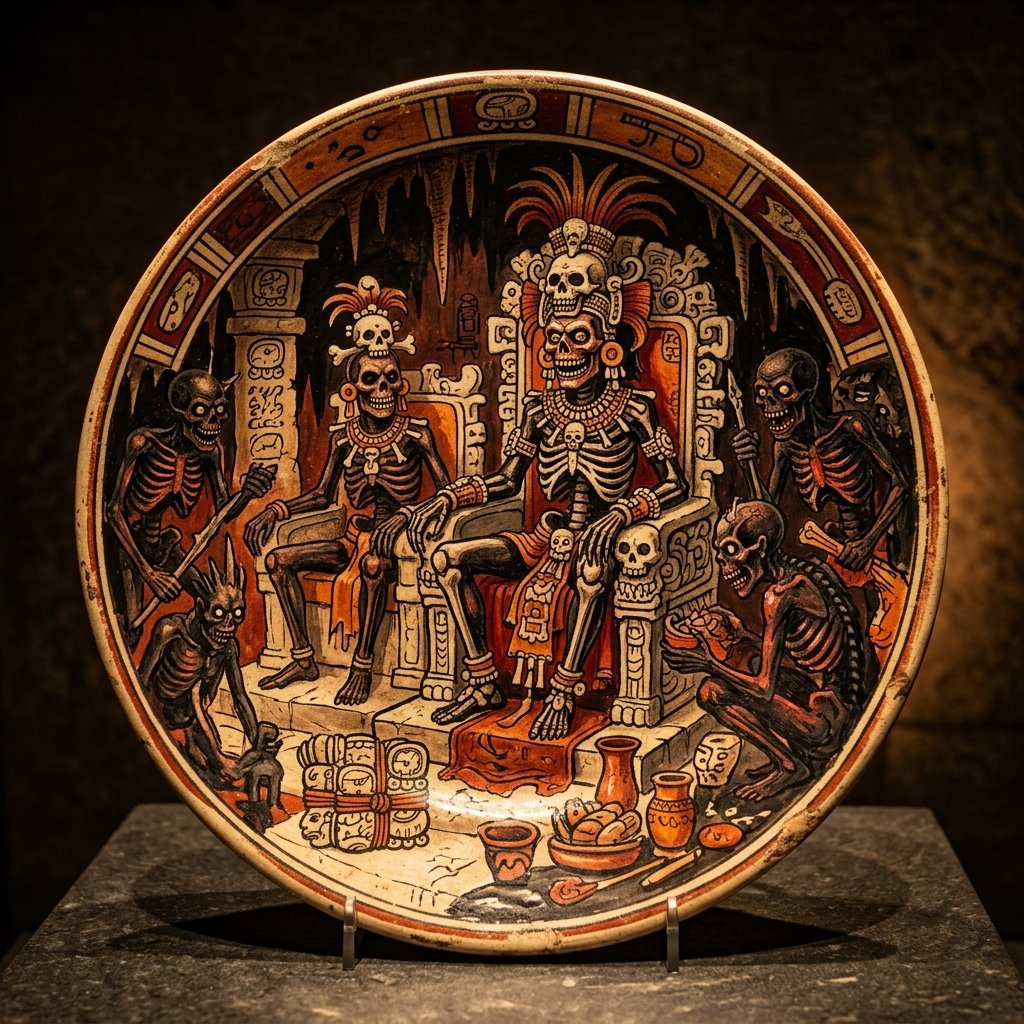
The Maya did not imagine the underworld as a place ruled by a single devil figure. Instead, Xibalba was governed by a council of twelve death lords — a hierarchical administration of suffering that systematically inflicted specific types of death on humanity. Each lord had a defined portfolio: one caused bleeding, another caused jaundice, another caused emaciation.
This model reflects the Maya understanding of disease as specific, categorizable, and purposeful — not random misfortune but targeted attacks by identifiable supernatural agents. When a Maya person fell ill, the nature of their illness could theoretically indicate which lord of Xibalba had targeted them, allowing healers to direct ritual remedies accordingly.
The Supreme Lords: Hun Came & Vucub Came
At the top of the hierarchy sit the two supreme rulers:
- Hun Came (1 Kame / "One Death") — The first lord of Xibalba and the primary decision-maker. His calendrical name places him on the day-sign Kame (Death) with the number coefficient 1, linking him to the 260-day Tzolk'in calendar.
- Vucub Came (7 Kame / "Seven Death") — The second lord, Hun Came's co-ruler. Together they function as a dyad — paired decision-makers who act in concert, reflecting the Maya preference for dual authority structures.
The paired-ruler model mirrors real-world Maya governance. Many Maya city-states had dual kingship systems or power-sharing arrangements between military and religious leaders. The lords of Xibalba replicate this political structure in the supernatural realm.
The Ten Disease Lords
Below the two supreme lords, the Popol Vuh names ten subordinate lords, arranged in pairs. Each pair personifies a specific type of suffering:
The specificity of these descriptions is remarkable. They read like a medical catalogue of tropical diseases: hemorrhagic fevers, bacterial infections causing edema, tuberculosis or parasitic wasting, and sudden cardiac events. The Maya were transforming empirical observations of disease into theological narrative.
How the Hero Twins Defeated Them
The central drama of the Popol Vuh is the story of how the Hero Twins Hunahpu and Xbalanque descended into Xibalba, survived the trials that killed their father — and then defeated the death lords not through superior force but through cleverness, trickery, and self-sacrifice.
The twins' ultimate victory comes when they allow themselves to be killed and ground into powder, only to reassemble themselves from their own bones — demonstrating power over death itself. They then trick Hun Came and Vucub Came into asking to be sacrificed and resurrected too. The twins sacrifice the lords — and simply don't bring them back.
After the defeat of the supreme lords, the twins demote the remaining lords of Xibalba. Death is not eliminated — it continues — but it is diminished. The underworld loses much of its power, and the lords are reduced to receiving only lesser offerings (Christenson, 2007, pp. 178–182).
Archaeological Evidence
The Lords of Xibalba appear frequently in Classic-period Maya art:
- Polychrome ceramics: Dozens of painted vessels depict skeletal figures wearing bone jewelry and death-eye ornaments, often shown in palace scenes within the underworld. The Princeton Vase (K511) and other "mythological vessels" illustrate key scenes from the underworld narrative.
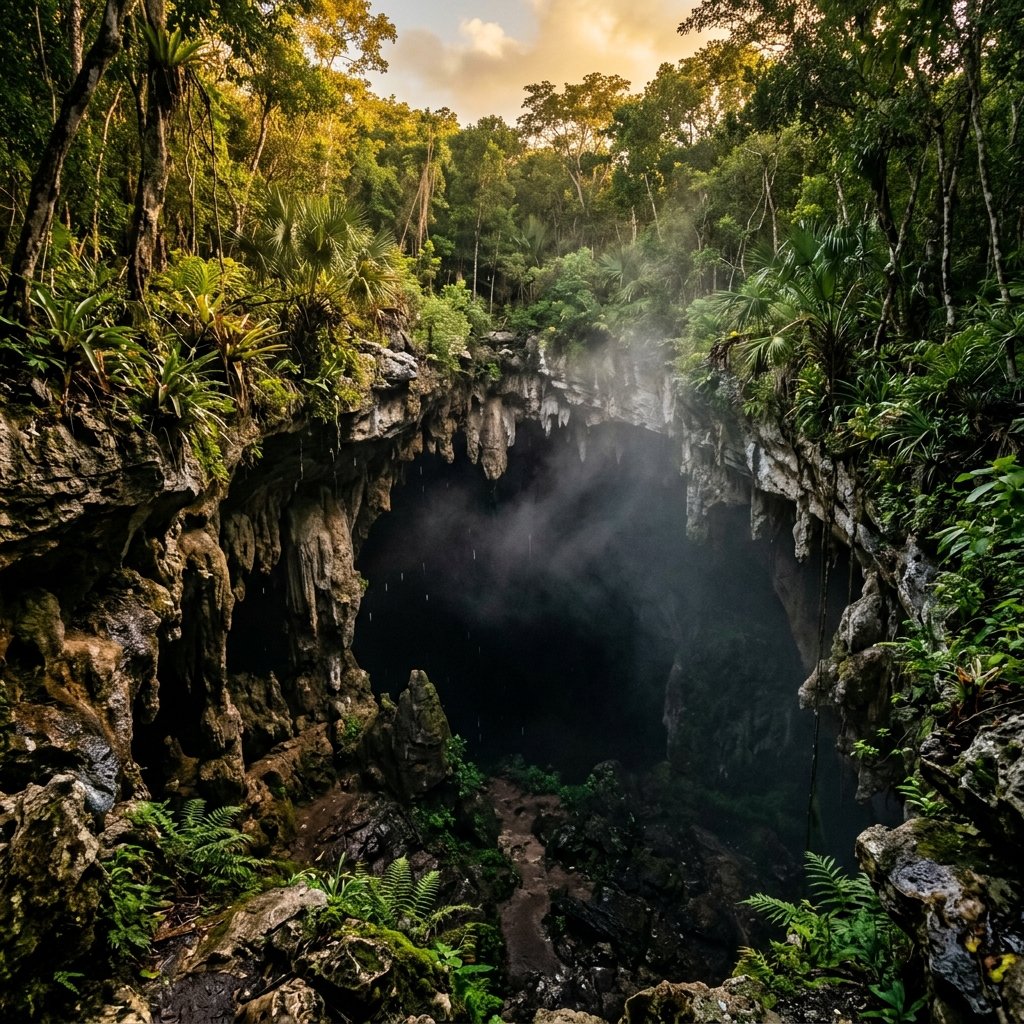
- Cave sites: Archaeological excavations in caves like Actun Tunichil Muknal (Belize), Naj Tunich (Guatemala), and Loltún (Yucatán) have recovered offerings — including human remains — that appear to be directed toward underworld deities.
- Temple iconography: The Temple of the Sun at Palenque includes a throne supported by skeletal figures that may represent Xibalban lords.
References
- Christenson, A.J. Popol Vuh: The Sacred Book of the Maya. University of Oklahoma Press, 2007.
- Tedlock, D. Popol Vuh: The Definitive Edition of the Mayan Book of the Dawn of Life. Simon & Schuster, 1996.
- Coe, M.D. "Death and the Ancient Maya." In Benson, E. (ed.), Death and the Afterlife in Pre-Columbian America, Dumbarton Oaks, 1975.
- Kerr, J. (ed.) The Maya Vase Book, Vols. 1–6. Kerr Associates, 1989–2000.
- Brady, J.E. & Prufer, K.M. (eds.) In the Maw of the Earth Monster: Mesoamerican Ritual Cave Use. University of Texas Press, 2005.
Frequently Asked Questions
How many Lords of Xibalba are there?
The Popol Vuh names twelve Lords of Xibalba. The two supreme rulers are Hun Came ("One Death") and Vucub Came ("Seven Death"). Below them are ten subordinate lords arranged in five pairs, each pair responsible for a specific type of death or disease: blood, pus, emaciation, filth, and sudden death.
How were the Lords of Xibalba defeated?
The Hero Twins defeated the Lords of Xibalba through cleverness and self-sacrifice, not brute force. They allowed themselves to be killed, then reassembled themselves from their ground bones. When the impressed death lords asked to experience the same miracle, the twins sacrificed them — and simply didn't resurrect them. Death was not eliminated but permanently diminished.
Did the Maya worship the Lords of Xibalba?
The Maya did not "worship" the death lords in the sense of devotion — they propitiated them through offerings designed to keep them satisfied and prevent them from attacking the living. Archaeological evidence from caves (which the Maya considered literal entrances to Xibalba) shows extensive offerings including ceramics, jade, incense, and in some cases human remains, all directed toward underworld powers.