Buluc Chabtan at a Glance
The Reality of Maya Warfare
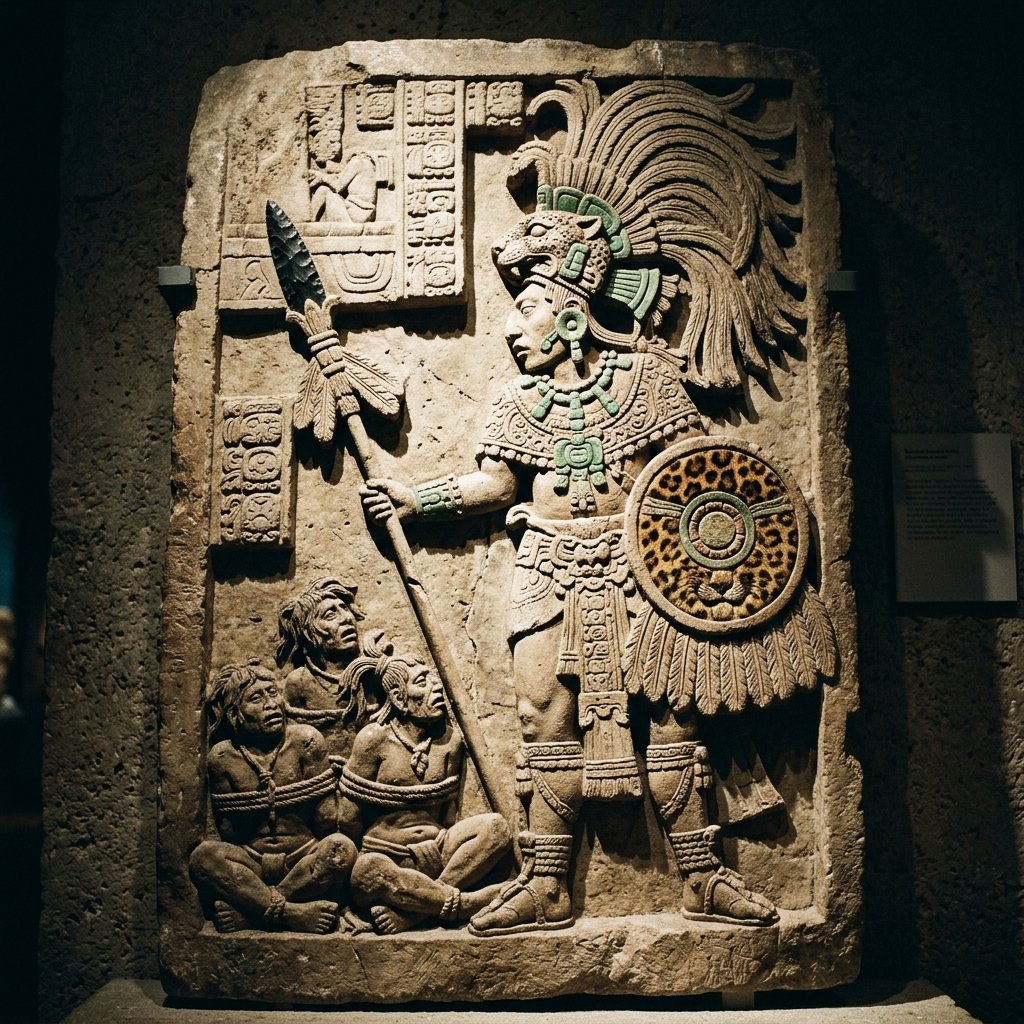
For many years, early Maya archaeologists promoted a romantic vision of the Classic Maya as a peaceful, astronomer-priest civilization, starkly different from the bloodthirsty Aztecs. The decipherment of Maya hieroglyphs in the late 20th century violently shattered that illusion. The Maya texts and art revealed a world engaged in constant, brutal, and highly ritualized endemic warfare.
Presiding over this violence was Buluc Chabtan, the god of war, sudden death, and human sacrifice. In the codices, he is a terrifying figure, frequently depicted alongside the God of Death, setting fire to structures or piercing victims with spears.
The Diagnostic Features of the War God
Buluc Chabtan (sometimes referred to as God F in the Schellhas classification system) is easily identifiable in Maya art by several grim indicators:
- The Black Line: He is usually depicted with a thick black line running down his face, passing through his eye and down his cheek, resembling specialized warrior face paint.
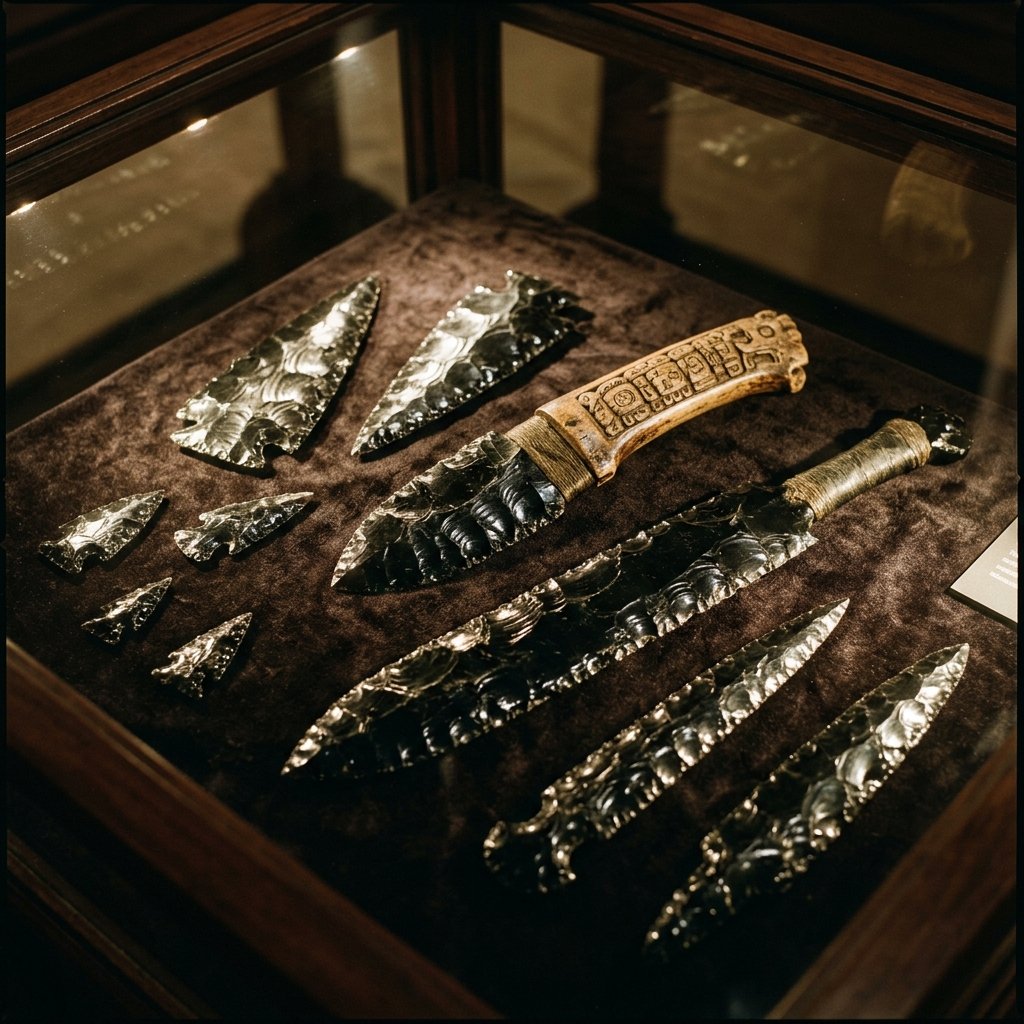
- Weapons of War: He frequently wields a spear tipped with flint or obsidian, a wooden club inset with obsidian blades (a macuahuitl-like weapon), and a shield.
- The Torch: He is often shown carrying a flaming torch, using it to set fire to wooden structures—the standard Maya glyphic shorthand for conquering a city was a burning temple.
The Purpose of Maya War: Captives, Not Conquest
To understand Buluc Chabtan, one must understand that the goals of Maya warfare were fundamentally different from European wars of conquest. Maya city-states rarely fought to occupy territory or completely assimilate neighboring populations.
The primary goal of elite Maya warfare was the capture of high-ranking enemy nobles and kings.
These captives were deeply humiliated—stripped of their royal finery, bound, and often tortured. Eventually, they were subjected to ritual execution, frequently through decapitation or having their hearts extracted, as an offering to the gods to maintain cosmic order. Buluc Chabtan represents this specific cycle: violence in the service of divine nourishment.
Blood and Sacrifice
Buluc Chabtan is intimately connected to bloodletting and sacrifice. In Maya theology, the gods gave their own blood (and the flesh of the Maize God) to create humanity. Therefore, humanity owed a perpetual "debt" of blood back to the divine. War was the mechanism for collecting that debt from the highest-value targets: enemy kings (Schele, L. & Miller, M.E., The Blood of Kings, 1986).
References
- Schele, L. & Miller, M.E. The Blood of Kings: Dynasty and Ritual in Maya Art. Kimbell Art Museum, 1986.
- Hassig, R. War and Society in Ancient Mesoamerica. University of California Press, 1992.
- Martin, S. & Grube, N. Chronicle of the Maya Kings and Queens. Thames & Hudson, 2nd edition, 2008.
- Taube, K. The Major Gods of Ancient Yucatan. Dumbarton Oaks, 1992.
- Coe, M.D. The Maya. Thames & Hudson, 9th edition, 2015.
Frequently Asked Questions
Who is Buluc Chabtan?
Buluc Chabtan is the Maya god of war, violence, and sudden death. He is typically depicted in the codices with a black line running down his face, wielding spears and torches to burn conquered temples. He represents the brutal reality of Maya conflict and the necessity of human sacrifice.
Did the Maya really perform human sacrifice?
Yes. While early 20th-century scholars tried to downplay it, the decipherment of Maya writing and art conclusively proved that human sacrifice—particularly of captured enemy nobles—was a central component of Maya statecraft and religion. It was considered necessary to repay the gods for the creation of the world and to keep the cosmos functioning.
Why did the Maya fight wars?
Unlike modern wars of territorial conquest, elite Maya warfare was primarily focused on capturing rival kings and nobles. Taking high-ranking prisoners brought immense prestige to the victorious king and provided high-value sacrificial victims to appease the gods. A captured king was the ultimate prize in Maya politics.