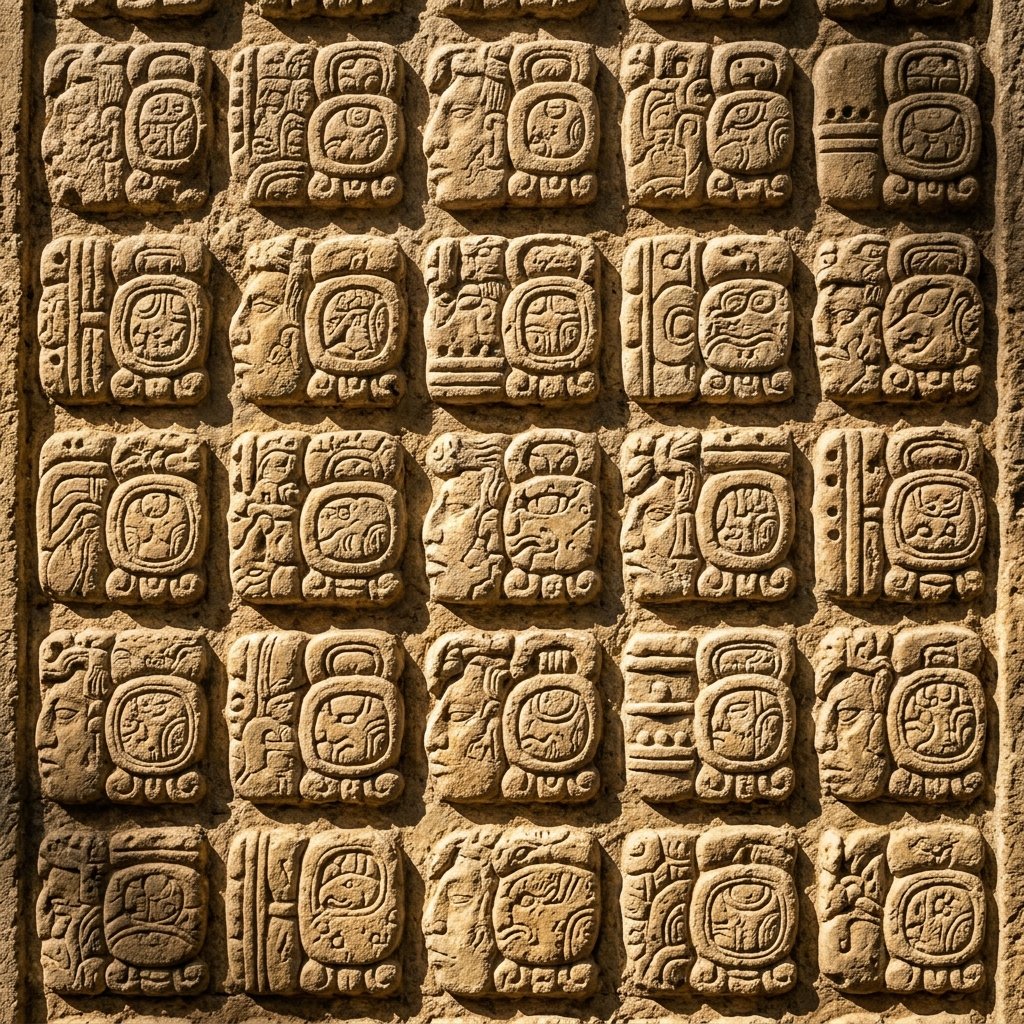
The Maya Writing System at a Glance
"For four centuries, scholars stared at Maya inscriptions and saw only decoration — beautiful, mysterious patterns that they assumed were symbolic but unreadable. Then, in the 1950s, a Soviet linguist working from photographs in Leningrad proved that Maya glyphs recorded spoken language. The Maya had been speaking to us for a thousand years. We simply hadn't learned to listen."
A Writing System Like No Other
The Maya developed the most sophisticated writing system in the pre-Columbian Americas — and one of the most complex ever devised anywhere on Earth. It is a logo-syllabic script, meaning that glyphs can function as either logograms (signs representing whole words) or syllabograms (signs representing individual syllables) — and the same idea can often be written in multiple equivalent ways, giving scribes extraordinary creative flexibility.
This script belongs to an exclusive category: it is one of only five writing systems in human history that were independently invented, without influence from any other literate tradition. The others are Sumerian cuneiform, Egyptian hieroglyphs, Chinese characters, and the undeciphered Indus Valley script. Every other writing system on Earth — including the alphabet you are reading now — derives ultimately from one of these five originals. The Maya writing system stands alongside them as evidence of a civilization that independently crossed one of the highest thresholds of human intellectual achievement: the ability to record language in permanent visual form.
Over 800 distinct glyphs have been catalogued, though many are variants or regional spellings of the same signs. The core writing system used approximately 500 glyphs in regular rotation — a number comparable to the Chinese character set needed for basic literacy (Coe, M.D. & Van Stone, M., Reading the Maya Glyphs, Thames & Hudson, 2005, pp. 17–22).
How Maya Writing Works
Maya glyphs are not simple pictures — they are a complete writing system capable of recording language as precisely as the Roman alphabet. Each inscription is organized into glyph blocks — roughly square or rectangular cells, typically read in paired columns from left to right and top to bottom. Each block contains:
- Main sign: The central element carrying the primary meaning — either a logogram (word) or a syllabogram (syllable)
- Affixes: Smaller signs attached as prefixes (left/top), suffixes (right/bottom), or infixes (embedded within) that modify the main sign's meaning — adding phonetic complements, grammatical markers, or semantic qualifiers
The elegant complexity of this system gave Maya scribes — known as aj tz'ib' ("he of the writing") — an extraordinary range of expression. A skilled scribe could write the same word multiple ways: purely logographically, purely syllabically, or in a hybrid combining both methods. This flexibility was not a defect but a feature — it allowed scribes to demonstrate their virtuosity, to create visual puns, and to compose inscriptions that were simultaneously readable text and visual art.
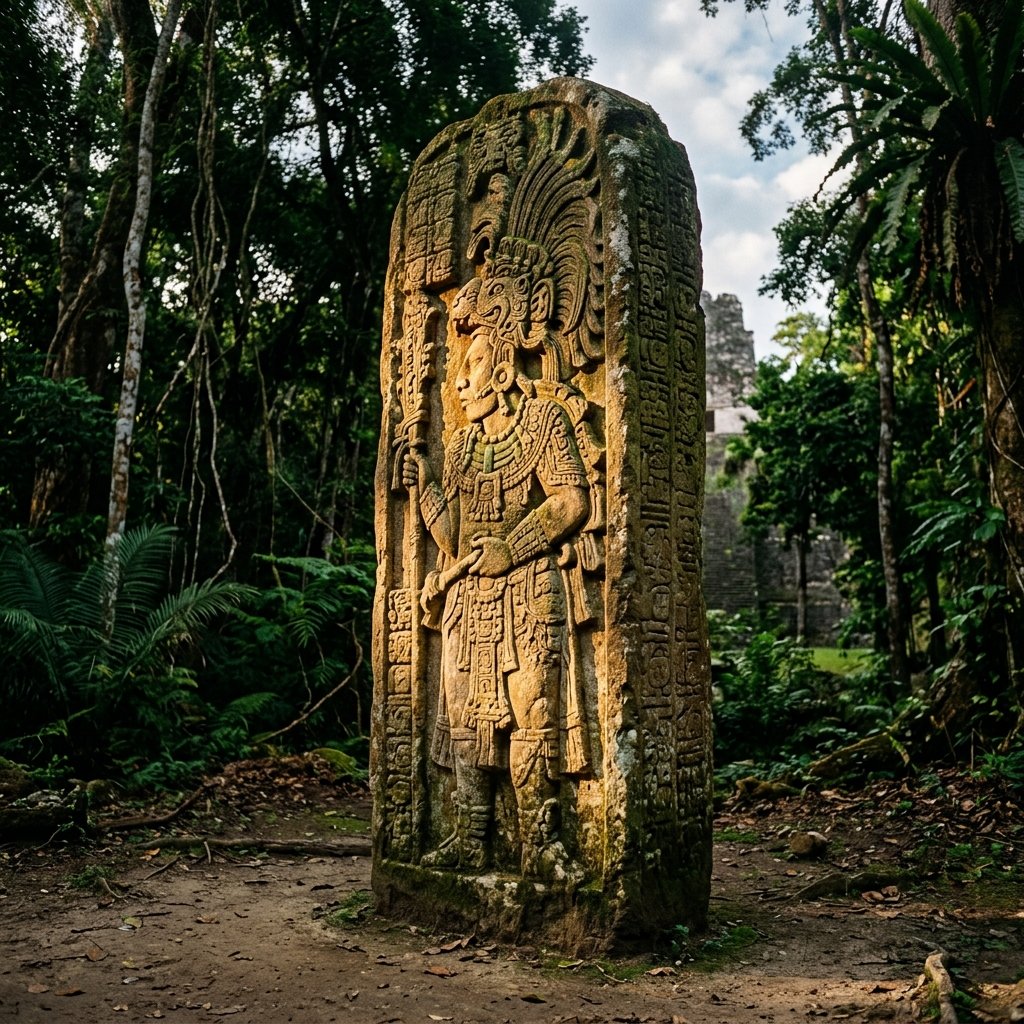
A Maya stela — the primary medium for royal inscriptions. These tall limestone slabs, often 2–4 meters high, were carved with the portrait of a ruler on one face and columns of hieroglyphic text recording his or her deeds, ancestry, and ritual activities on the sides and back. Stelae were typically erected at the end of k'atun cycles (periods of approximately 20 years) and served as permanent historical records placed in public plazas for all to see.
The Six Categories of Maya Symbols
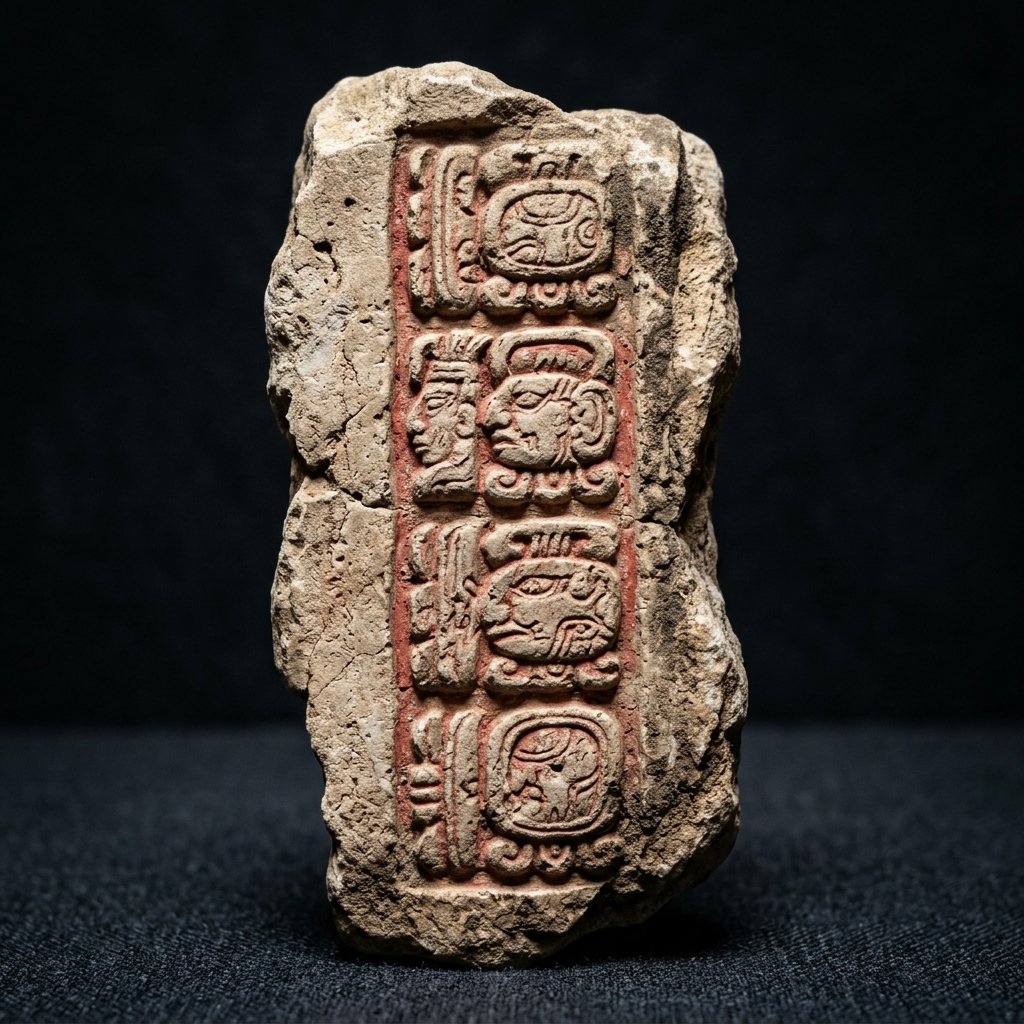
Hieroglyphic Writing
The full logo-syllabic writing system — used on stelae, lintels, pottery, codices, and temple walls to record dynastic history, astronomical observations, ritual events, and mythology. Over 800 glyphs, approximately 80% deciphered.
Explore Maya writing →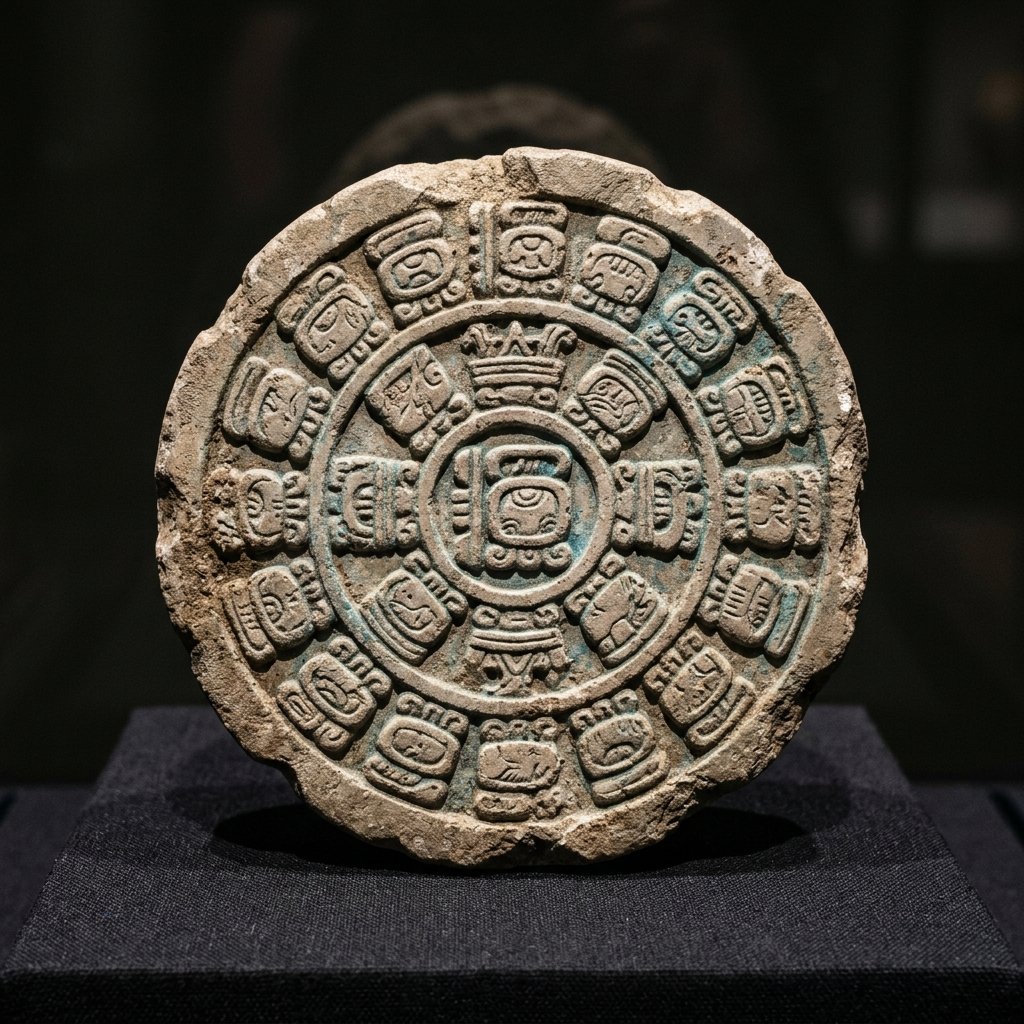
Calendar Glyphs
Specialized glyphs for each of the 20 Tzolk'in day signs, the 19 Haab' months, and the Long Count period markers. Among the most frequently encountered and most easily recognizable Maya symbols.
See the 20 day sign glyphs →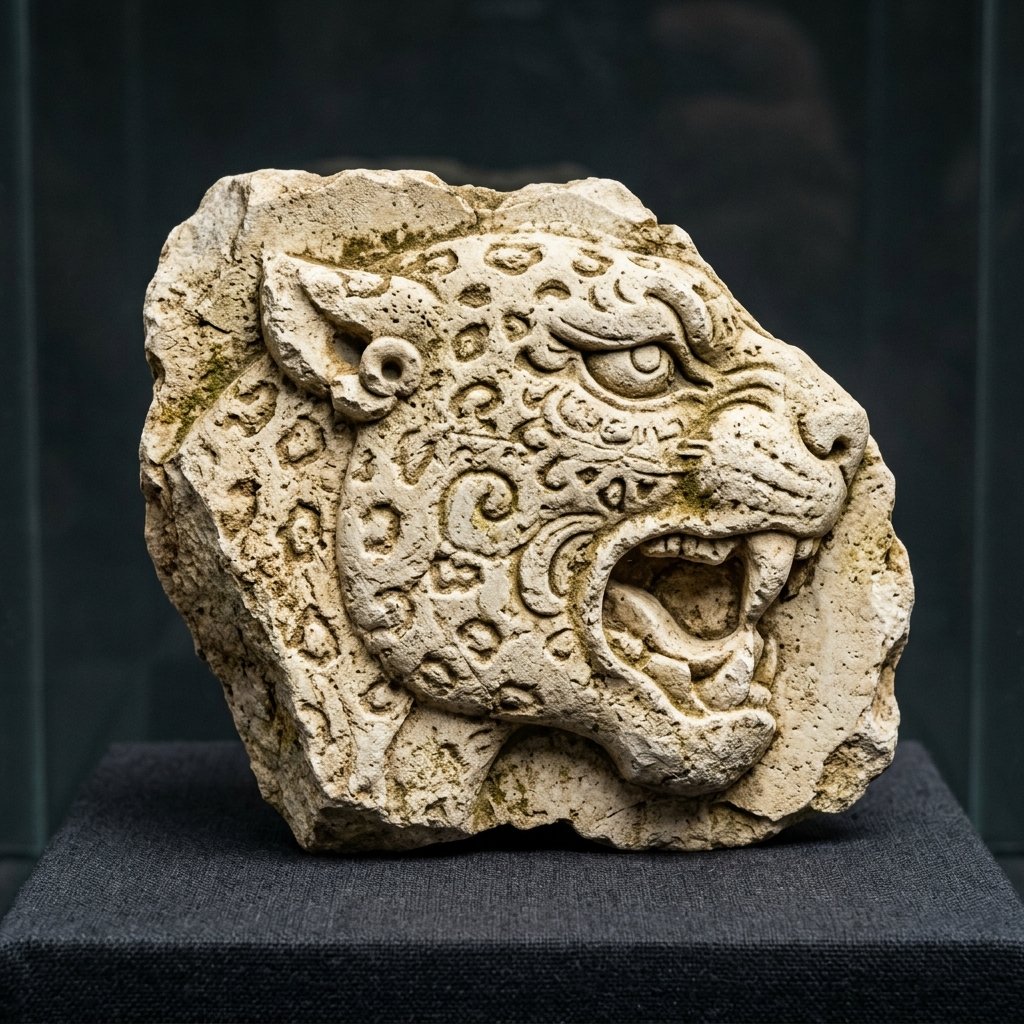
Animal Symbols
Jaguar, serpent, eagle, monkey, dog, bat, quetzal, and macaw — each carrying specific mythological, political, and calendrical significance. The jaguar signified night power and kingship; the serpent encoded cosmic vision; the quetzal embodied divine beauty.
Explore glyph meanings →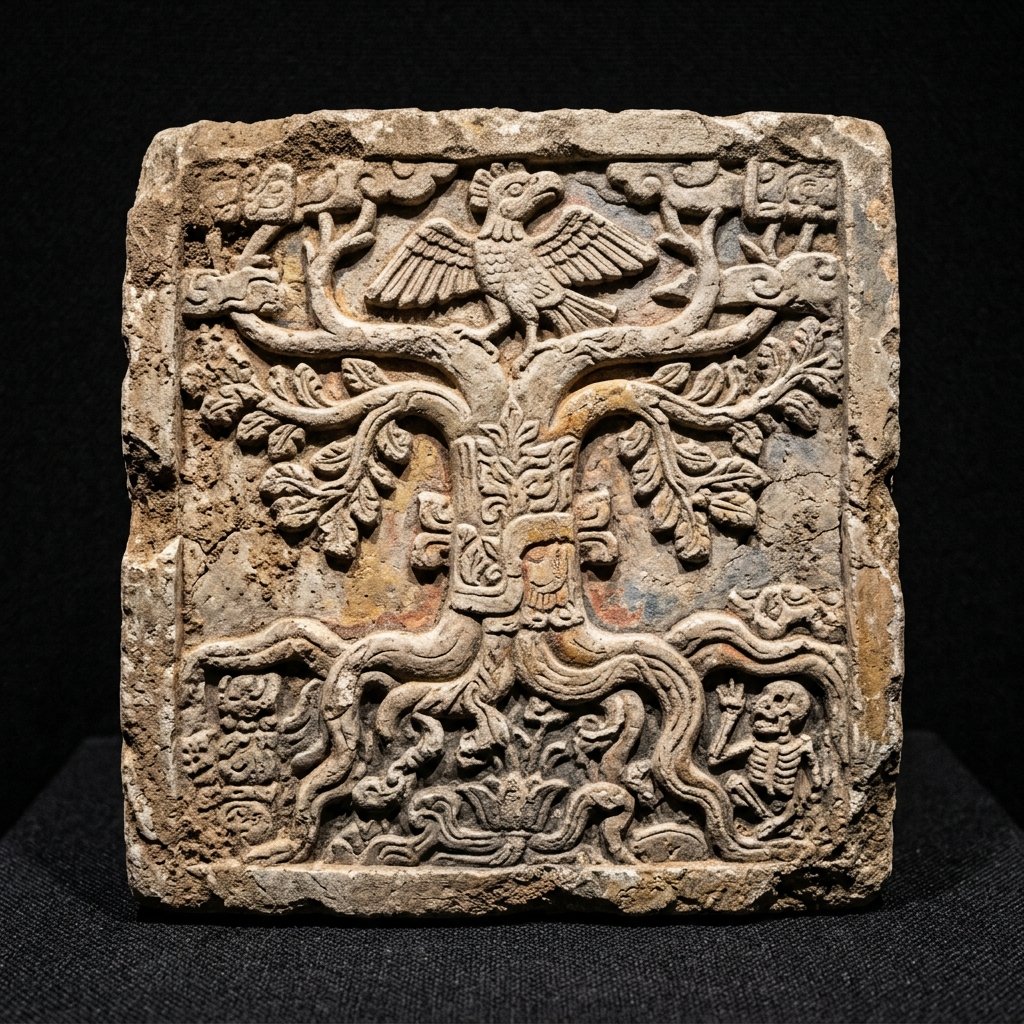
Cosmic Symbols
The World Tree (ceiba), the Vision Serpent, the Cosmic Monster, the k'in (sun/day/time) glyph, and the jade symbol — encoding the Maya three-tiered cosmos of heavens, earth, and underworld connected by a central axis.
Explore sacred geometry →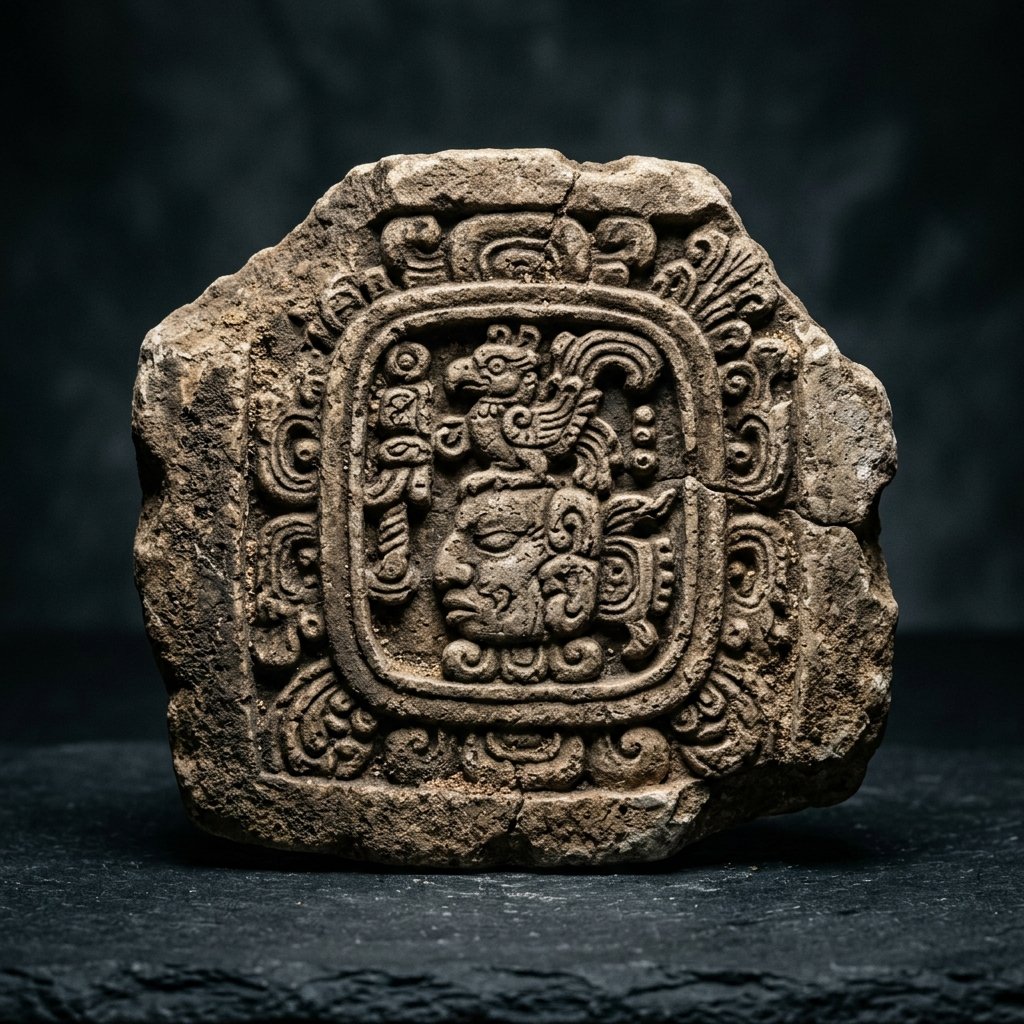
Royal Emblem Glyphs
Unique "logo" glyphs identifying specific Maya city-states and their ruling dynasties. Each major polity — Tikal, Palenque, Copán, Calakmul — had a distinctive emblem glyph, functioning as both a place-name and a declaration of political sovereignty.
Number Symbols
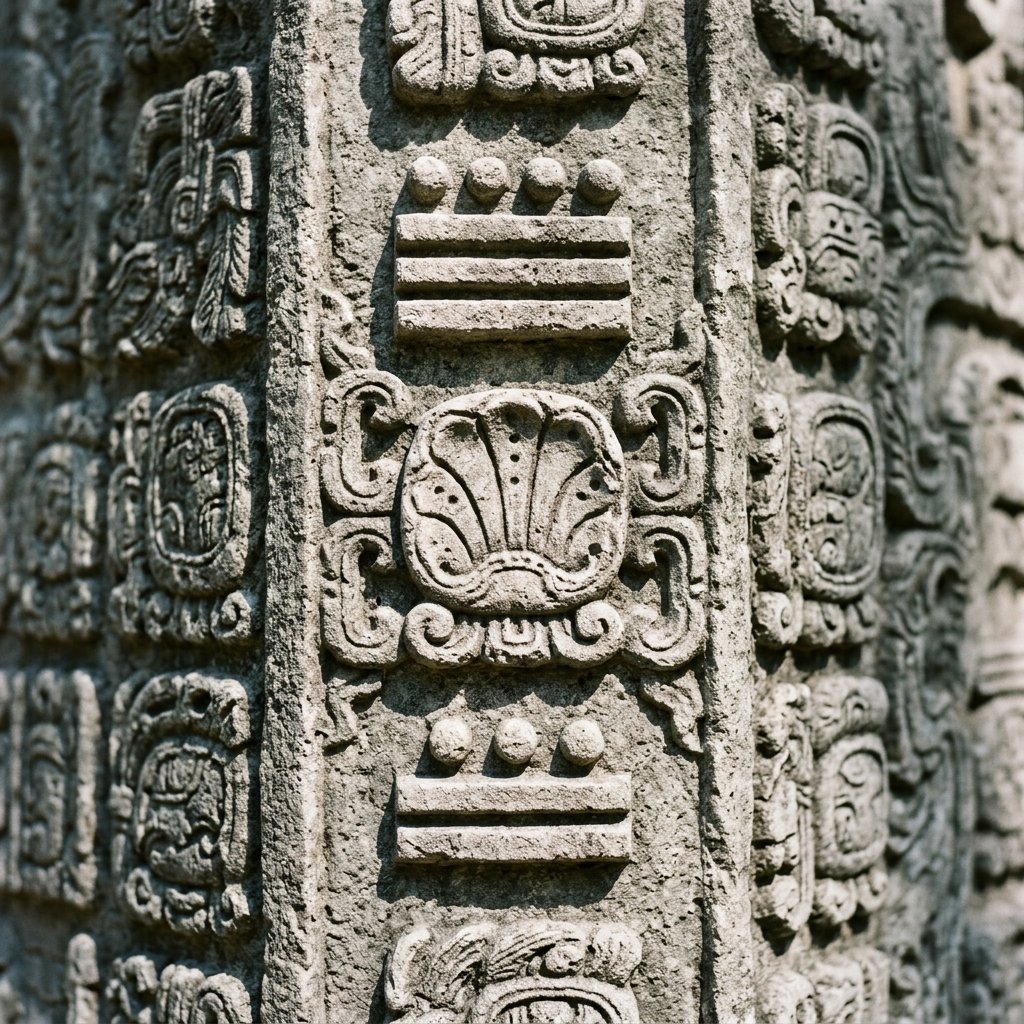
The Maya vigesimal (base-20) number system — one of the most elegant mathematical notations ever devised. Using just three symbols — a dot (1), a bar (5), and a shell glyph (0) — the Maya could express any number and were among the first civilizations to discover the concept of zero.
Learn Maya mathematics →Symbol Directory
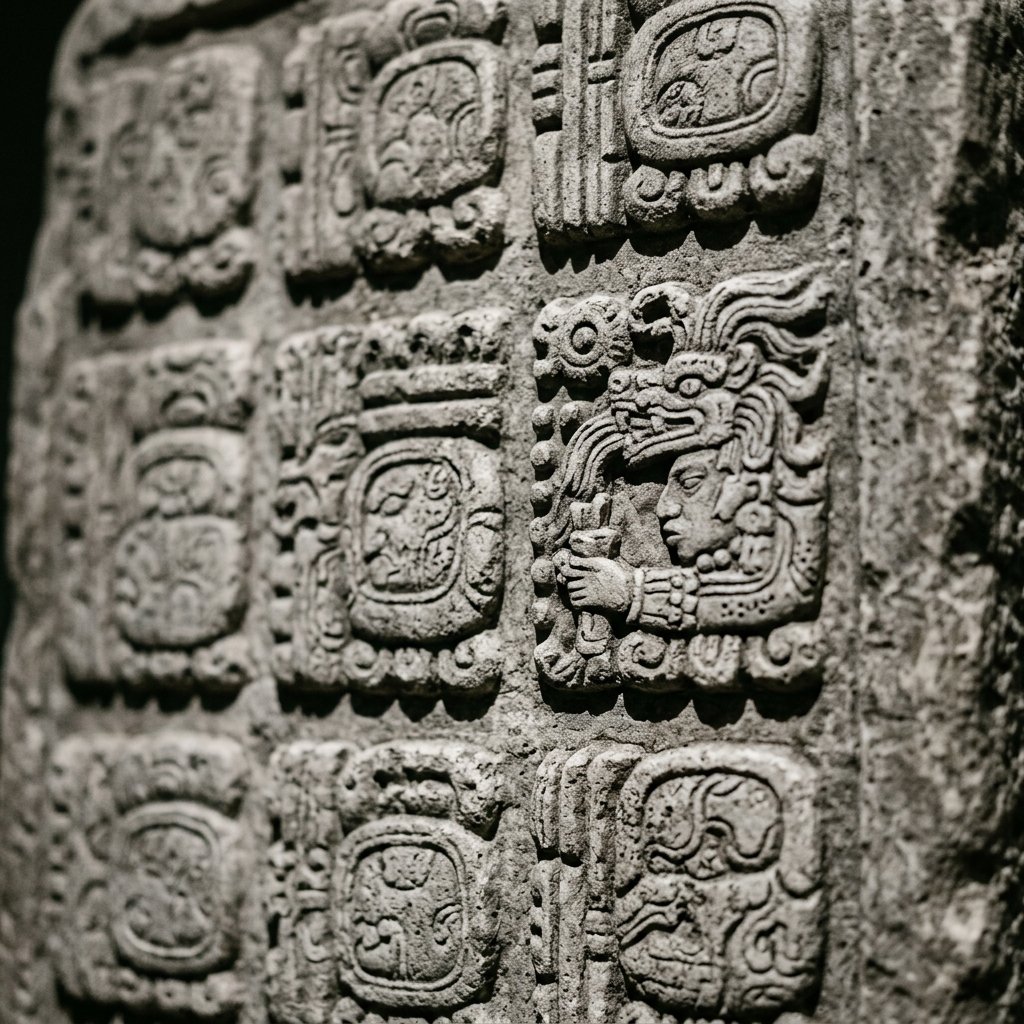
The Writing System
Reading the Stones
Epigraphy, Logo-Syllabic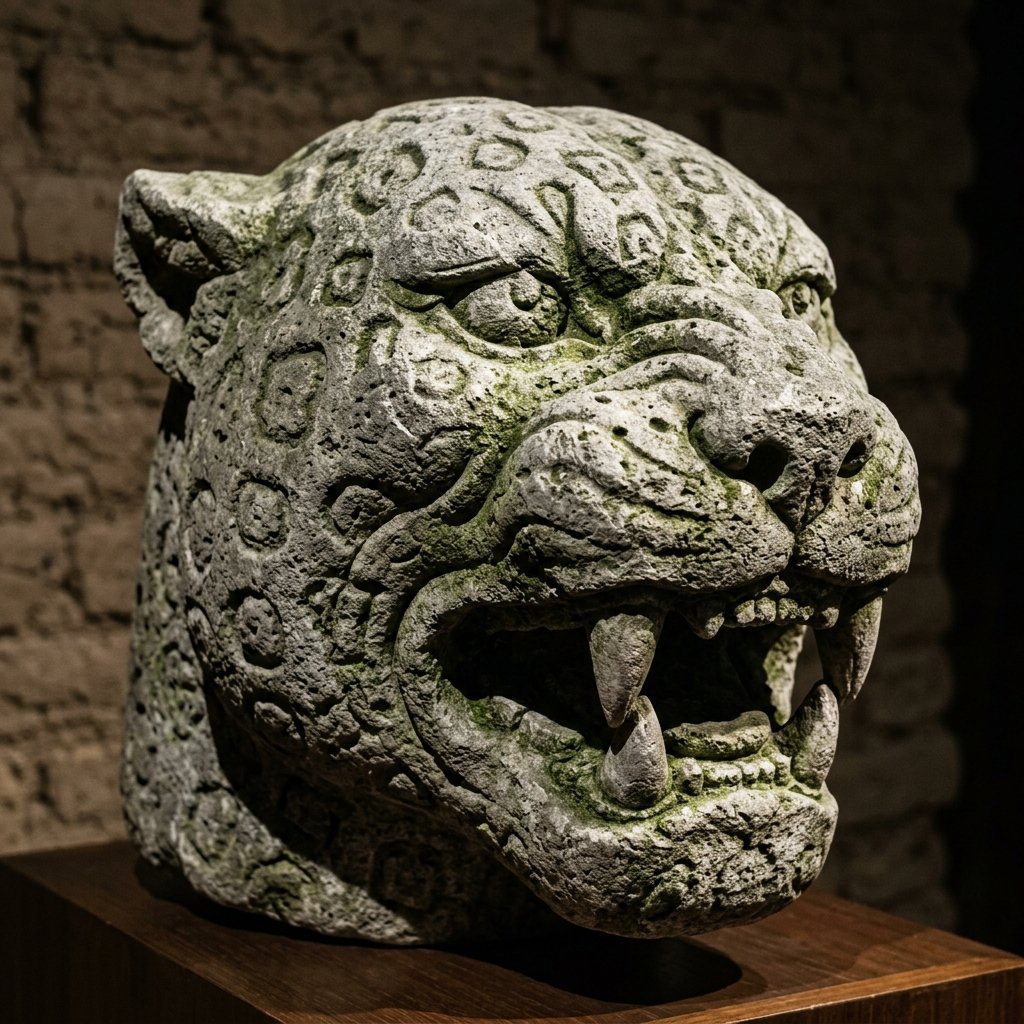
The Jaguar
Power & The Underworld
Royal Authority, Night Sun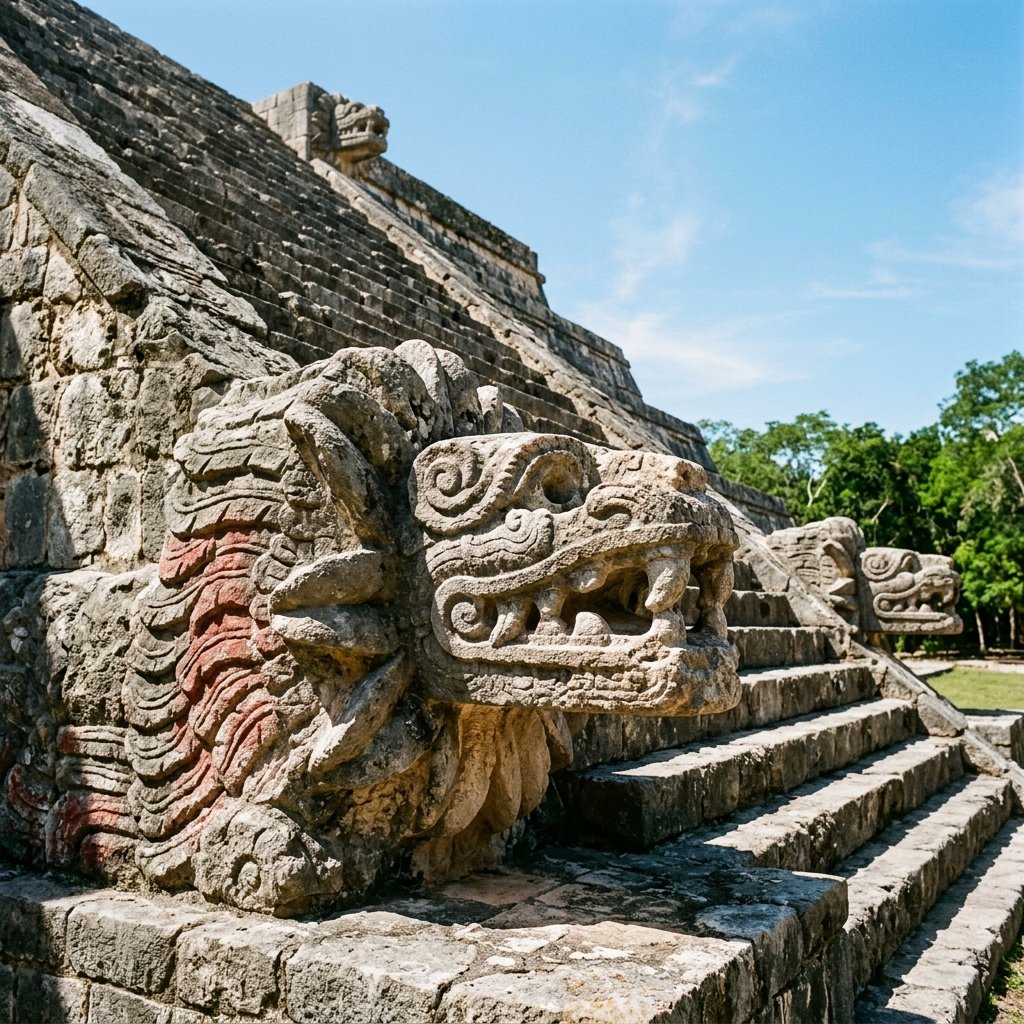
Feathered Serpent
Union of Earth & Sky
Creation, Duality, Wind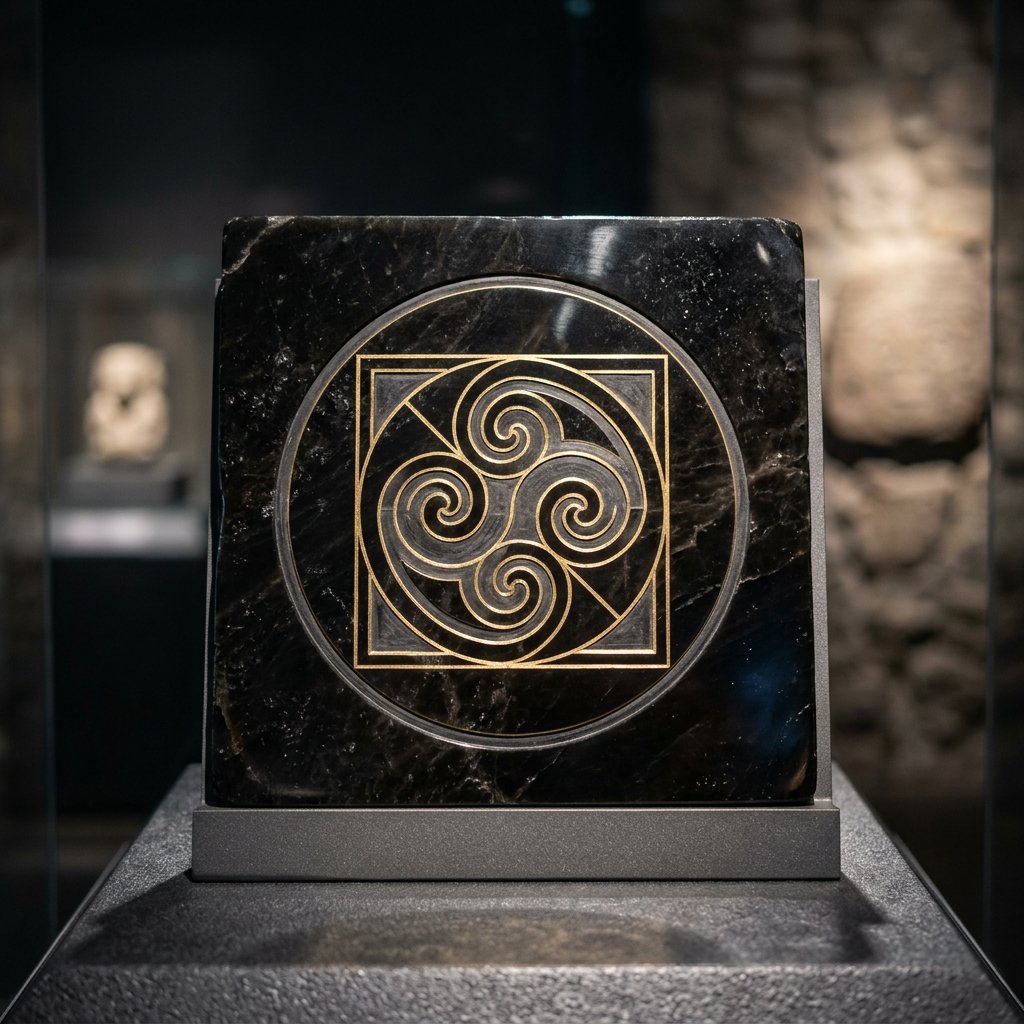
Hunab Ku
The Modern Cosmos Symbol
New Age Debunk, Unity Maya Numbers
Dot, Bar & Shell
Mathematics, Astronomy
The World Tree
Wakah-Chan
Cosmic Axis, Milky Way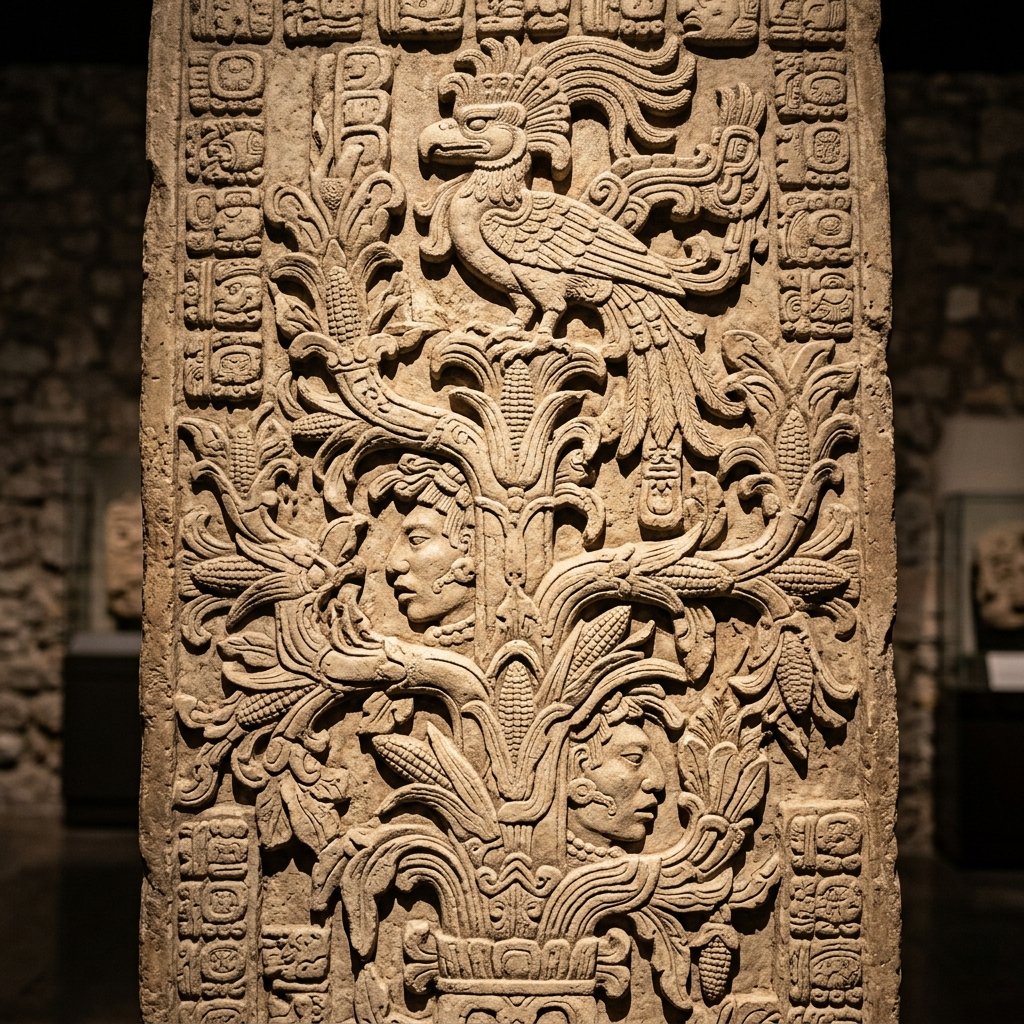
The Maya Cross
Foliated Maize Cross
Agriculture, Resurrection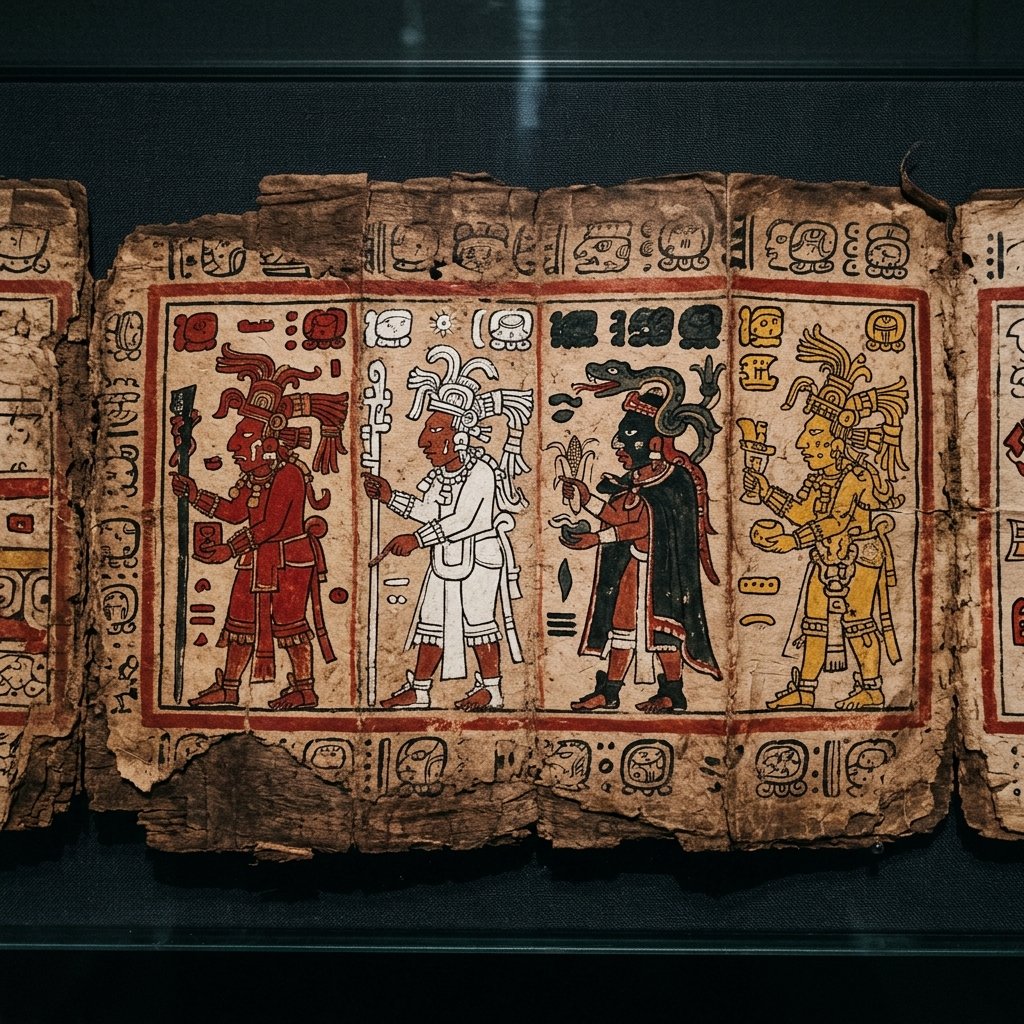
Directional Colors
Sacred Geography
Space, Maize, Ritual Alignment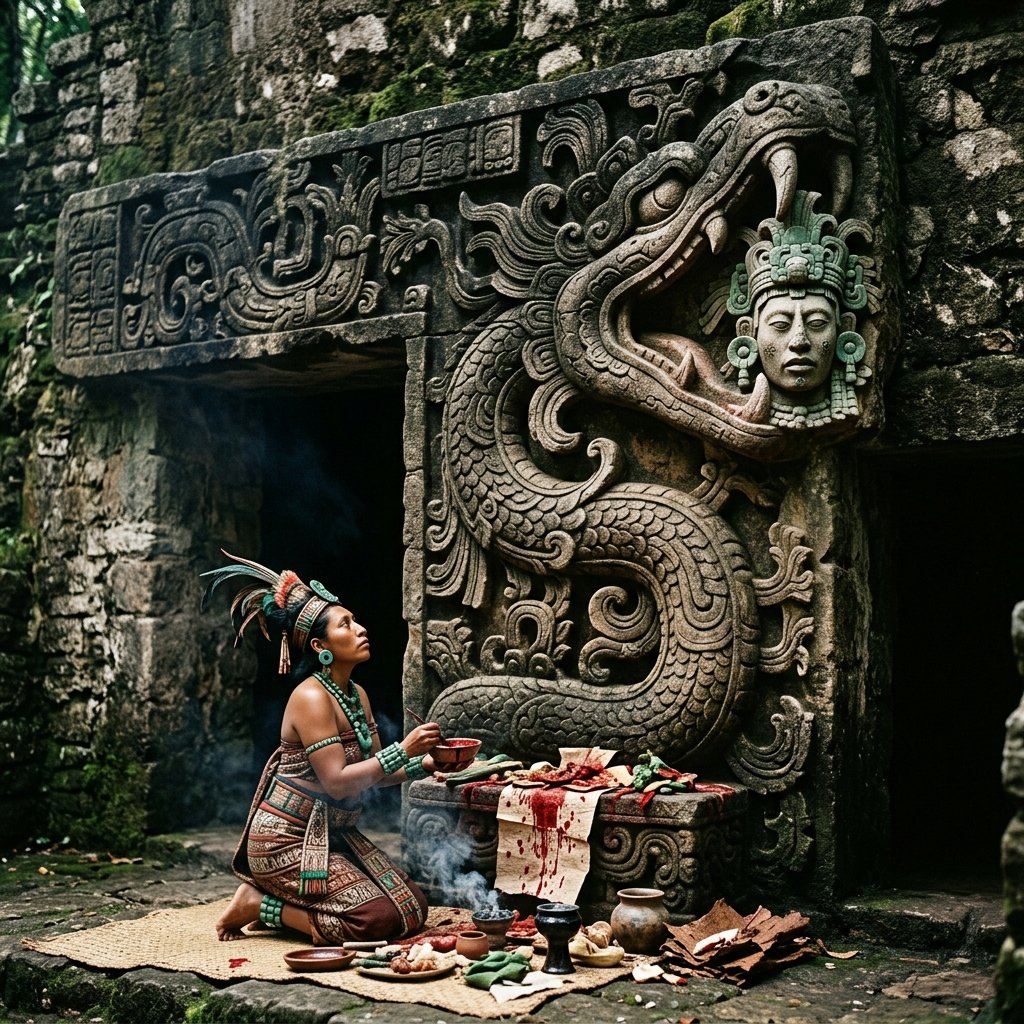
The Vision Serpent
Portal to Ancestors
Bloodletting, Prophecy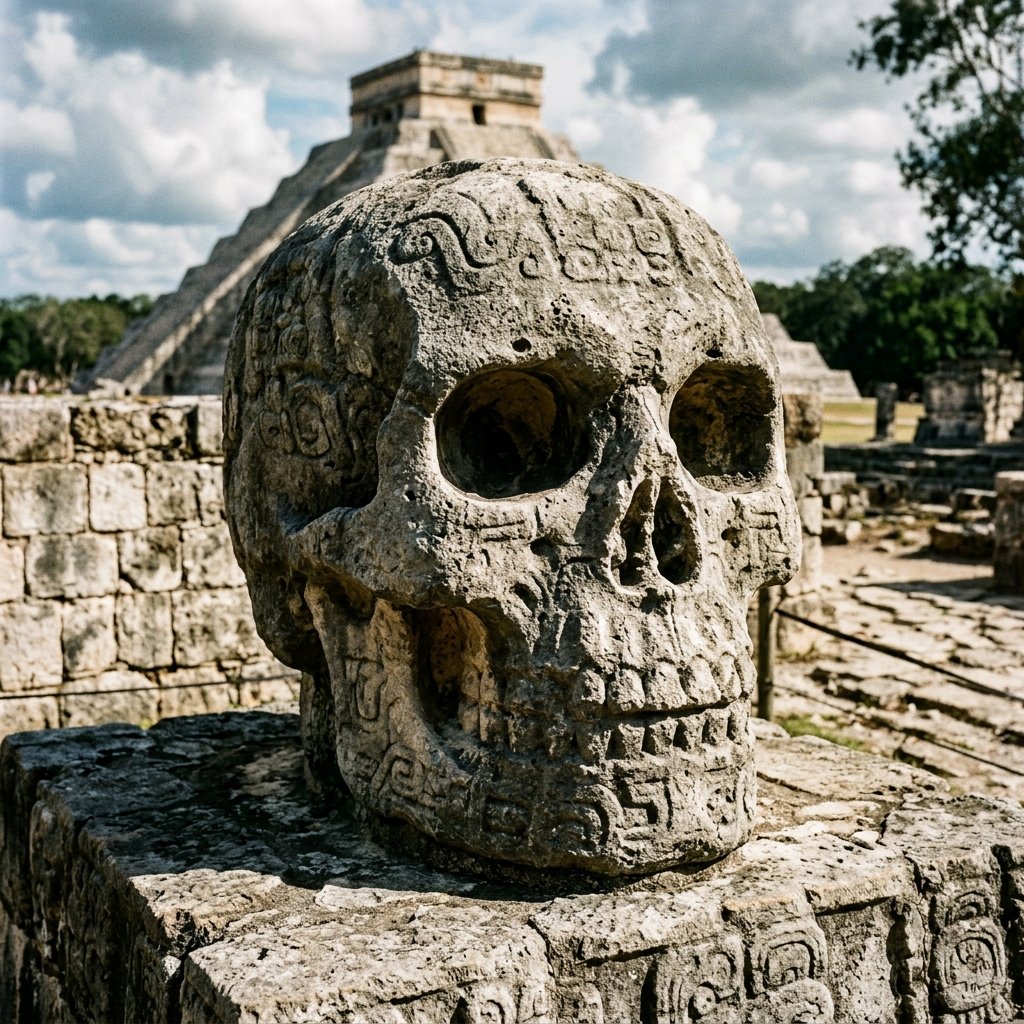
The Tzompantli Skull
Death & Regeneration
Underworld, Sacrifice, Seeds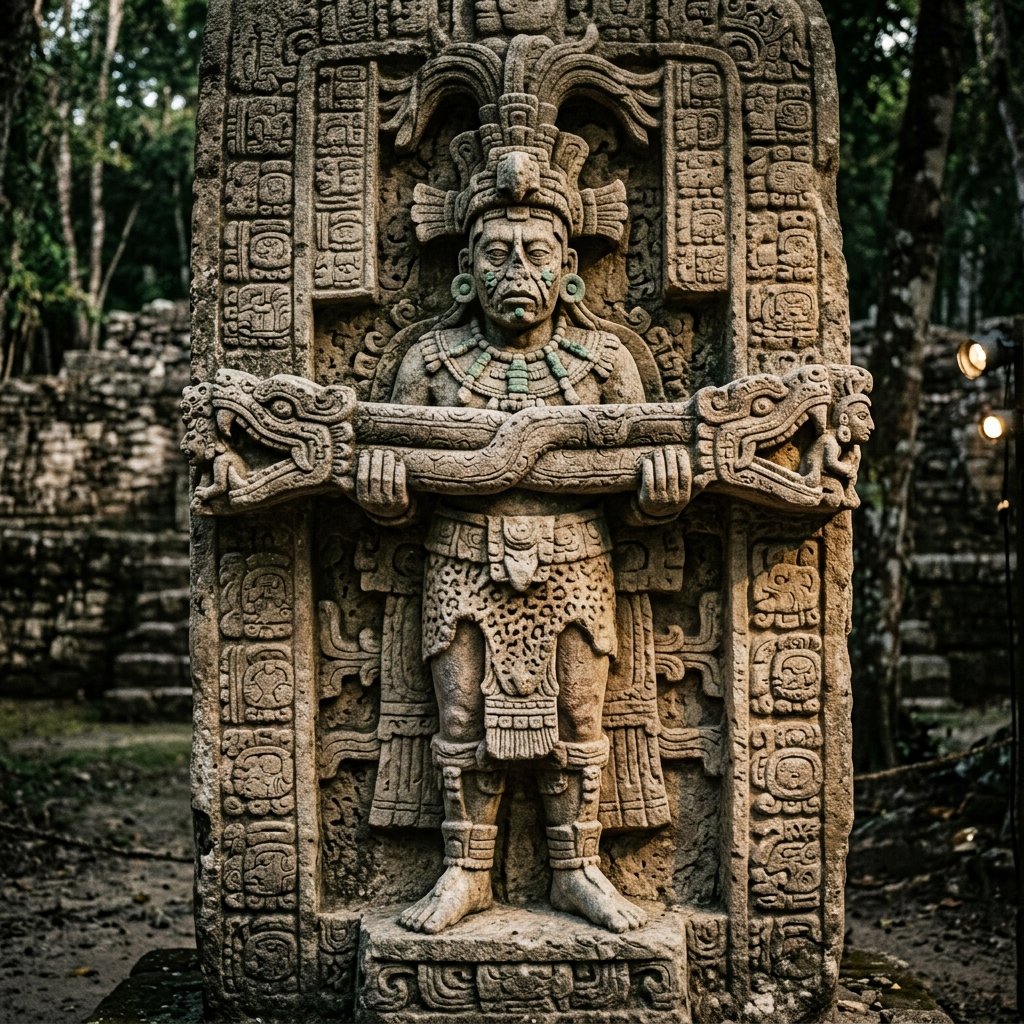
The Serpent Bar
Scepter of Kingship
Divine Authority, Ecliptic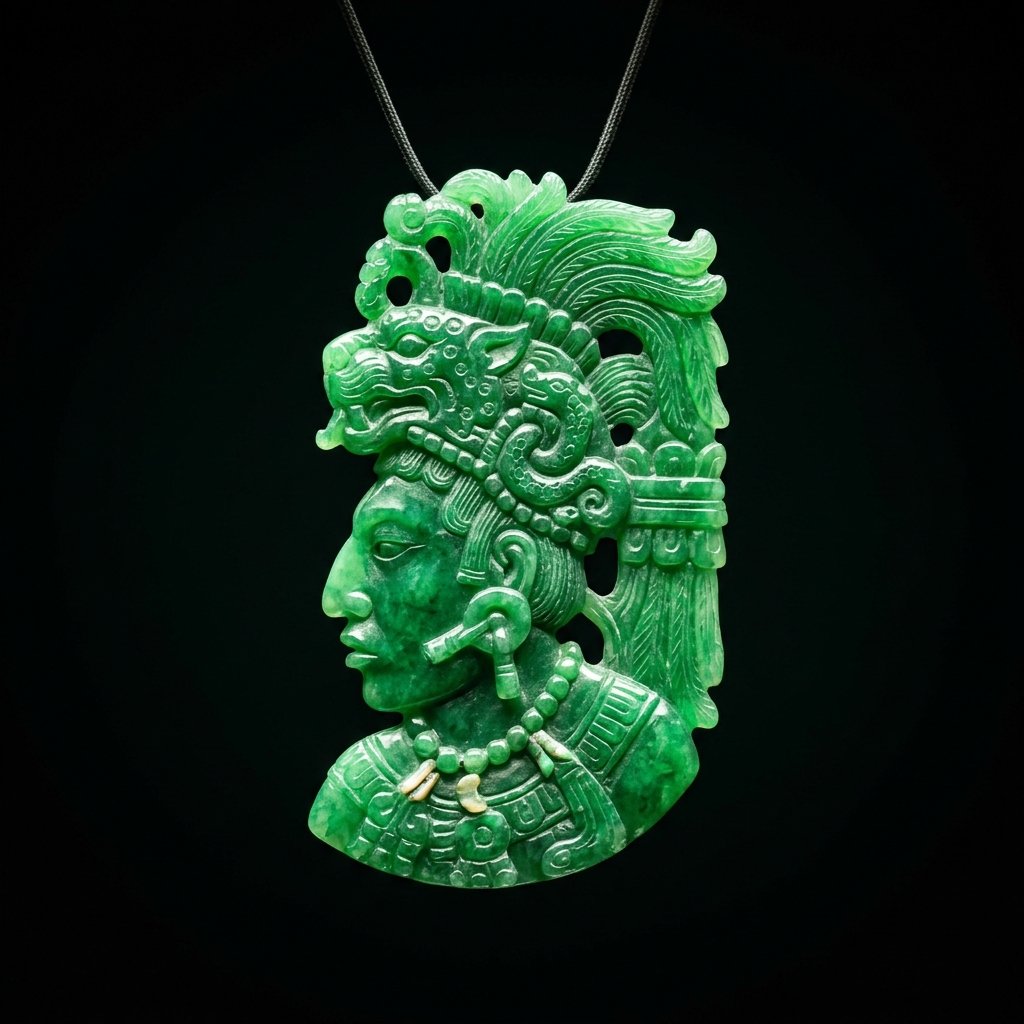
Jade
The Stone of Life
Breath, Water, Eternity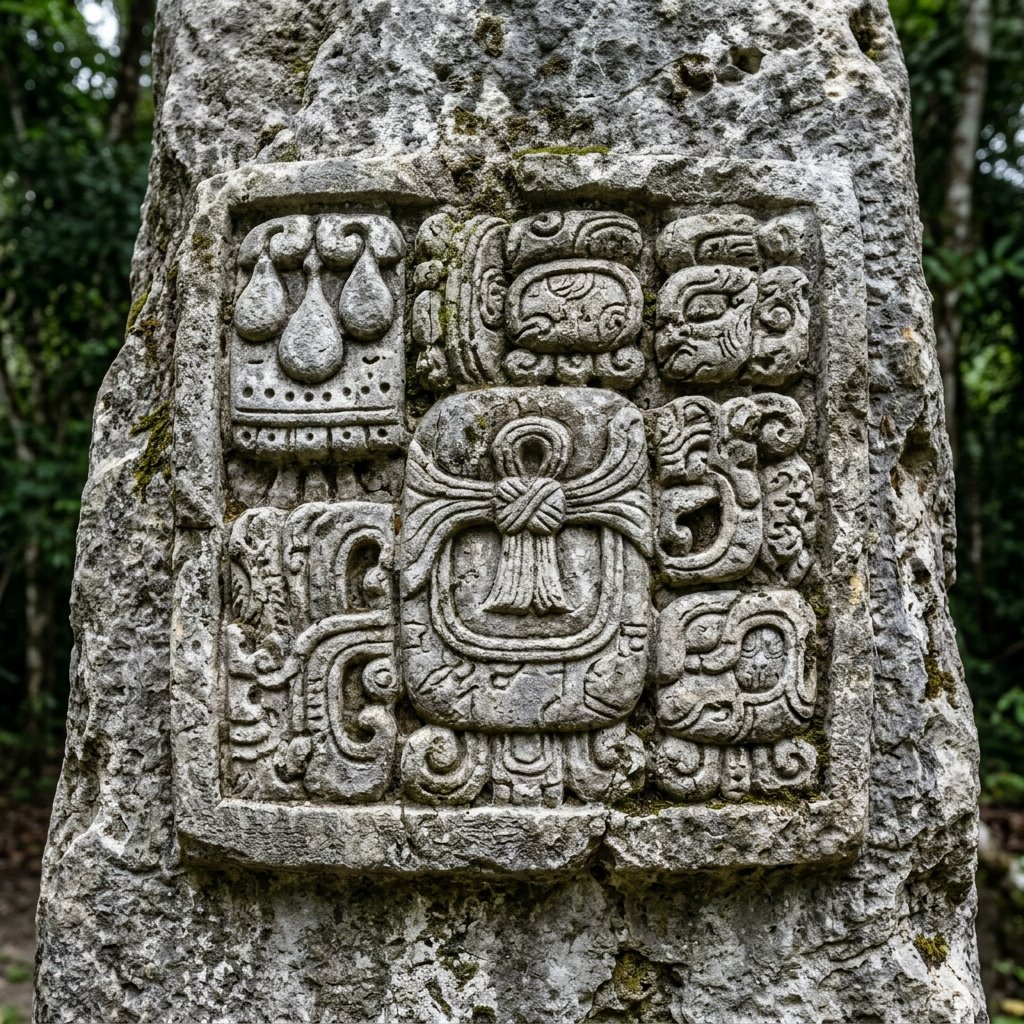
The Emblem Glyph
Royal Logo
City-States, Political History
Body Modification
The Painted Canvas
Tattoos, Cranial Shaping, Inlays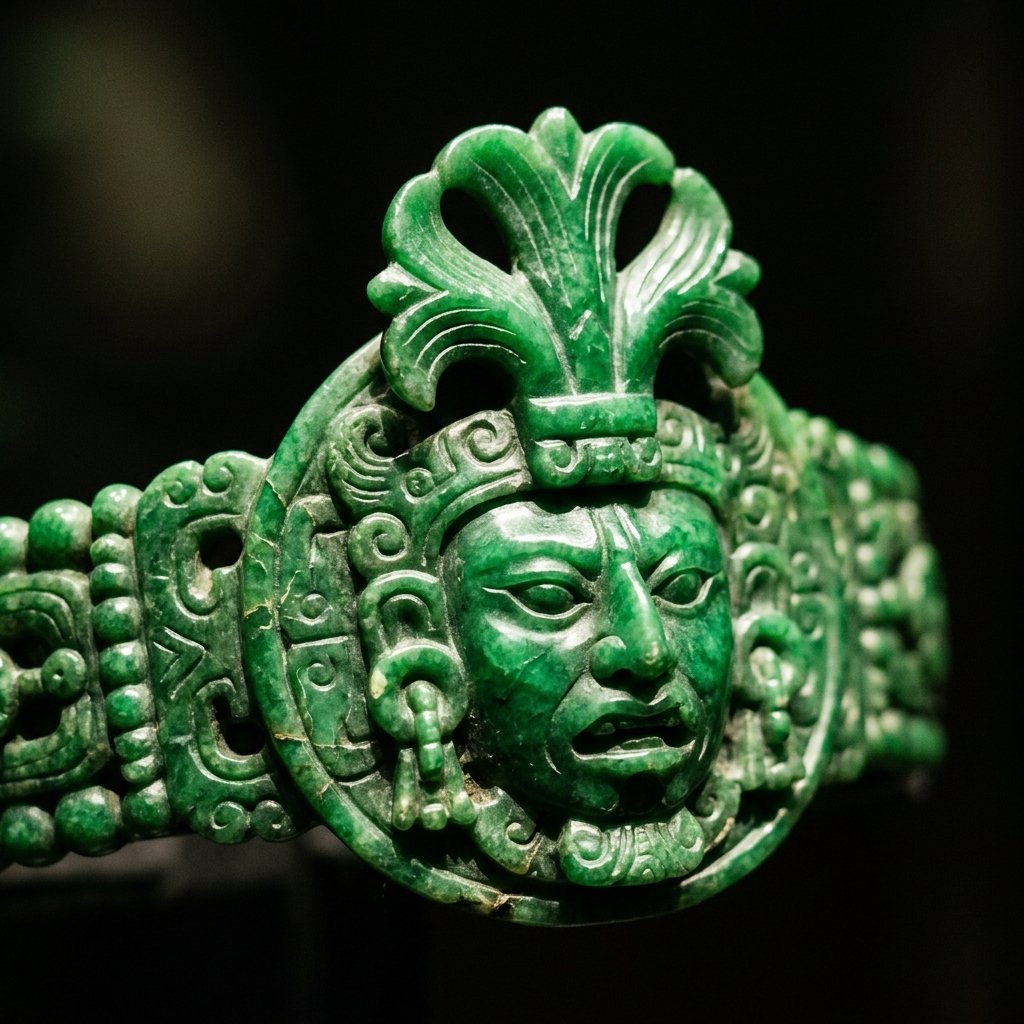
The Jester God
The Sak Huun Crown
Trefoil Headband, Royalty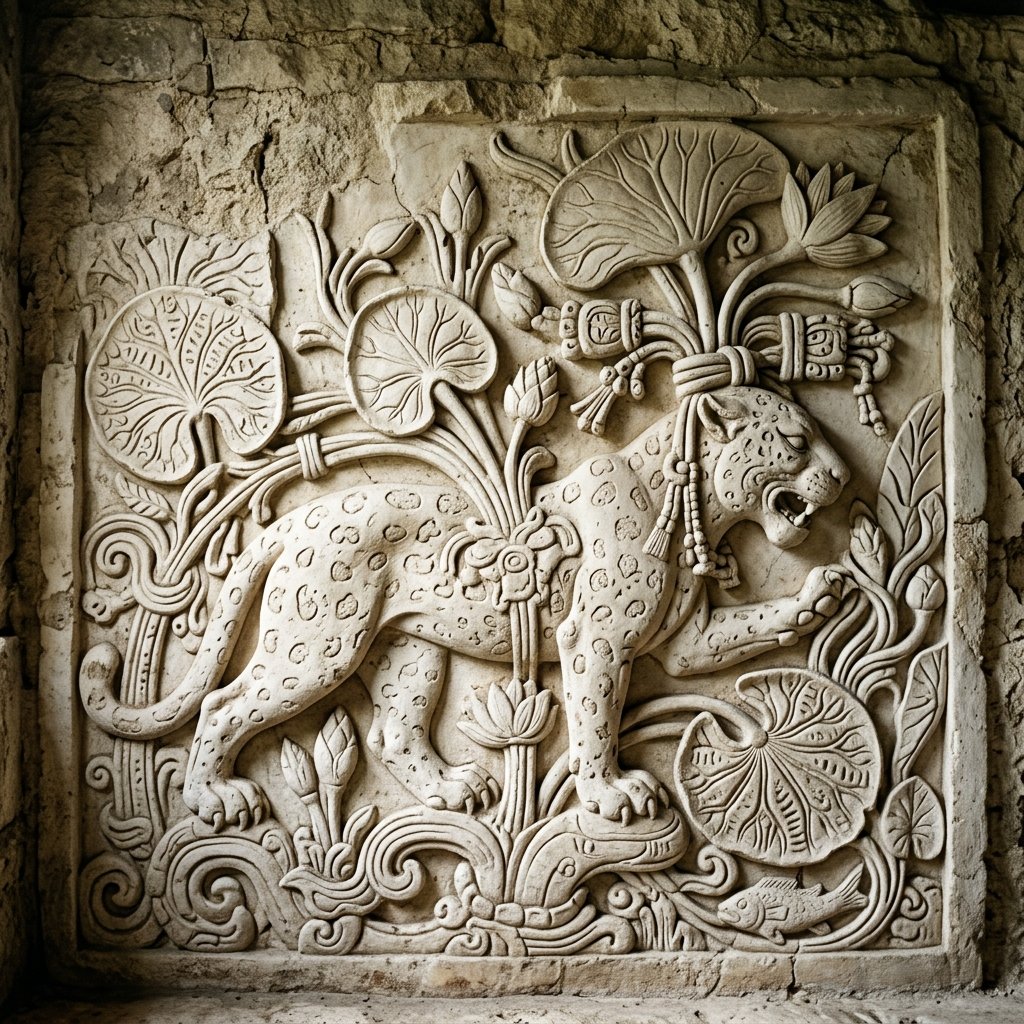
The Water Lily
Membrane of the Underworld
Standing Water, Jaguars, TranceThe Great Decipherment
For four centuries after the Spanish conquest, Maya glyphs were assumed to be purely symbolic or decorative — beautiful but unreadable. The decipherment of Maya writing is one of the great intellectual detective stories of the 20th century, achieved through the work of three remarkable scholars:
A Soviet linguist working from photographs in Leningrad (he never visited the Maya region), Knorosov published a groundbreaking paper in 1952 demonstrating that Maya glyphs were phonetic — that they recorded the sounds of spoken language, not just abstract ideas. His insight — that the glyphs worked syllabically, like Japanese kana — was initially rejected by Western scholars but ultimately proved correct, laying the foundation for the entire field of Maya epigraphy.
A Russian-born American archaeologist who proved in 1960 that Maya inscriptions recorded historical events — births, accessions, conquests, and deaths of real kings and queens. Before her work, scholars believed the inscriptions were purely astronomical or religious. Proskouriakoff demonstrated that they were history — that the Maya had recorded the equivalent of a royal archive in stone.
A child prodigy who began reading Maya glyphs at age eight and was awarded a MacArthur Fellowship at eighteen, Stuart has been the leading figure in Maya epigraphy for four decades. His decipherments have unlocked vast portions of the Maya historical record, revealing complex political relationships, ritual practices, and theological concepts previously unknown. His contributions span from the identification of royal names to the understanding of Maya concepts of time and cosmos (Stuart, D., The Order of Days: Unlocking the Secrets of the Ancient Maya, Harmony Books, 2011).
Where Maya Writing Was Used
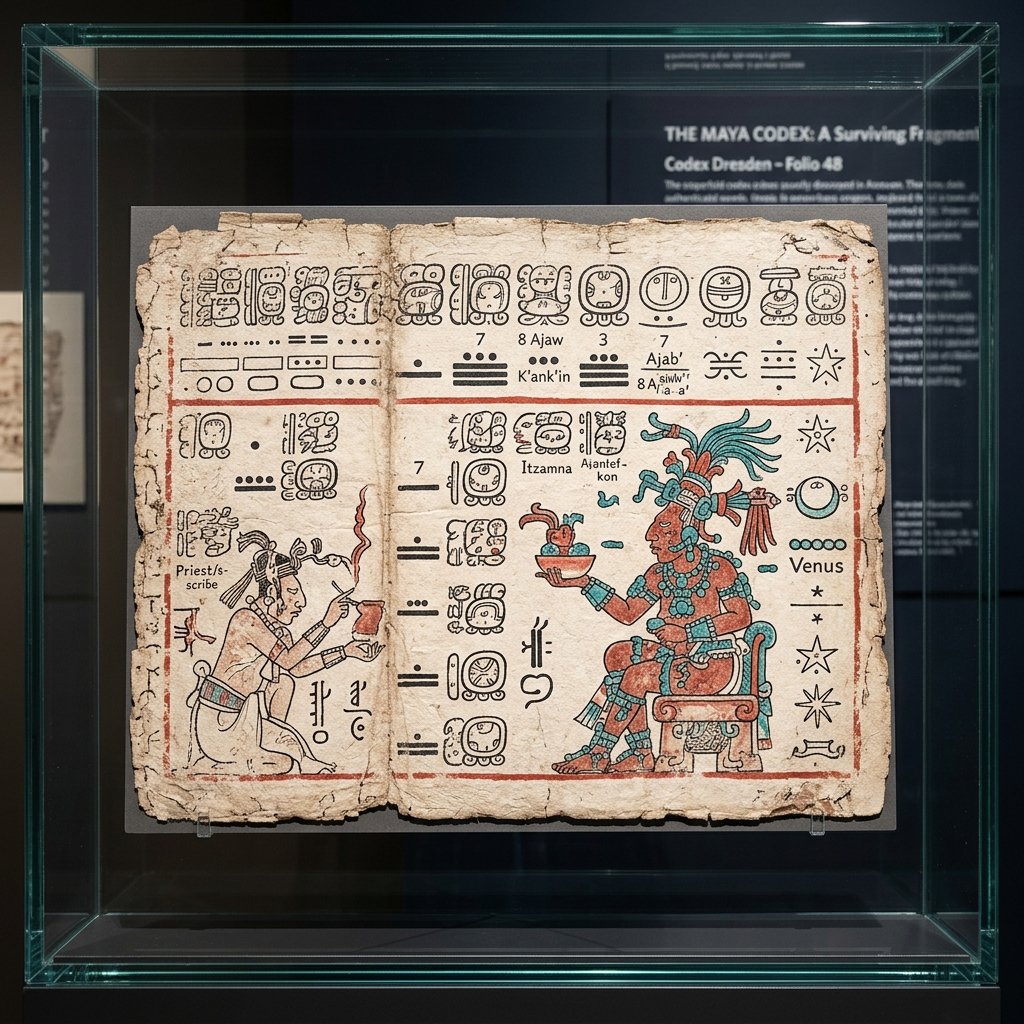
A page from a Maya codex — a folding bark-paper book. Of the thousands of codices that existed before the Spanish conquest, only four survive: the Dresden, Madrid, Paris, and Grolier codices. The systematic destruction of Maya books by colonial authorities represents one of the greatest cultural losses in human history. The surviving codices contain astronomical tables, ritual almanacs, and prophecy cycles that demonstrate the extraordinary precision of Maya intellectual achievement.
Maya writing appeared on virtually every surface the civilization produced:
- Stone monuments (stelae): Tall limestone slabs carved with royal portraits and historical texts, erected in public plazas
- Temple walls and lintels: Carved or stucco inscriptions on temple facades, doorway lintels, and interior walls
- Ceramic vessels: Painted pottery — particularly the polychrome cylinders of the Classic period — bearing mythological narratives, dedication texts, and the names of their owners
- Codices: Folding books of bark paper coated with lime plaster and painted with fine brushes — only four survive of the thousands that once existed
- Shell, bone, and jade: Luxury items inscribed with dedications, names, and ritual texts
- Wall paintings: Murals at sites like Bonampak, San Bartolo, and Calakmul that combine painted imagery with hieroglyphic captions
Emblem Glyphs: The Logos of Maya City-States
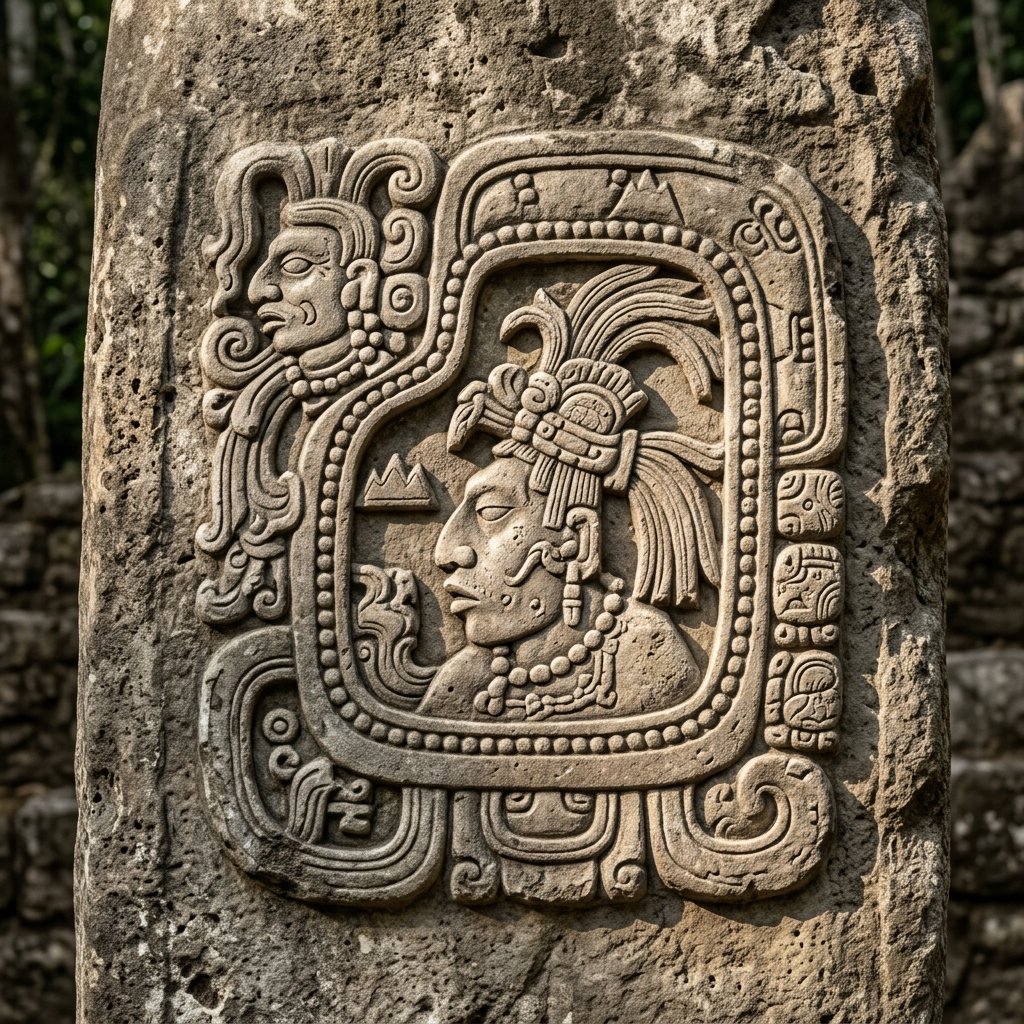
A Maya emblem glyph — the distinctive "logo" that identified a specific city-state and its ruling dynasty. Each major Maya polity had a unique emblem glyph that functioned simultaneously as a place-name and a declaration of political sovereignty. The German scholar Heinrich Berlin identified emblem glyphs in 1958, proving that Maya inscriptions contained geographical and political information — not merely astronomical data.
One of the most important categories of Maya symbols is the emblem glyph — a compound sign that identifies a specific city-state and its ruling dynasty. First identified by Heinrich Berlin in 1958, emblem glyphs typically consist of a "water-group" prefix, the logogram k'uhul ("divine" or "holy"), and a main sign unique to each polity. Together, they read as "Divine Lord of [City]" — a royal title that simultaneously named a place and asserted sovereign authority.
The identification of emblem glyphs transformed Maya archaeology. Before Berlin's discovery, scholars had no way to determine which city produced a given inscription. After it, the entire political landscape of the Maya world became visible — a network of competing city-states, each with its own dynastic history, alliances, and rivalries, recorded in stone for posterity.
Explore the Symbol Categories
References
- Coe, M.D. Breaking the Maya Code. Thames & Hudson, 2012 (3rd edition).
- Coe, M.D. & Van Stone, M. Reading the Maya Glyphs. Thames & Hudson, 2005.
- Houston, S., Chinchilla, O. & Stuart, D. The Decipherment of Ancient Maya Writing. University of Oklahoma Press, 2001.
- Stuart, D. The Order of Days: Unlocking the Secrets of the Ancient Maya. Harmony Books, 2011.
Frequently Asked Questions
Can you read Maya hieroglyphs?
Yes — approximately 80% of known Maya glyphs have been deciphered by modern scholars. The Maya script is logo-syllabic, meaning glyphs can represent whole words (like Chinese characters) or individual syllables (like Japanese kana). Decipherment accelerated dramatically after the 1950s, and new readings are still being proposed and confirmed regularly. The remaining undeciphered 20% consists mainly of rare or damaged signs.
How many Maya symbols are there?
Over 800 distinct glyphs have been catalogued in the Maya writing system, though many are variants, regional forms, or stylistic versions of the same signs. The core writing system used approximately 500 signs in regular rotation — a number comparable to the Chinese character set needed for basic newspaper literacy. This complexity reflects not a deficiency but a strength: the system's flexibility allowed scribes extraordinary creative expression.
Why were so few Maya books saved?
The Maya produced thousands of codices (folding bark-paper books), but only four survive. The vast majority were deliberately burned by Spanish colonial authorities, particularly by Bishop Diego de Landa, who ordered a mass burning at Maní, Yucatan, in July 1562. Landa later wrote: "We found a large number of books... and as they contained nothing in which there were not to be seen superstition and lies of the devil, we burned them all." This single act destroyed an incalculable portion of Maya literary heritage.
Is Maya writing related to Egyptian hieroglyphs?
No — Maya writing was independently invented, with no connection to Egyptian, Sumerian, or any Old World writing system. The superficial visual similarity (both use pictorial signs) is coincidental — a case of convergent evolution. Maya writing is one of only five writing systems in human history that were invented from scratch, making it one of the rarest intellectual achievements in the human record.