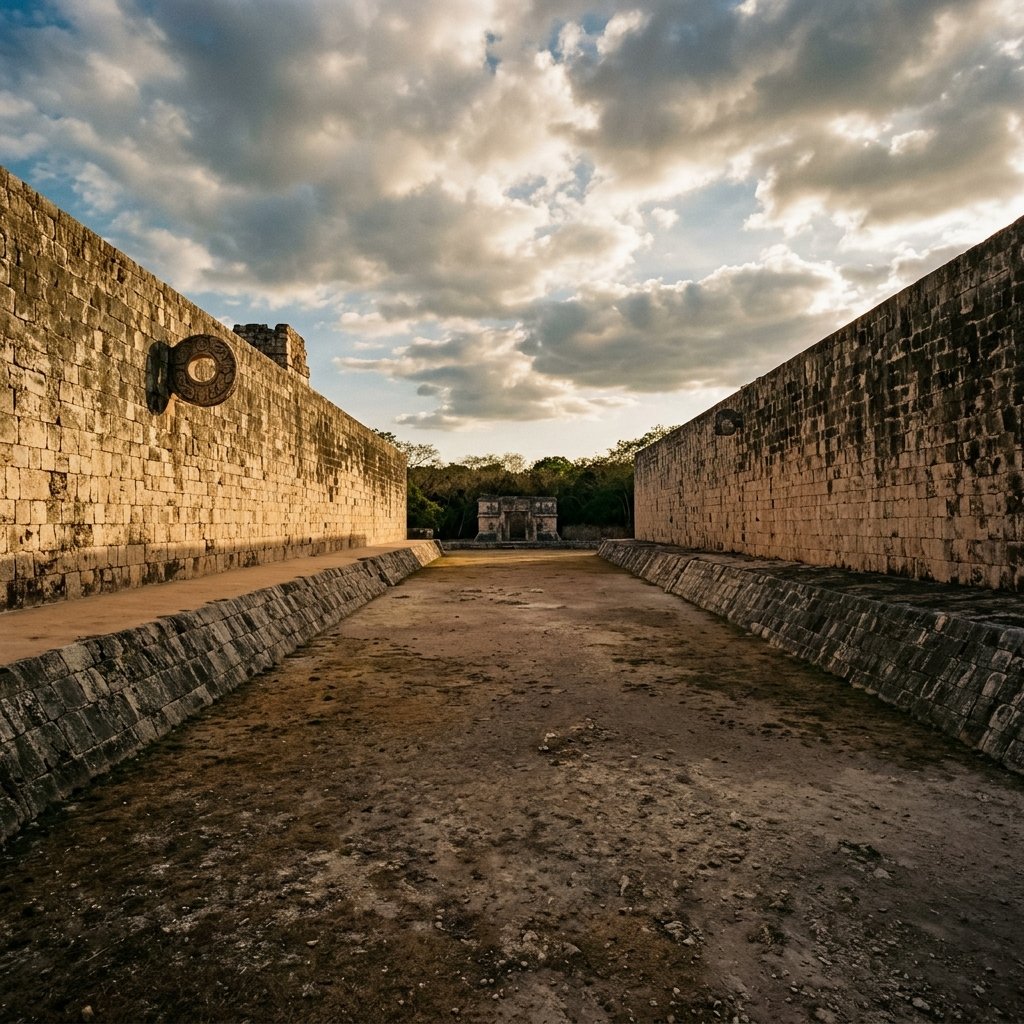
The Hero Twins at a Glance
"They did not conquer death by avoiding it. They did not escape the underworld by running from it. They walked into Xibalba knowing they would die — and they died voluntarily, willingly, with strategic purpose. And from that death, they came back. This is the most radical theological proposition in pre-Columbian America: death can be defeated, but only by dying."
The Greatest Story in the Americas
The story of the Hero Twins — Hunahpú and Xbalanqué — occupies the central section of the Popol Vuh, the K'iche' Maya creation epic, and constitutes what is arguably the greatest narrative achievement of pre-Columbian American literature. It is simultaneously a creation myth (explaining the origin of the sun and moon), an agricultural allegory (encoding the maize cycle), a political charter (legitimizing royal descent), and a profound philosophical meditation on the nature of death, sacrifice, and transformation.
What elevates the Hero Twins narrative above simple myth is its intellectual sophistication. The twins do not defeat the lords of death through superior violence or divine intervention — they defeat them through intelligence, preparation, and voluntary sacrifice. As Dennis Tedlock observes in his authoritative translation, the Hero Twins' story teaches that "wit triumphs over power, and that the willingness to accept death is the only path to overcoming it" (Tedlock, D., Popol Vuh: The Definitive Edition of the Mayan Book of the Dawn of Life, Simon & Schuster, 1996, p. 44).
Part I: The Father's Fall
The story begins not with the twins themselves but with their father — Hun Hunahpú (One Hunahpú), the Maize God. He and his brother Vucub Hunahpú (Seven Hunahpú) are passionate ball players whose thunderous games on the surface of the earth disturb the lords of Xibalba — the underworld — who demand they descend to play against them.
But the brothers are unprepared. They fail the lords' first test (greeting mannequins they mistake for real lords), sit on a burning bench they believe is a mere seat, and are outmaneuvered at every turn. The lords of Xibalba sacrifice them. Hun Hunahpú's head is severed and hung in a calabash tree — a macabre trophy that merges with the fruit until the tree appears to bear calabash gourds that are, in fact, the Maize God's skull.
A maiden named Xquic ("Blood Woman") approaches the forbidden tree. The skull speaks to her and spits into her palm, miraculously impregnating her. Fleeing Xibalba to escape the wrath of the death lords, she ascends to the surface world, where she gives birth to the Hero Twins: Hunahpú ("One Blowgunner") and Xbalanqué ("Jaguar Sun" or "Hidden Sun").
Part II: The Defeat of Seven Macaw
Before confronting Xibalba, the young twins must first deal with a threat on the earth's surface: Vucub Caquix (Seven Macaw), a vain, powerful bird-deity who claims falsely to be the sun and the moon. His pretension is literally cosmic — he declares himself the light of the world when in fact the true sun and moon do not yet exist.
The twins defeat Seven Macaw through cleverness rather than force. They shoot him with blowguns, wounding his jaw (destroying his beautiful turquoise teeth, the source of his vanity), and then convince two elderly healers (actually divine beings in disguise) to remove his remaining teeth and eyes under the pretext of curing him — effectively stripping him of the very attributes he used to impersonate the sun.
The episode establishes a pattern that will repeat throughout the narrative: the twins use intelligence, deception, and preparation — never brute force — to overcome enemies who are stronger than they are. As the Mayanist Allen Christenson notes, this "trickster" quality is "not a moral failing but a theological virtue" in the Popol Vuh — the gods themselves endorse cleverness as the highest form of power (Christenson, A.J., Popol Vuh: The Sacred Book of the Maya, University of Oklahoma Press, 2007, p. 128).
Part III: The Descent into Xibalba
Like their father, the twins become passionate ball players — and like their father, their games disturb the lords of Xibalba, who summon them to the underworld. But unlike their father, they are prepared. They know the story of their father's failure. They know the lords' tricks. And they send a messenger ahead — a mosquito — to spy on Xibalba, learning the names of every death lord before they arrive.
This detail is significant: in Maya thought, knowing someone's name gives you power over them. By learning the lords' names in advance, the twins arrive with a strategic advantage their father never had. When they enter Xibalba's council chamber, they correctly identify and greet every lord by name — passing the first test that their father failed.
The Six Houses of Trial
The lords of Xibalba subject the twins to a gauntlet of six deadly trials — each set in a nightmarish "house" designed to kill those who enter. Where their father died in the first such test, the twins survive every one through resourcefulness and lateral thinking:
Total darkness. The lords provide a torch and cigars that must remain lit until morning — but burning them would consume them entirely. The twins place fireflies on the tips of the torch and cigars, creating the illusion of burning without actual combustion. They return the items intact at dawn.
Filled with obsidian blades that slash ceaselessly. The twins bargain with the blades themselves, promising that they will one day cut the flesh of animals — and the blades stop moving. (This etiological detail explains why obsidian is used for cutting.)
Killing cold, filled with hail and freezing wind. The twins build fires of pine wood and survive the night.
Filled with ravenous jaguars. The twins feed them bones instead of their own flesh — satisfying the animals' hunger with a substitute.
Filled with consuming fire. Where others would burn, the twins survive without being consumed — their divine nature protecting them.
Filled with deadly bats, including the monstrous Camazotz ("Death Bat"). This is the trial where the twins suffer their greatest setback: Hunahpú peeks above the edge of his blowgun (where they are hiding) and Camazotz decapitates him, carrying his head to the ball court.
Part IV: Death and Resurrection — The Heart of the Story
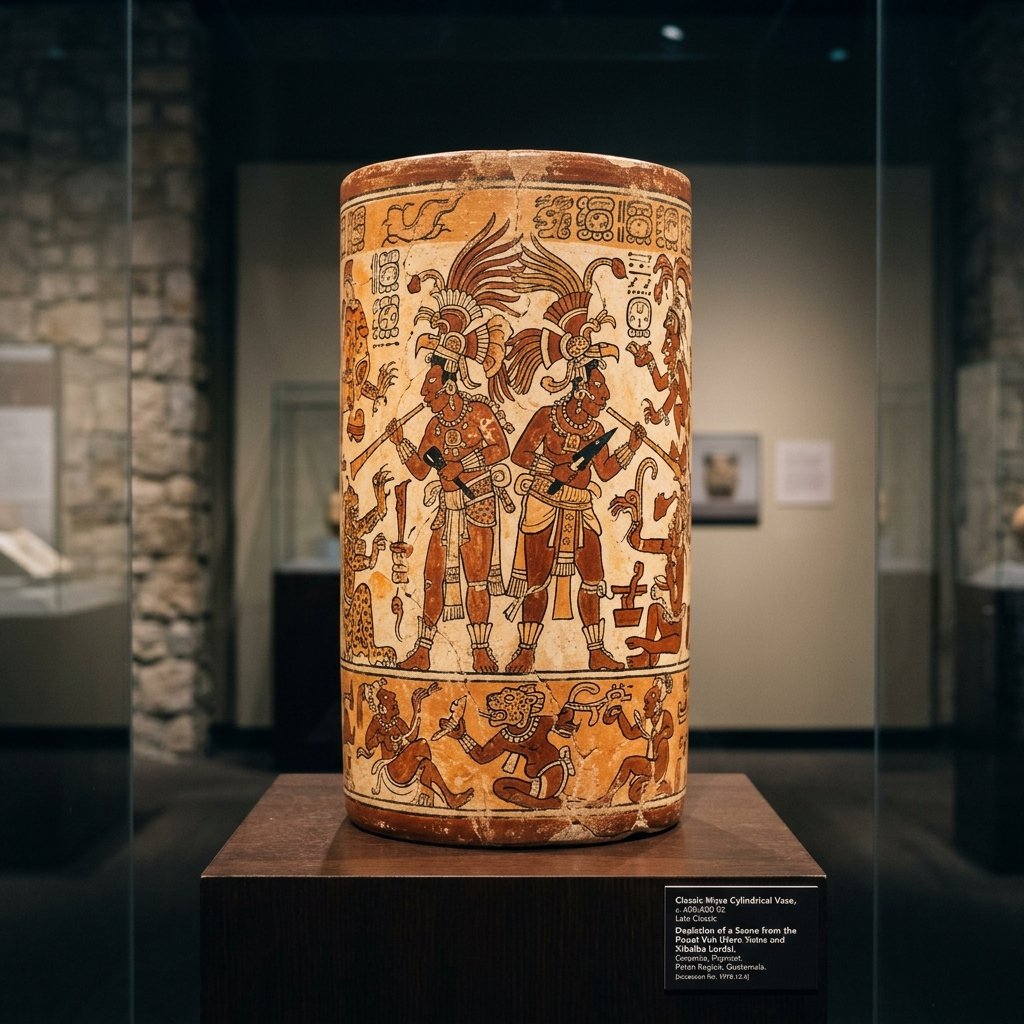
A Classic Maya painted ceramic vessel depicting a scene from the underworld — the type of visual record that confirms the Popol Vuh's deep antiquity. Hundreds of such vessels, painted between 600 and 900 AD, depict scenes from the Hero Twins narrative — proving that the story was well-known across the Maya world centuries before it was written down in the Popol Vuh manuscript around 1554.
After Hunahpú's beheading, Xbalanqué replaces his brother's head with a carved squash — and through a complex series of tricks involving a rabbit (who distracts the lords by bouncing across the ball court, mimicking the ball), he recovers Hunahpú's actual head and restores it.
But the twins realize that they cannot defeat Xibalba by surviving its trials — the lords will simply invent new ones. The only way to win is to change the game entirely. So they do something unprecedented: they voluntarily allow themselves to be killed.
They consult with two seers, Xulu and Pacam, who advise them on what the lords will do with their remains. Then they dance into the fire pit the lords have prepared and die. Their bones are ground to dust and thrown into a river.
But this is precisely what they planned. Five days later, the twins reappear — first as catfish in the river, then as two ragged, anonymous wanderers who perform extraordinary miracles: they can immolate a house and restore it whole; they can sacrifice a dog and bring it back to life; they can kill each other and resurrect each other. They are death itself, turned inside out — beings who have passed through destruction and learned its mechanics.
Word of these miraculous performers reaches the lords of Xibalba, who demand a private show. The twins oblige. They sacrifice a dog and restore it. They burn a house and rebuild it. Then one twin kills the other and brings him back. The lords, delighted, demand to experience the miracle themselves: "Do it to us! Sacrifice us!"
The twins sacrifice the two greatest lords of Xibalba — One Death and Seven Death. But this time, they do not bring them back. The underworld's power is broken. Death has been defeated — not by fighting it, but by dying willingly and returning.
"This is your word: from now on, your day will not be great. The offerings you receive will be reduced. You will no longer receive the blood of humans. You will receive only sap of croton trees, only resin, only small creatures."
— The Hero Twins to the remaining lords of Xibalba (Tedlock translation, 1996)
Part V: Ascension
Having broken the power of the underworld, the twins resurrect their father — the Maize God — and then ascend into the sky:
"They did not die. They were lifted into the sky. One was given the sun, and the other the moon. Then the vault of the sky and the surface of the earth were illuminated."
— Popol Vuh, Part IV (Tedlock translation, 1996)
The Hero Twins become the Sun and Moon — the celestial bodies that light the world and measure time. Their daily passage across the sky repeats their mythic journey: each dawn is a resurrection, each sunset a descent into the underworld, each night a passage through Xibalba. The story does not end — it repeats, eternally, every day.
The Ball Game: Ritual Reenactment
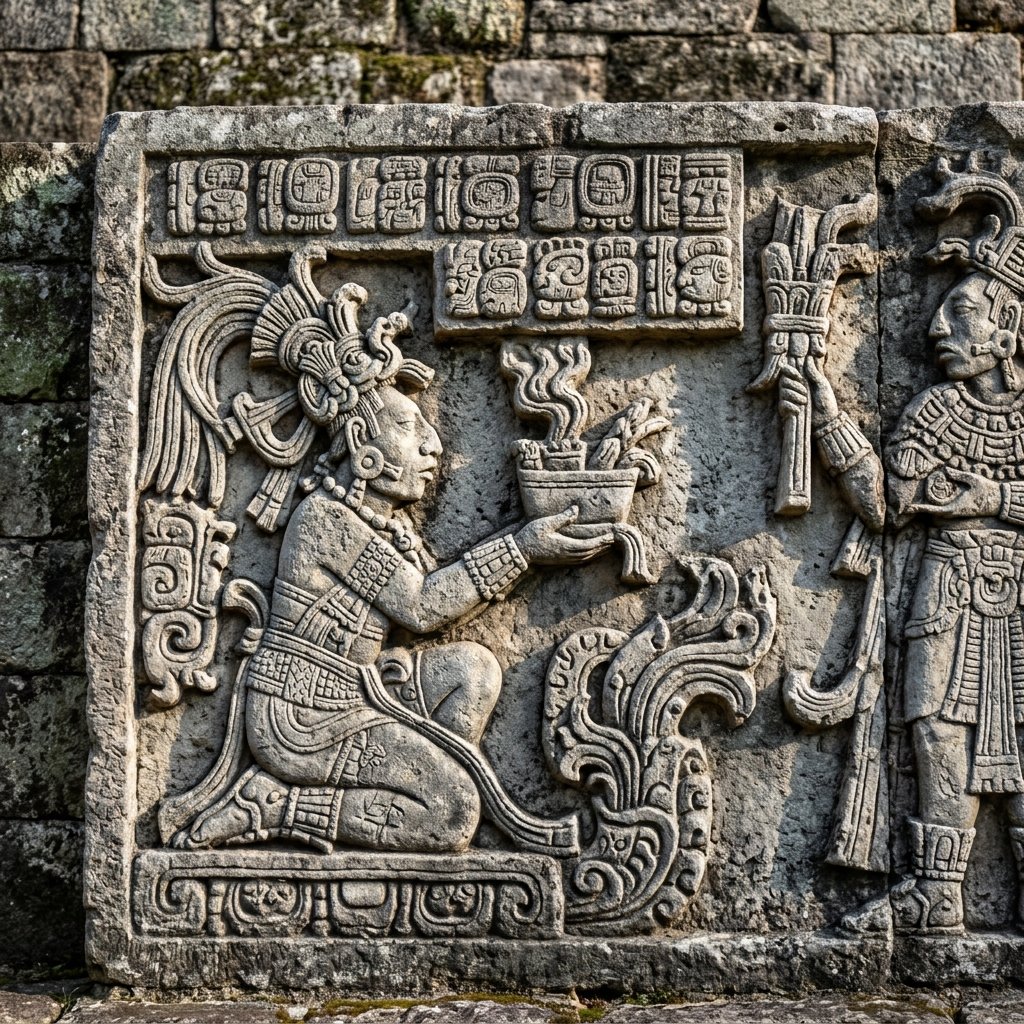
A carved stone relief panel from a Maya ball court. Ball court reliefs frequently depict scenes of sacrifice and cosmic contest — visual references to the Hero Twins' mythic ball game against the lords of Xibalba. The ball game was not sport but ritual: a reenactment of the cosmic struggle between life and death that the twins played and won.
The Maya ball game (pitz) — played on stone courts found at virtually every major Maya site — was a ritual reenactment of the Hero Twins' cosmic contest with death. The game was not sport in the modern sense but sacred performance: a ceremonial replay of the mythic showdown between life and death that determined the fate of the cosmos.
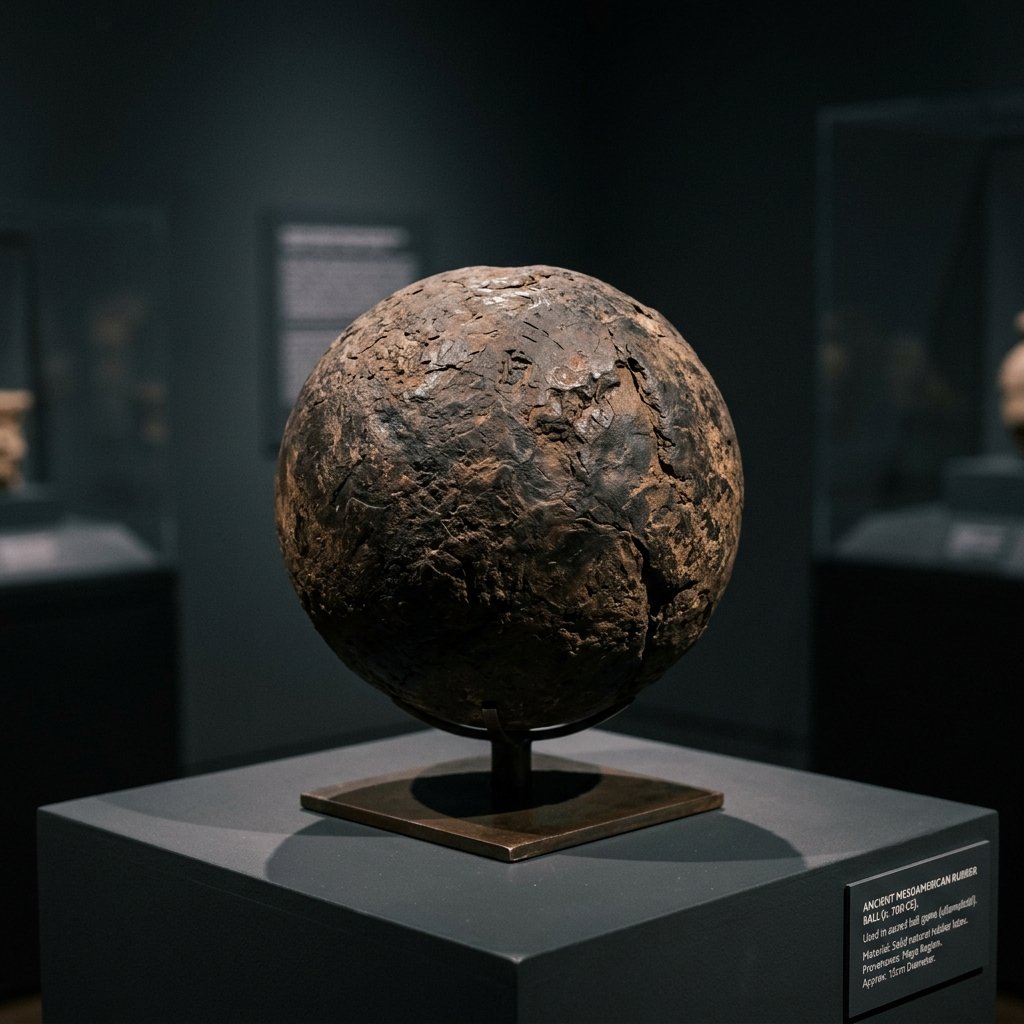
An ancient Mesoamerican rubber ball of the type used in the sacred ball game. These solid rubber balls — some weighing over 3 kg — were struck with the hip, forearm, and sometimes head (not hands or feet). The rubber was produced from the sap of the Castilla elastica tree, making Mesoamerica the birthplace of rubber technology. The ball itself symbolized the sun's movement through the sky and underworld.
The rubber ball — solid, heavy, produced from the sap of the Castilla elastica tree — represented the sun moving through the sky. The stone ring goals, mounted high on the court walls, may have represented the passage between cosmic levels. David Stuart's decipherment of ball game-related texts has revealed that the Maya term for the act of playing the ball game was closely associated with sacrificial ritual: "the ballplayer is, in a very real sense, reenacting the Hero Twins' journey" (Stuart, D., Sourcebook for the 30th Maya Hieroglyphic Forum, University of Texas at Austin, 2006).
The Visual Record: Painted Ceramics
One of the most remarkable aspects of the Hero Twins narrative is its independent confirmation in Classic Maya art. Hundreds of painted ceramic vessels from the Classic period (250–900 AD) — produced centuries before the Popol Vuh manuscript was written — depict scenes from the Hero Twins story with unmistakable clarity: the twins hunting with blowguns, the defeat of Seven Macaw, the descent into Xibalba, the confrontation with the death lords, and the resurrection of the Maize God.
This visual record proves that the Popol Vuh narrative was not a Postclassic invention but a story of deep antiquity, known and depicted across the Maya world for at least a thousand years before it was transcribed in European script. The scholar Michael Coe pioneered the identification of these scenes in his groundbreaking work The Maya Scribe and His World (1973), demonstrating that "painted Maya pottery is essentially an illustrated edition of the Popol Vuh" — a visual library of underworld mythology preserved in ceramic form (Coe, M.D., The Maya Scribe and His World, Grolier Club, 1973, p. 115).
Why the Story Matters
The Hero Twins narrative operates simultaneously on multiple levels:
Cosmological
It explains the origin of the sun and moon, the defeat of primordial darkness, and the establishment of the cosmic order that makes human life possible.
Agricultural
The Maize God's death and resurrection by his sons mirrors the maize cycle: the corn is harvested (killed), its seeds are buried (descend to Xibalba), and new plants emerge (resurrection). Every planting season reenacts the Hero Twins' triumph.
Political
Maya kings claimed descent from the Hero Twins, using the narrative to legitimize their divine right to rule. The royal court was modeled on the twins' court — the king was, in essence, the Hero Twin's heir, repeating his ancestor's cosmic victory.
Philosophical
The story teaches that death is not the end, that intelligence triumphs over brute force, that preparation defeats blind courage, and that the willingness to sacrifice oneself is the highest form of power. These are not primitive ideas — they are sophisticated philosophical propositions.
References
- Christenson, A.J. Popol Vuh: The Sacred Book of the Maya. University of Oklahoma Press, 2007.
- Coe, M.D. The Maya Scribe and His World. Grolier Club, 1973.
- Stuart, D. Sourcebook for the 30th Maya Hieroglyphic Forum. University of Texas at Austin, 2006.
- Taube, K. The Major Gods of Ancient Yucatan. Dumbarton Oaks, 1992.
- Tedlock, D. Popol Vuh: The Definitive Edition of the Mayan Book of the Dawn of Life. Simon & Schuster, 1996.
Frequently Asked Questions
Are the Hero Twins gods?
They begin as demigods — half-divine through their father Hun Hunahpú (the Maize God) — and end as celestial beings (the Sun and Moon). Their journey from mortal to divine is central to the story's meaning: it is the template for the possibility of transcendence through sacrifice. They demonstrate that divinity is not merely inherited but earned through intelligence, courage, and voluntary self-sacrifice.
How do we know the Hero Twins story is ancient?
Although the Popol Vuh manuscript was written down around 1554, hundreds of painted ceramic vessels from the Classic period (600–900 AD) depict unmistakable scenes from the Hero Twins narrative — their blowgun hunts, the defeat of Seven Macaw, underworld confrontations, and the resurrection of the Maize God. This visual record proves the story was widely known at least 600–900 years before the manuscript was produced.
What was the ball game for?
The Mesoamerican ball game (pitz) was a ritual reenactment of the Hero Twins' cosmic contest with the lords of death. The rubber ball represented the sun; the stone court represented the cosmic playing field between the earth and the underworld; and the game itself was a sacred performance that sustained the cosmic order. Ball courts are found at virtually every major Maya site, confirming the centrality of this ritual to Maya civilization.
Where can I see Hero Twins imagery?
Painted Maya ceramics in major museum collections are the richest source — particularly the "Princeton Vase," the "Popol Vuh Vase," and vessels in the Museo Popol Vuh in Guatemala City and the Museum of Fine Arts, Boston. Ball court reliefs at Chichén Itzá, Copán, and other sites also depict related imagery. The Great Ball Court at Chichén Itzá — the largest in the Americas — features elaborately carved relief panels showing sacrificial ball game scenes.