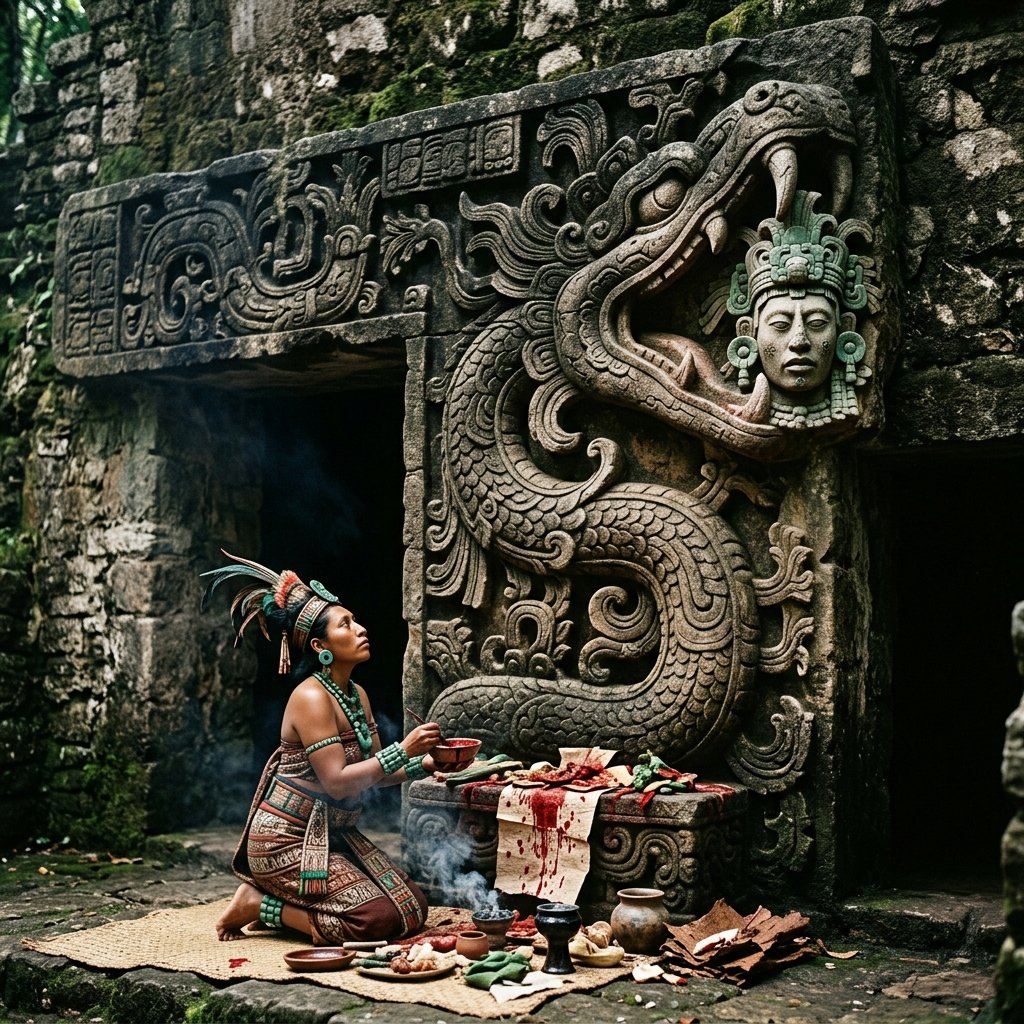
The Vision Serpent at a Glance
The Economics of Blood
To understand the Vision Serpent, one must first understand the fundamental contract of Maya theology: the gods require sustenance, and their food is blood.
According to the Maya creation myth, the gods created humans using their own blood mixed with maize dough. Because humanity owed its existence to this divine sacrifice, humans were eternally indebted to the gods. To keep the universe functioning—to ensure the sun rose and the rains fell—this debt had to be repaid through a continuous cycle of blood-offerings.
While the sacrifice of captives in war was common, the most potent and ritually significant blood belonged to the king and queen. As the living conduits between the earthly and divine realms, royal blood possessed immense magical power. The agonizing process of offering their own blood was known as auto-sacrifice or bloodletting (Schele, L. & Miller, M.E., The Blood of Kings, 1986).
Summoning the Vision Serpent
The Vision Serpent was not an animal that lived in the jungle; it was a supernatural entity summoned through extreme physical pain, blood loss, and sensory deprivation.
A classic royal bloodletting ritual typically followed this sequence:
- The king or queen would pierce a fleshy part of their body (the tongue, earlobes, or genitals) using a stingray spine, obsidian blade, or a rope studded with thorns.
- The blood was allowed to drip onto strips of bark paper collected in a ceramic bowl.
- The blood-soaked paper was then set on fire.
- As the thick black smoke rose, the royal participant—often in a state of hypovolemic shock, pain-induced trance, and possibly aided by psychoactive substances or fasting—would experience an intense hallucination.
- The smoke would materialize into the Vision Serpent.
The serpent served as a physical, rippling portal connecting the earthly realm to Xibalba (the underworld) and the heavens. From the terrifying, gaping jaws of the serpent, a revered ancestor or a patron deity would emerge to speak with the ruler, offering prophecies, military advice, or validation of their right to rule.
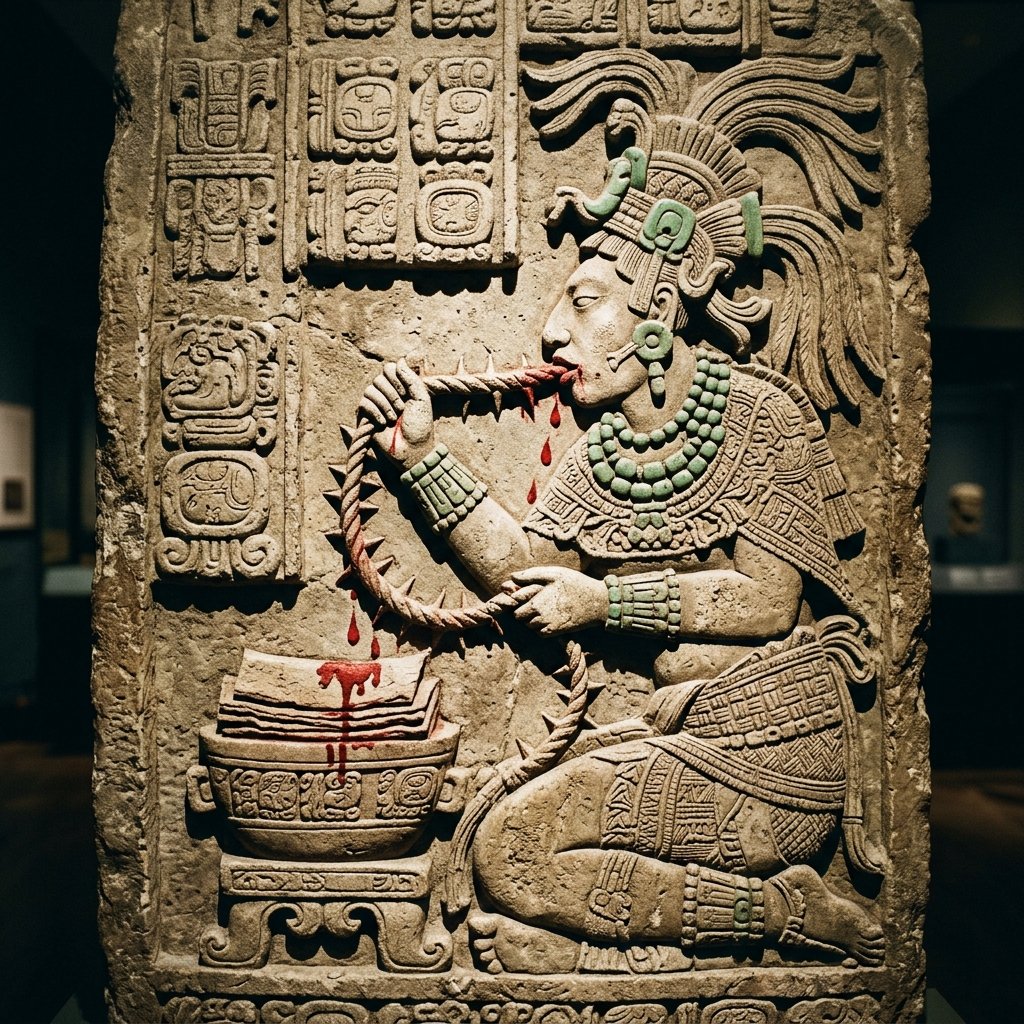
Masterpiece of Stone: Lintel 25 of Yaxchilán
The most famous depiction of the Vision Serpent in all of Mesoamerican art is Lintel 25 from the Classic Maya city of Yaxchilán, carved in 723 AD.
The lintel masterfully captures the terrifying climax of the ritual. The great queen Lady Xoc kneels on the ground in an elaborate woven dress, clutching a basket holding the blood-stained bark paper and a stingray spine. In front of her, a massive, double-headed Vision Serpent rears up. From the upper jaw of the magnificent beast emerges the warrior ancestor Yat Balam, pointing a spear directly at her.
Through this carving, Lady Xoc permanently recorded her immense spiritual power and her direct line of communication with the founders of the dynasty.
The Snake as the Ultimate Portal
Why a serpent? In Maya natural history, snakes were viewed as boundary-crossers. They live in water, burrow into the earth (the underworld), and climb into the branches of trees (the heavens). Furthermore, the act of shedding their skin made them a potent symbol of rebirth and renewal (Miller, M. & Taube, K., The Gods and Symbols of Ancient Mexico and the Maya, 1993).
When a Maya king or queen conjured the Vision Serpent, they were proving to their subjects that they had the power to breach the boundaries of reality, journey into the terrifying unknown, and return with the blessings of the gods.
References
- Martin, S. & Grube, N. Chronicle of the Maya Kings and Queens. Thames & Hudson, 2nd edition, 2008.
- Miller, M. & Taube, K. The Gods and Symbols of Ancient Mexico and the Maya. Thames & Hudson, 1993.
- Schele, L. & Miller, M.E. The Blood of Kings: Dynasty and Ritual in Maya Art. Kimbell Art Museum, 1986.
- Tate, C. Yaxchilan: The Design of a Maya Ceremonial City. University of Texas Press, 1992. (For detailed analysis of Lintel 25).
Frequently Asked Questions
What is a Vision Serpent?
The Vision Serpent is a supernatural creature in Maya art representing a hallucination or trance state. It served as a portal or conduit connecting the earthly realm with the underworld. From its open jaws, gods or royal ancestors would emerge to communicate with the living.
How was the Vision Serpent summoned?
It was summoned through a severe bloodletting ritual (auto-sacrifice). Royals would pierce their tongue, ears, or genitals, let the blood drip onto bark paper, and then burn the paper. The smoke from the burning blood would materialize into the Vision Serpent.
Why did Maya kings and queens pierce their tongues?
The Maya believed the gods required blood to sustain the universe. Because royal blood was the most sacred, kings and queens were obligated to offer it. Piercing highly sensitive areas like the tongue induced severe pain and blood loss, which facilitated the trance-like state necessary to contact the divine.