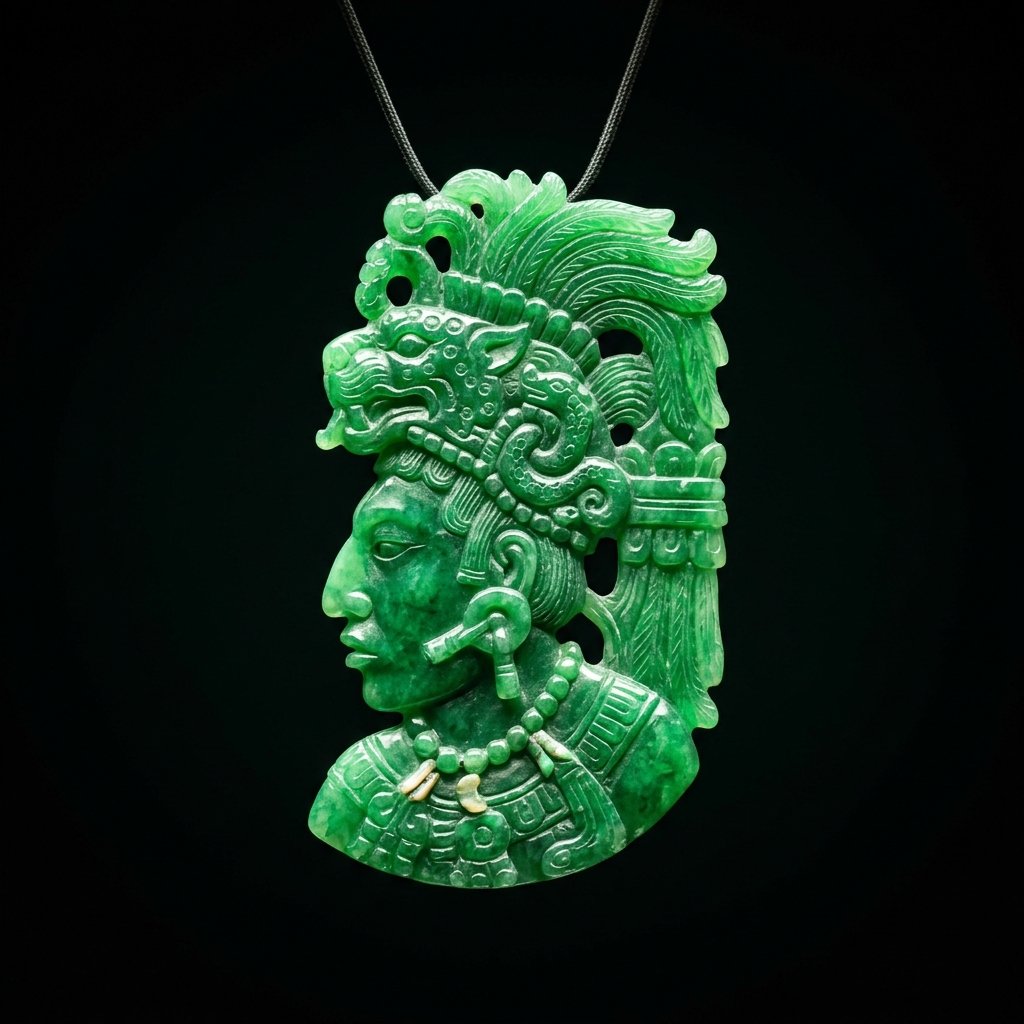
Jade Symbolism at a Glance
More Precious Than Gold
When the Spanish conquistadors arrived in Mesoamerica in the 16th century, they were driven by a singular, manic obsession: gold. They were deeply confused when the indigenous Maya and Aztec leaders offered them something they considered far more valuable: green stones.
To the ancient Maya, gold was entirely secondary (and did not even become somewhat common until the Postclassic period). The ultimate measure of wealth, political power, and spiritual purity was jade.
But the Maya did not value jade just because it was rare; they valued it because its physical properties matched their most profound theological concepts. It was hard, meaning it was eternal. It was green, meaning it was linked to the fertility of the jungle and the growing maize plant. And when polished, it looked wet, linking it directly to life-giving water (Taube, K., Olmec Art at Dumbarton Oaks, 2004).
The Stone of Breath and Soul
The Maya believed that jade contained the essence of life itself. The word for the color blue-green (yax) is the same word used for "first," "new," and "precious."
This connection to the life force dictated how jade was used in mortuary rituals. When a high-ranking Maya noble died, a small, highly polished jade bead was placed in their mouth. It was believed that this stone would catch and hold the individual's dying breath—literally capturing their soul so it could journey safely into the afterlife.
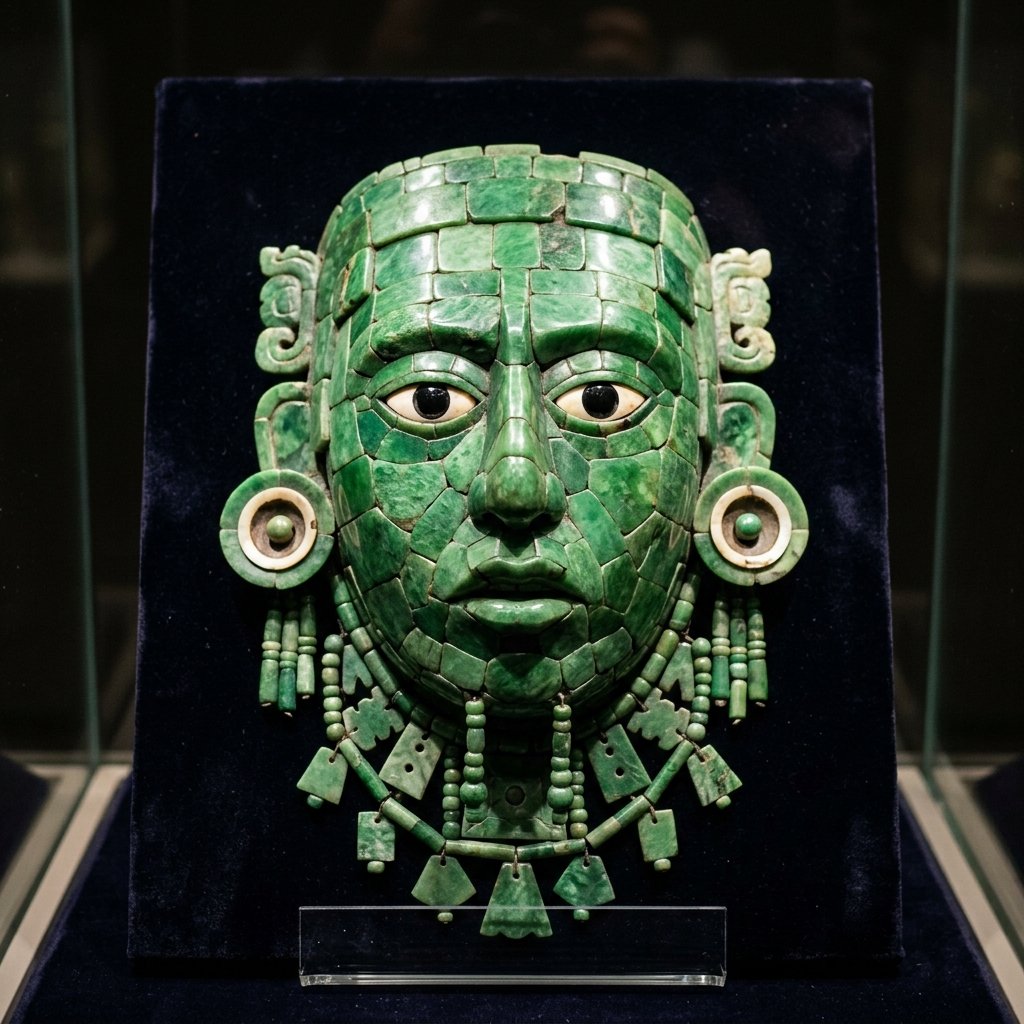
The ultimate expression of this belief was the jade death mask. The great King K'inich Janaab Pakal of Palenque was buried wearing an intricate mosaic mask of brilliant green jade. In the darkness of his sarcophagus, where his flesh would rot and disappear, the jade ensured that he possessed an eternal, divine, and incorruptible face with which to defeat the Lords of Xibalba and be resurrected as the Maize God.
The Source of Maya Jade: The Motagua Valley
The type of jade used by the Maya—jadeite—is significantly harder, denser, and rarer than the nephrite jade used in ancient China.
In fact, for the entirety of Mesoamerican history, there was only one known geological source for jadeite: the Motagua River Valley in modern-day Guatemala. Because the source was so restricted, the control of the jade trade was a massive driver of geopolitics. Powerful Maya cities like Copán and Quiriguá grew wealthy precisely because they controlled the trade routes that moved unworked jade boulders from the Motagua fault line up into the Petén jungle and the Yucatan peninsula.
Water and Wealth
Because it was associated with water, jade was often thrown into cenotes (natural sinkholes) as an offering to Chaac, the rain god. One of the largest deposits of Maya jade ever found was dredged from the Sacred Cenote at Chichén Itzá.
In art, water itself is sometimes depicted as streams of jade beads. The heavy jade necklaces, ear flares, and belt assemblages worn by Maya kings in their portraits were not just displays of economic wealth—they were statements that the king was the source of water and agricultural fertility for his people.
References
- Pillsbury, J., Doutriaux, M., Bakhshaliyeva, R. & Trever, L. Golden Kingdoms: Luxury Arts in the Ancient Americas. J. Paul Getty Museum, 2017.
- Proskouriakoff, T. Jades from the Cenote of Sacrifice, Chichen Itza, Yucatan. Peabody Museum, 1974.
- Schele, L. & Miller, M.E. The Blood of Kings: Dynasty and Ritual in Maya Art. Kimbell Art Museum, 1986.
- Taube, K.A. Olmec Art at Dumbarton Oaks. Dumbarton Oaks, 2004.
Frequently Asked Questions
Why did the Maya value jade over gold?
While gold is soft and associated with the dry heat of the sun, jade is incredibly hard (representing eternity) and green (representing water, life, and the maize plant). In the tropical environment of Mesoamerica, the forces of water and agriculture were far more religiously vital than the reflective qualities of gold.
Where did the Maya get their jade?
All ancient Mesoamerican jadeite came from a single geological source: the Motagua River Valley in modern-day Guatemala. The stone was collected from the riverbed and heavily traded across the entire continent.
How did they carve jade without metal tools?
Jadeite is harder than steel, so even if the Maya had iron tools, they wouldn't have worked. Instead, Maya artisans carved jade through abrasion. They used bow-drills, plant fibers, or wooden sticks coated with a paste of water and crushed quartz or garnet sand, slowly wearing away the stone over hundreds of hours.