Why Ek Balam Belongs on Your List
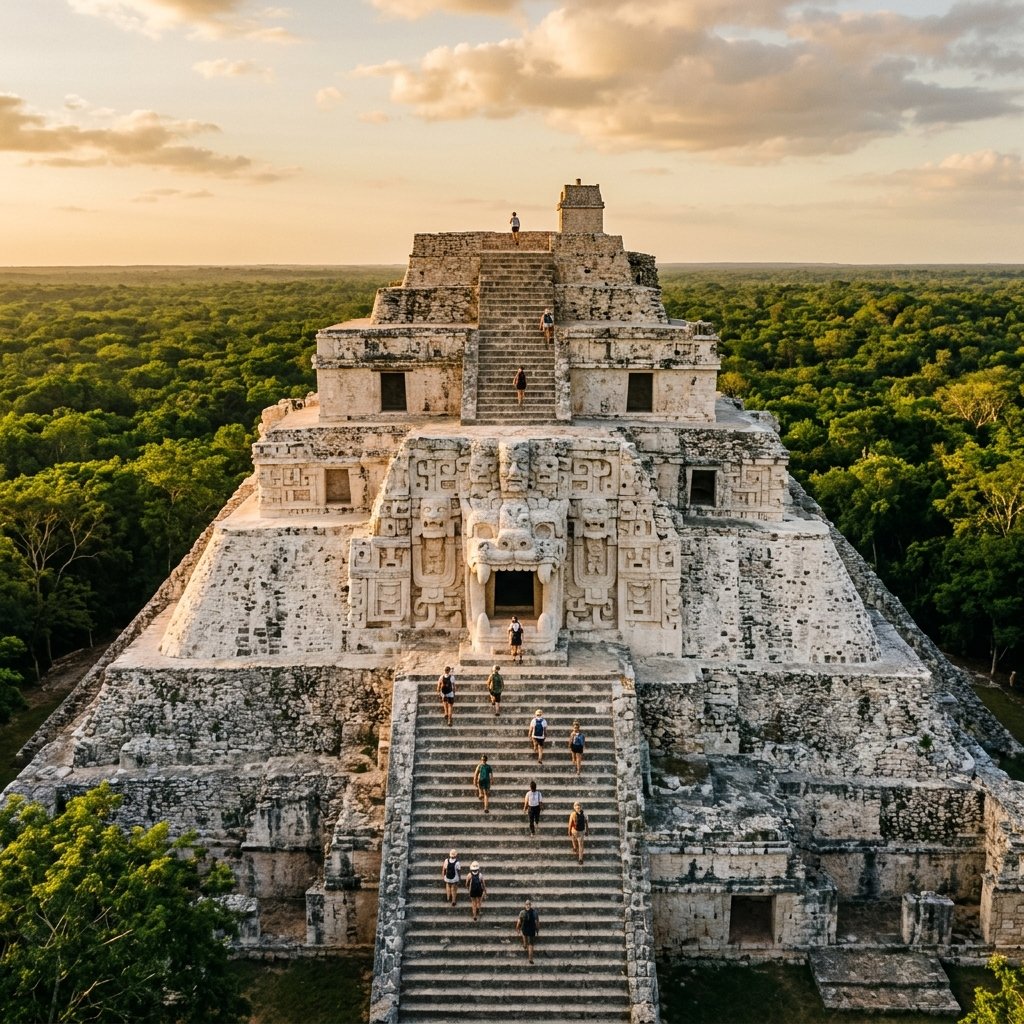
Ek Balam ("Black Jaguar" in Yucatec Maya) is a Late Classic city (600–1000 AD) just 30 km north of Valladolid. It was home to King Ukit Kan Le'k Tok', whose tomb — sealed behind a monstrous stucco mouth — contains some of the most extraordinary Maya art ever preserved. Unlike Chichén Itzá, you can still climb the main pyramid. Unlike Tulum, you won't be fighting selfie sticks for space. This is what Maya archaeology feels like before the tour buses arrive.
History: The Rise and Reign of the Black Jaguar
Ek Balam was occupied from at least the Middle Preclassic period (~600 BC), but its golden age came during the Late Classic (770–896 AD) under the rule of Ukit Kan Le'k Tok' — a king whose name translates roughly as "Father of the Four Flint Regions." Under his leadership, Ek Balam became a regional power controlling a territory of roughly 12 km², surrounded by double defensive walls enclosing a dense urban core.
Ukit Kan Le'k Tok' is unusual in the Maya historical record because he may not have been ethnically Maya. His name doesn't follow standard Maya naming conventions, and some of the artistic motifs at Ek Balam — particularly winged figures not found elsewhere in the Maya world — have led researchers to propose that he may have had Gulf Coast or even distant cultural connections (Vargas de la Peña & Castillo Borges, Arqueología Mexicana, 2006).
The city declined rapidly after 900 AD as part of the broader Classic Maya Collapse, but the site was deliberately sealed rather than simply abandoned — the great stucco facade was carefully covered with stone, protecting it for over a millennium.
The Acropolis: What Makes It Extraordinary
The main structure at Ek Balam — the Acropolis — is 160 meters long, 70 meters wide, and 31 meters tall. It's not a single pyramid but a multi-level complex containing at least 72 rooms spread across six levels. It functioned simultaneously as a royal palace, administrative center, memorial temple, and burial monument.
By the Numbers
- Height: 31 meters (101 ft) — climbable
- Length: 160 meters (525 ft)
- Width: 70 meters (230 ft)
- Rooms: 72+ interior chambers
- Levels: 6 architectural tiers
- Era: Peak construction ~770–896 AD
What Sets It Apart
- Best-preserved stucco sculpture in the Maya world
- One of the last major climbable pyramids in Mexico
- 360° jungle panorama from the summit
- Intact royal tomb with original offerings
- Fraction of Chichén Itzá's visitor count
- Active archaeological research ongoing
The Mouth of the Monster: Maya Art at Its Finest
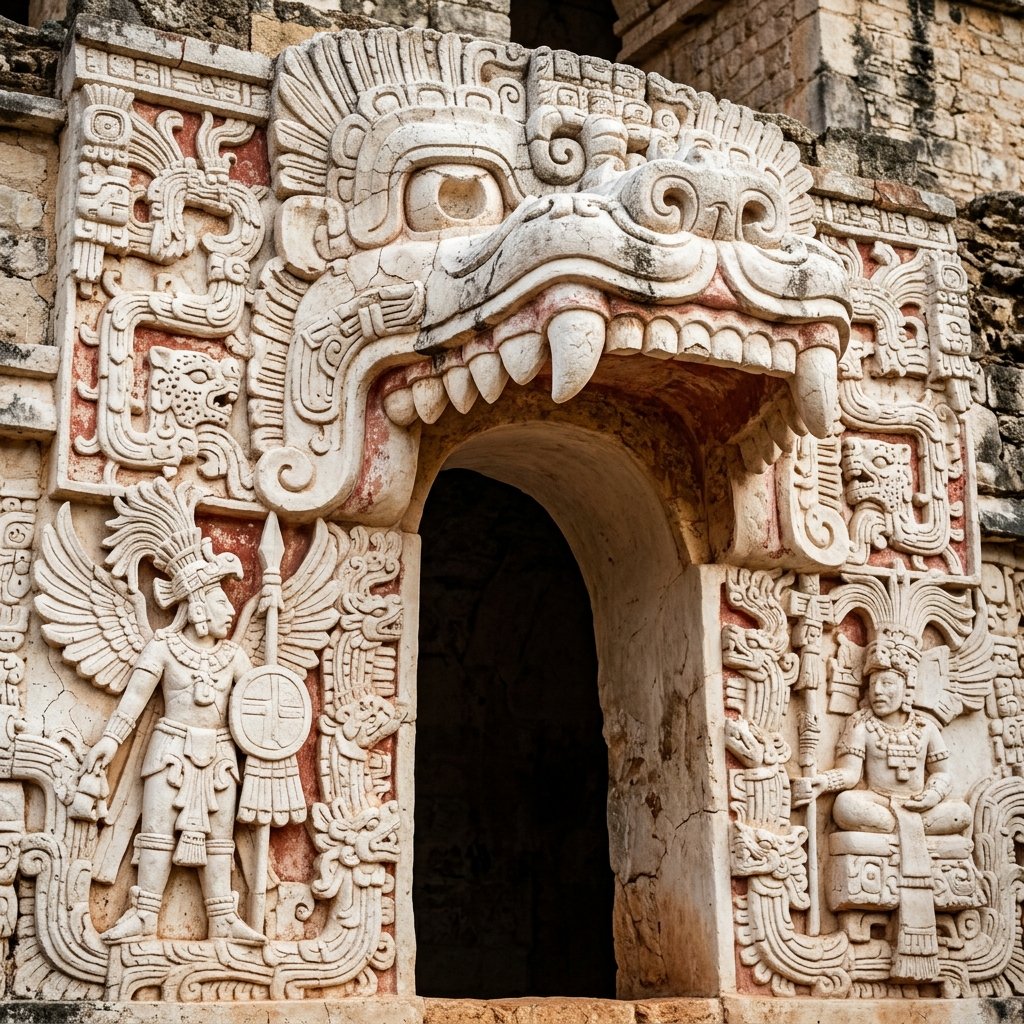
Halfway up the Acropolis's north face, protected under a thatched roof, lies the feature that makes INAH archaeologists weep with joy: the Sak Xok Naah ("White House of Reading") — a monumental stucco facade shaped as the gaping jaw of a cosmic monster.
Step inside the mouth, and you're entering the tomb of Ukit Kan Le'k Tok'. The concept — entering death through the mouth of the earth — is found throughout Maya cosmology. But nowhere else is it executed with this level of artistic ambition:
- Winged warriors: Flanking the mouth are stucco figures of winged human beings — unique in Maya art. No other site has produced winged human figures. Their meaning is debated, but their presence fuels speculation about Ek Balam's cultural connections beyond the Maya heartland.
- Seated lords: Life-sized stucco portraits of nobles in full ceremonial regalia, with individual facial features suggesting real portraiture — not idealized types.
- Preservation: Because the Maya themselves encased the facade in protective stone fill before abandoning the city, the stucco survived 1,100+ years in near-pristine condition. Details that would have eroded in decades are still razor-sharp.
Art historian Mary Miller has called the Ek Balam stucco facade "one of the masterpieces of ancient American art — comparable in ambition and technical achievement to the finest works of classical antiquity" (Miller, Maya Art and Architecture, 1999).
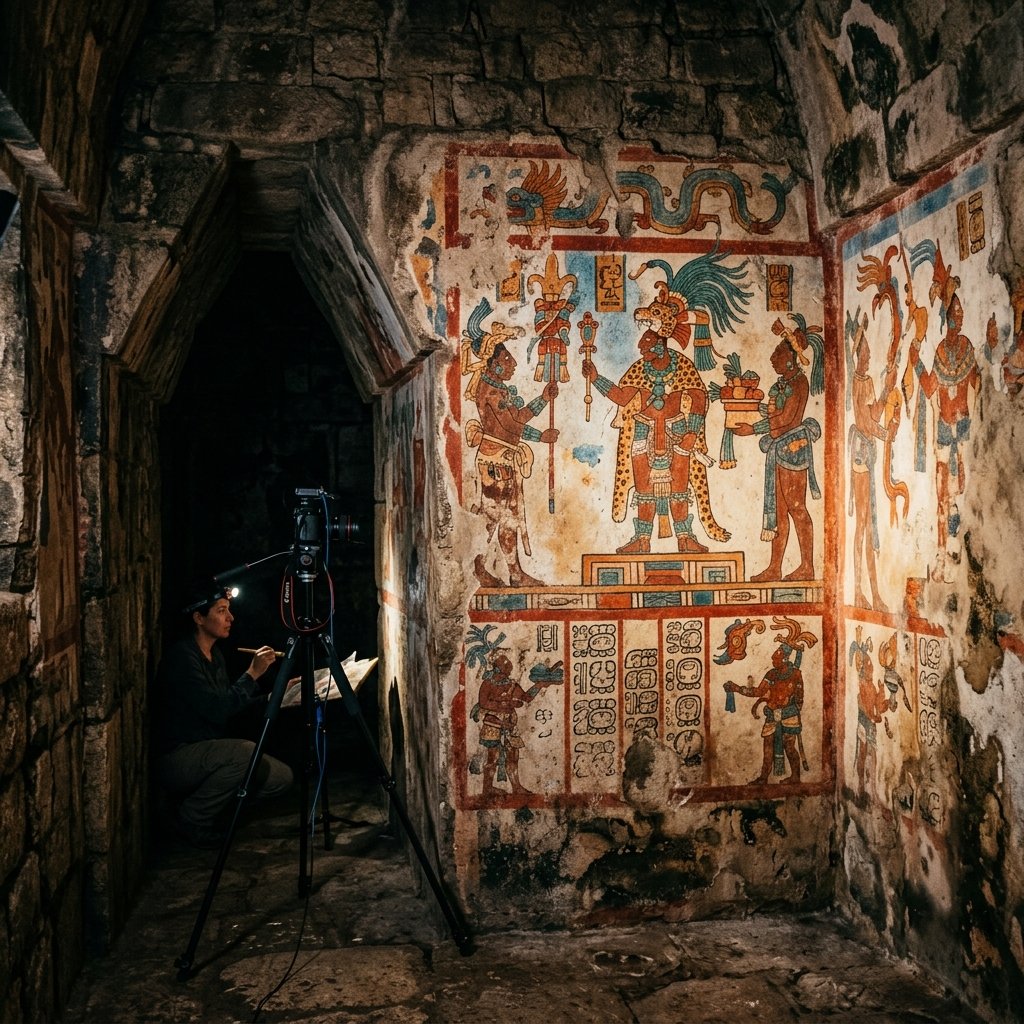
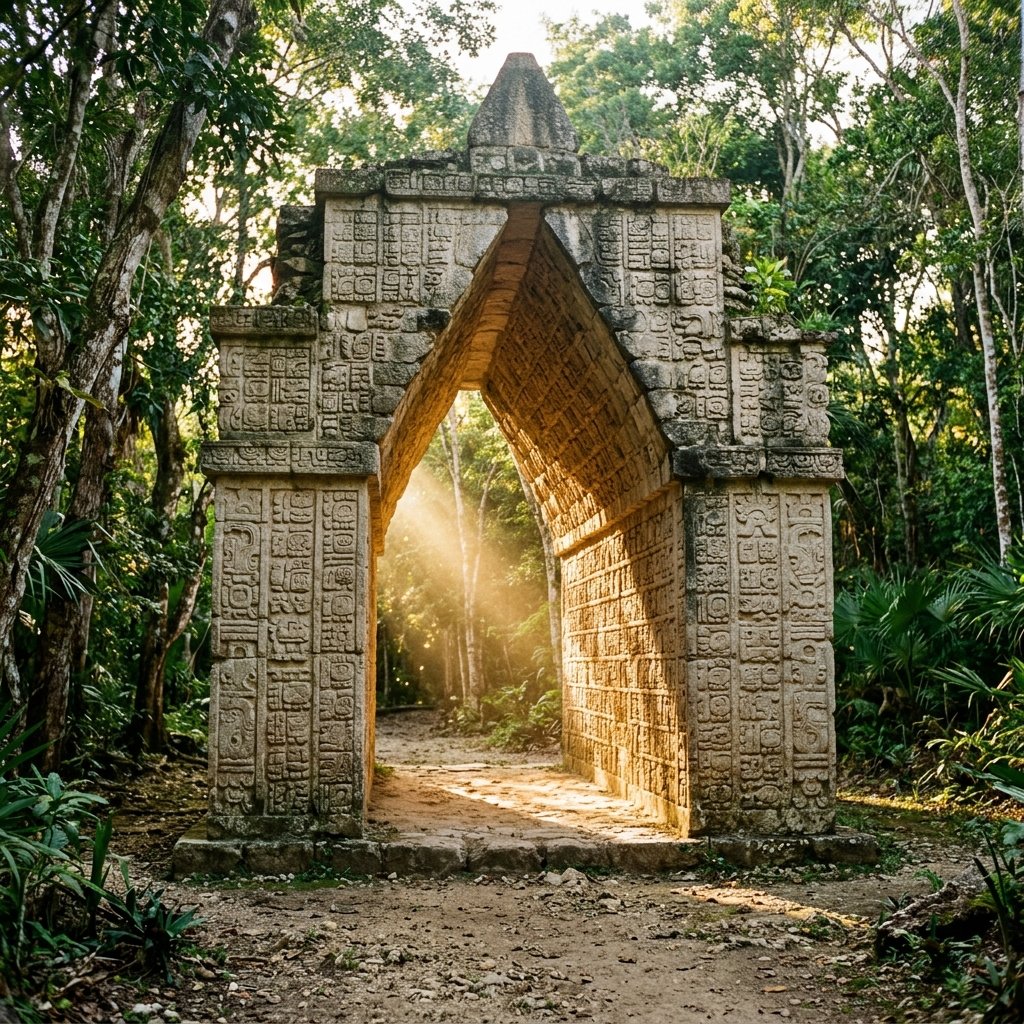
Other Highlights You Shouldn't Miss
Visitor's Guide
| Location | 30 km north of Valladolid, Yucatán, Mexico |
| Entrance Fee | ~531 MXN ($30 USD) — includes INAH and state fees |
| Hours | 8:00 AM – 5:00 PM daily (last entry 4:00 PM) |
| Time Needed | 2–3 hours for a thorough visit |
| Can You Climb? | Yes! The Acropolis is still climbable — bring sturdy shoes |
| Getting There | 25 min from Valladolid by car/taxi; 2 hrs from Cancún; colectivos run from Valladolid bus station |
Insider Tips
Arrive at opening (8 AM). You'll have the site nearly to yourself for the first hour. The morning light on the Acropolis is magical, and the stucco facade faces north — evenly lit all morning.
Combine with Cenote X'Canché. A stunning cenote is just 1.5 km from the ruins' entrance — walkable or bikeable. Swim after climbing. Perfect day itinerary.
Hire a local guide. ~500 MXN for a 1.5-hour tour. Ek Balam's guides are excellent and will show you details you'd miss on your own — including the winged figures that are easy to overlook without someone pointing them out.
Bring water and sunscreen. There's limited shade at the top of the Acropolis, and the Yucatán sun is brutal. The climb is steep but manageable for anyone of reasonable fitness.
Respect the site. Ek Balam is an active archaeological zone. Don't touch the stucco sculptures — body oils accelerate deterioration of 1,200-year-old plaster. The fact that you can still climb is a privilege; treat it as one.
Ek Balam vs Other Major Sites
| Feature | Ek Balam | Chichén Itzá | Tulum |
|---|---|---|---|
| Climbable? | ✅ Yes | ❌ No | ❌ No |
| Crowds | Low | Extreme | Heavy |
| Art quality | World-class stucco | Excellent stone carving | Modest murals |
| Nearby cenote | ✅ 1.5 km walk | Ik Kil (commercialized) | Gran Cenote (popular) |
Frequently Asked Questions
Is Ek Balam worth visiting if I've already been to Chichén Itzá?
Absolutely — many archaeologists consider Ek Balam more rewarding than Chichén Itzá for visitors interested in Maya art and architecture. The stucco facade is unmatched anywhere in the Maya world, the ability to climb gives you a physical connection to the site that Chichén Itzá no longer offers, and the lower visitor count creates a far more immersive experience.
How difficult is the climb?
Moderate. The Acropolis is steep but has a fixed rope handrail to assist. Most visitors of average fitness can make it in 10–15 minutes. Wear closed-toe shoes with grip. The view from the top — 360° of unbroken jungle canopy — is worth every step.
Can I visit Ek Balam and Chichén Itzá in one day?
Yes, if you start early. Ek Balam at 8 AM → Cenote X'Canché swim → Chichén Itzá by 1 PM is a popular itinerary. Valladolid makes an ideal base for both sites.
References & Further Reading
- Vargas de la Peña, L. & Castillo Borges, V. R. (2006). "Ek' Balam: City of the Black Jaguar." Arqueología Mexicana, XIV(79).
- Miller, M. E. (1999). Maya Art and Architecture. Thames & Hudson.
- Ringle, W. M. & Bey, G. J. (2001). "Post-Classic and Terminal Classic Courts of the Northern Maya Lowlands." Royal Courts of the Ancient Maya, Vol. 2. Westview Press.
- Lacadena, A. (2004). "The Glyphic Corpus from Ek Balam." FAMSI Reports.