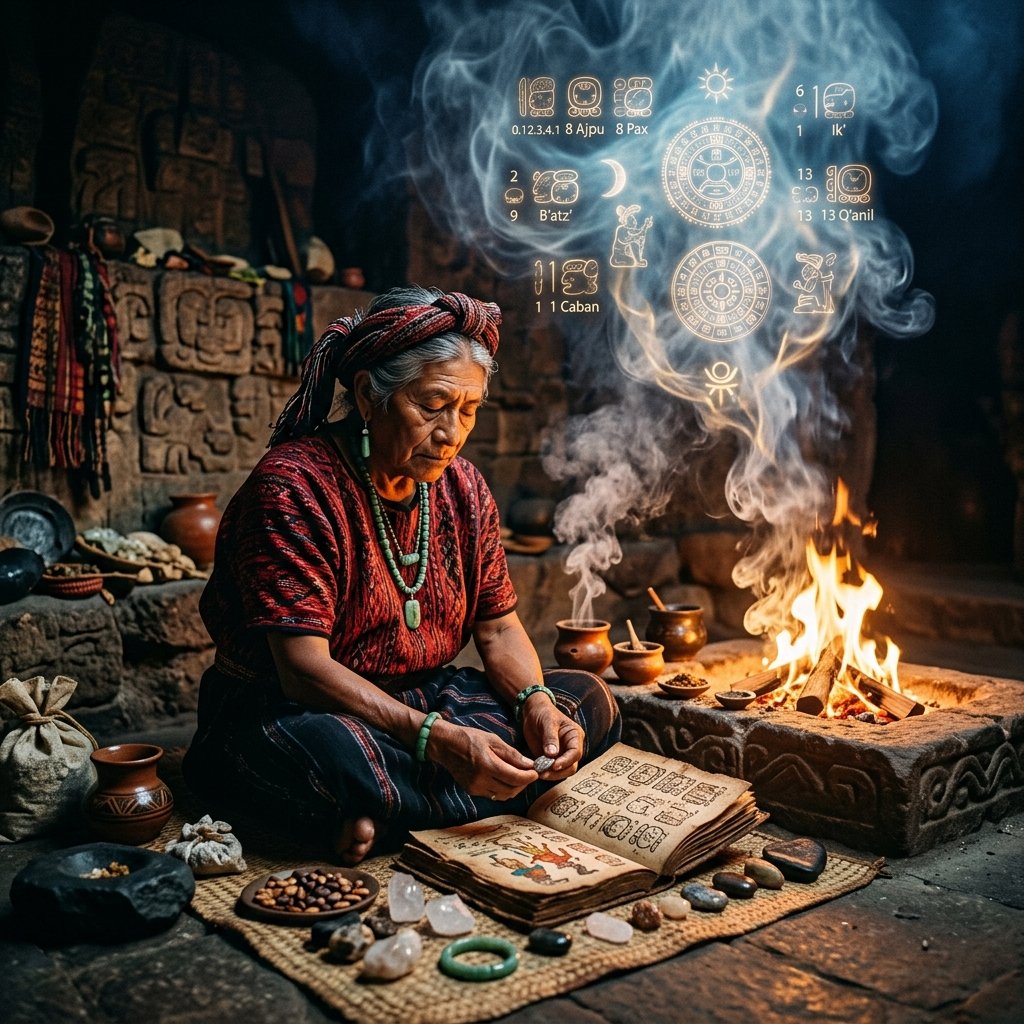
Prophecy as Technology
Maya prophecy was not random prediction — it was a systematic, calendrically structured technology for anticipating future events based on cyclical historical patterns. Every 256-day Tzolk'in cycle, every 52-year Calendar Round, and every 7,200-day Katun carried specific associations derived from centuries of recorded history. When the chilam (prophet) spoke, he was drawing on a database as much as divine inspiration.
The Three Engines of Maya Prophecy
1. Astronomical Prediction
The Maya could accurately predict eclipses, Venus appearances, and lunar phases using mathematical tables in the Dresden Codex. This wasn't prophecy in the mystical sense — it was observational astronomy of extraordinary precision. But in Maya culture, astronomical events were prophetic: a solar eclipse foretold the death of kings, Venus's first appearance as morning star demanded warfare (Aveni, Skywatchers, 2001).
2. Katun Prophecy (Cyclical History)
The Maya divided time into Katuns — 7,200-day (~20-year) periods, each bearing one of thirteen numbers. Since each numbered Katun carried associations from its previous occurrence, and the full cycle of 13 Katuns repeated every ~256 years, the Maya could "predict" that Katun 8 Ahau would bring drought and political upheaval — because it had done so before. The colonial-era Books of Chilam Balam record these Katun prophecies in detail (Roys, The Book of Chilam Balam of Chumayel, 1933).
3. Divination (Tzolk'in Day-Sign Reading)
The 260-day Tzolk'in calendar assigned each day a combination of number (1–13) and sign (20 day-names), creating a unique identity. Maya daykeepers used these sign combinations to determine favorable and unfavorable days for planting, warfare, marriage, and travel — a practice that continues among K'iche' Maya communities in Guatemala today (Tedlock, Time and the Highland Maya, 1982).
Did the Prophecies Come True?
Here's where it gets genuinely fascinating. Several recorded Katun prophecies show real predictive success — not because of magic, but because cyclical historical patterns are real:
- The Katun prophecies predicted that Katun 8 Ahau would bring the arrival of foreigners. The Spanish arrived during Katun 8 Ahau (Roys, 1933).
- The prophecies predicted political fragmentation during Katun 4 Ahau — and this Katun historically correlates with periods of decentralization.
- Drought climatology from lake-core data shows that droughts did indeed cluster around certain Katun periods (Hodell et al., Science, 2001).
Were the Maya predicting the future? Or were they — like modern actuaries — using historical statistical patterns to estimate probabilities? The answer may be: both. And that makes them more impressive, not less.
The Chilam Balam: Living Prophecy
The Books of Chilam Balam — colonial-era manuscripts written in Yucatec Maya using European script — preserve Katun prophecies alongside historical chronicles, creating a unique hybrid of prediction and record-keeping. The most famous, the Chilam Balam of Chumayel, includes the prophecy: "On that day, dust possesses the earth. On that day, a blight is on the face of the earth... the tender leaf is destroyed."
This was recorded before the Spanish conquest but reads like a description of it. Whether this represents genuine foresight, post-hoc editing, or a cyclical pattern that happened to align remains debated — but the text itself is a treasure of human intellectual history.
Frequently Asked Questions
Did the Maya predict the end of the world in 2012?
No. The 2012 phenomenon was a modern misinterpretation. The completion of the 13th Baktun on December 21, 2012 was a calendar milestone — the rollover of a major cycle — not a doomsday prediction. No ancient Maya text describes the end of the world on this date. Living Maya communities consistently rejected the apocalyptic interpretation.
References & Further Reading
- Roys, R. L. (1933). The Book of Chilam Balam of Chumayel. Carnegie Institution.
- Tedlock, B. (1982). Time and the Highland Maya. U of New Mexico Press.
- Aveni, A. F. (2001). Skywatchers. UT Austin Press.
- Hodell, D. A., et al. (2001). "Solar Forcing of Drought Frequency in the Maya Lowlands." Science, 292(5520), 1367–1370.