The Short Answer
The ancient Maya never predicted the end of the world on December 21, 2012. The date marked the completion of the 13th Baktun in the Long Count calendar — the end of a 5,125-year cycle. It was analogous to an odometer rolling from 999,999 to 000,000 — a significant milestone, not an apocalypse. The "2012 prophecy" was a modern invention that had virtually no basis in ancient Maya belief.
What the Date Actually Means
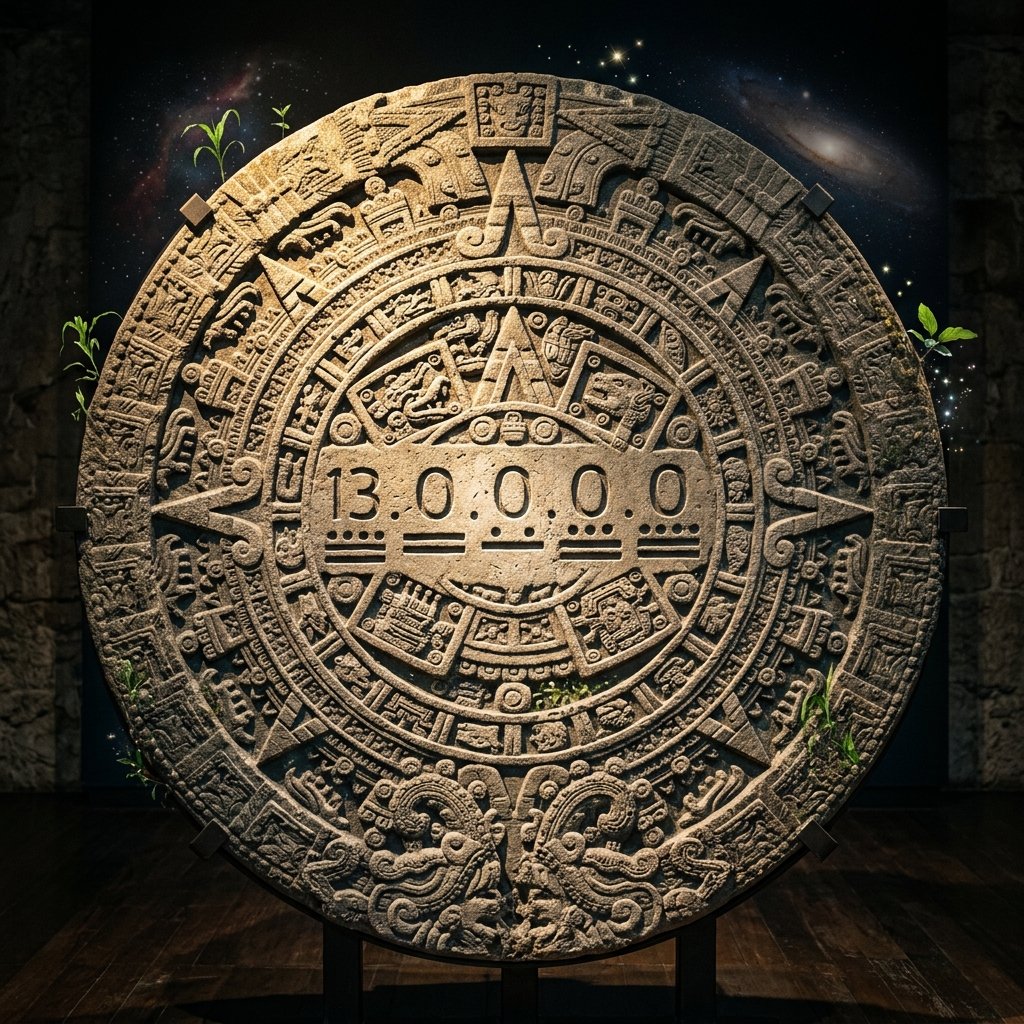
The Maya Long Count tracks time from a mythological creation date (August 11, 3114 BC in our calendar). December 21, 2012 is when the Long Count reached 13.0.0.0.0 — the completion of 13 Baktuns (roughly 5,125 years).
For the Maya, 13 was a sacred number (13 levels of heaven, 13 tones in the Tzolk'in). The completion of 13 Baktuns was a major calendrical event — but the Long Count doesn't stop at 13.0.0.0.0. It keeps counting: 13.0.0.0.1, 13.0.0.0.2, and so on. The Maya had inscriptions referencing dates millions of years in the future, which makes no sense if they believed the world would end in 2012.
The Tortuguero Monument
Only one known ancient Maya inscription actually references the 2012 date: Monument 6 at Tortuguero, a partially broken tablet from the 7th century. The legible portion says that on 13.0.0.0.0, the deity Bolon Yokte' K'uh (a god associated with war, conflict, and the underworld) "will descend" or "will manifest." The rest of the inscription is damaged.
This is hardly an apocalyptic prophecy. It describes a divine manifestation at a calendrical milestone — a ceremony, not a catastrophe. One partial inscription on one broken tablet at one site is the entirety of the ancient "evidence" for 2012.
How the Myth Spread
The modern 2012 phenomenon was not Maya at all:
- 1960s–70s: New Age authors (José Argüelles, Terence McKenna) begin connecting the Long Count end-date to cosmic transformation theories
- 1990s: Books like The Maya Prophecies and 2012: The Return of Quetzalcoatl popularize apocalyptic interpretations
- 2000s: Internet amplification + Discovery Channel/History Channel documentaries create mass awareness
- 2009: Roland Emmerich's disaster film 2012 grosses $769 million worldwide, cementing the idea in popular culture
- 2012: Nothing happens. The world continues. The Long Count ticks to 13.0.0.0.1.
What Maya Elders Said
Contemporary Maya spiritual leaders were consistently clear: the 2012 date represented a renewal, not a destruction. Leaders from the Guatemala Highland Maya, Yucatan communities, and Mexican Maya organizations publicly stated that the apocalyptic narrative was a Western misinterpretation.
"For the Maya, this is not the end of the world. It is the beginning of a new cycle — a time of renewal and transformation. The idea that we predicted destruction is offensive and wrong."
— Guatemalan Maya spiritual leaders, 2012 joint statement
The Real Lesson
The 2012 phenomenon says more about modern Western culture than about the ancient Maya. We projected our own anxieties about climate change, political instability, and technological disruption onto a 7th-century inscription, repackaged it as ancient prophecy, and made it a billion-dollar media event. The Maya themselves watched with a mixture of bemusement and frustration as their culture was distorted for entertainment.
Frequently Asked Questions
Did anything happen on December 21, 2012?
Maya communities in Guatemala and Mexico held ceremonies marking the completion of the 13th Baktun — celebrations of renewal and new beginnings. Chichén Itzá hosted a large gathering. The world continued normally. The Long Count advanced to 13.0.0.0.1.
When does the NEXT Baktun cycle complete?
The 14th Baktun will complete around 2407 AD. But the Long Count can track far longer periods — Maya inscriptions reference dates over 100 quintillion years in the future.
Did the movie 2012 affect tourism?
Dramatically. Tourism to Maya sites surged 15–30% leading up to December 2012. Chichén Itzá was overwhelmed with visitors on December 21. While the apocalyptic framing was harmful, the increased interest in Maya culture had some positive effects on local economies.