Maya Warfare at a Glance
War Was Central
Early scholars described the Maya as peaceful astronomers — a myth shattered by the decipherment of Maya hieroglyphic writing in the 1970s–1990s. The inscriptions revealed that warfare was absolutely central to Maya political life. Kings gained prestige through military victory, derived legitimacy from capturing rival rulers, and built their monuments to commemorate conquests.
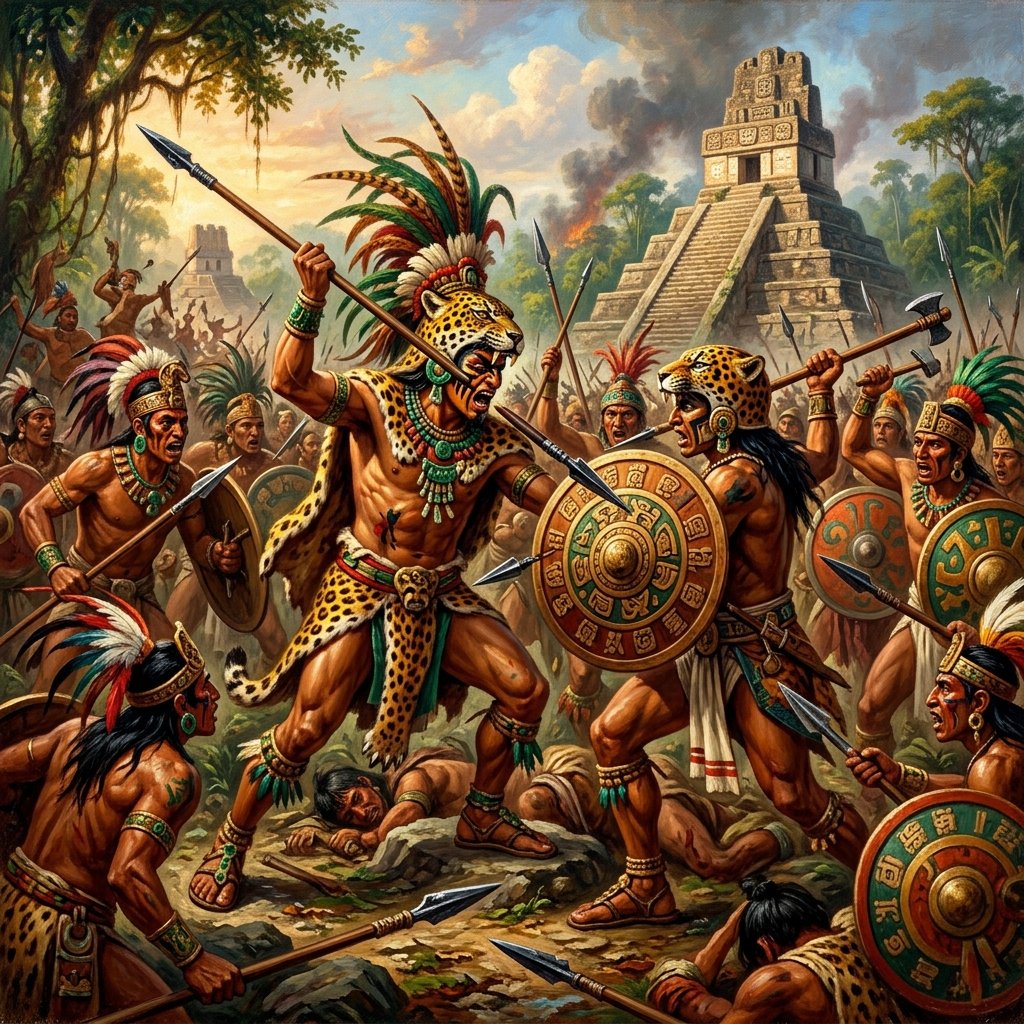
The Bonampak murals (Room 2) provide the most vivid depiction of Maya battle: warriors in full regalia clash in a chaotic melee, the king seizes a captive by the hair, and the defeated enemy is stripped and displayed on the palace steps. This is not ritual play-fighting — it is brutal, decisive combat (Miller, M.E., The Murals of Bonampak, 1986).
Weapons and Armor
Offensive Weapons
- Spears and javelins: Long thrusting spears with obsidian or flint points — the primary weapon for close combat.
- Atlatl (spear-thrower): A leverage device that increased the range and velocity of thrown darts. Introduced or popularized after the Teotihuacan "Entrada" of 378 AD.
- War clubs: Wooden clubs with embedded obsidian or flint blades along the edges — devastating cutting weapons similar to the Aztec macuahuitl.
- Slings: Used for ranged attacks with stone projectiles.
- Axes: Stone-headed axes used in close combat and as symbols of royal military power.
Defensive Equipment
- Cotton armor (ichcahuipilli): Quilted cotton garments soaked in salt brine, which hardened into a surprisingly effective defense against obsidian and flint weapons. Spanish conquistadors later adopted this Maya armor because it worked better in tropical heat than European steel.
- Shields: Wooden or hide shields, often circular, decorated with war symbolism.
- War helmets: Elaborate headdresses shaped as jaguars, eagles, or supernatural creatures — serving as both protection and identity markers.
Types of Warfare
- Star Wars: Total wars of destruction timed to Venus risings. Goal: annihilate enemy dynasty.
- Tribute wars: Campaigns to force tribute payments from neighboring cities — the economic engine of Maya polities.
- Capture raids: Targeted operations to seize specific high-ranking individuals for sacrifice.
- Defense: Fortifications were rare in the Classic period but became common in the Postclassic — Mayapán, Tulum, and other late cities had defensive walls.
Frequently Asked Questions
How did the Maya fight wars?
Wars were timed to Venus risings for divine sanction. The primary goal was capturing enemy kings for sacrifice, not territorial conquest. Armies used spears, atlatl, clubs, and stone axes. Quilted cotton armor was remarkably effective against stone weapons.
Was Maya warfare ritualistic or practical?
Both. The religious framework was genuine, but consequences were devastating. Star Wars destroyed entire dynasties. Tribute wars extracted economic resources. Modern research has shattered the myth of the "peaceful Maya."
What weapons did the Maya use?
Obsidian-tipped spears, atlatl spear-throwers, war clubs with stone blades, slings, and axes. Defensive gear included quilted cotton armor (so effective that Spanish conquistadors adopted it) and decorated shields.