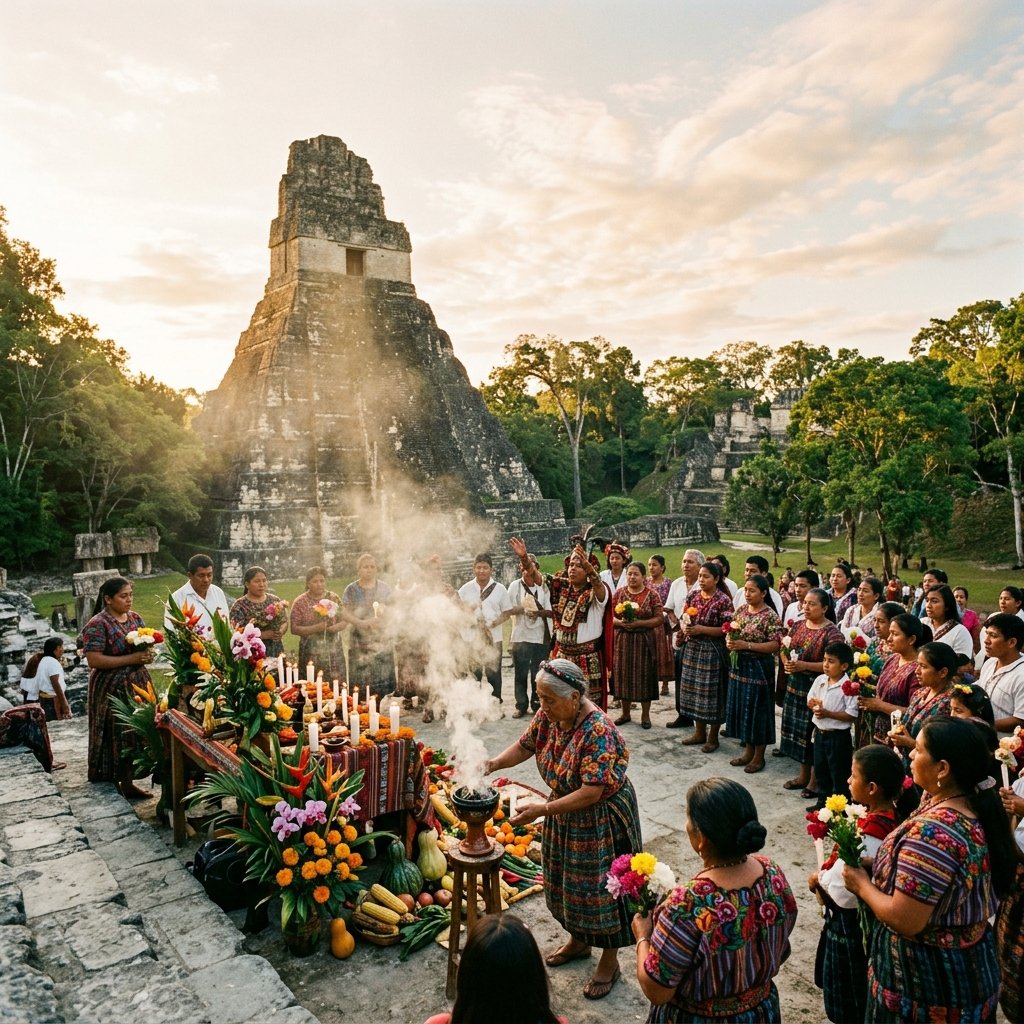
The Maya Rights Movement at a Glance
Continuity and Catastrophe
The Maya people did not disappear. This point — so obvious to the approximately 6 million people who speak Mayan languages today — is sometimes obscured by the popular mythologizing of the "mysterious" Maya collapse. The Classic Maya cities were abandoned, but the Maya people continued — through the Postclassic period, through the Spanish conquest, through colonial oppression, and through one of the most devastating genocides of the 20th century.
Understanding the modern Maya rights movement requires understanding this history of resilience in the face of systematic violence.
The Guatemalan Civil War and Genocide
Between 1960 and 1996, Guatemala suffered a 36-year civil war between the military government and leftist guerrilla groups. During the war's most brutal phase — 1981 to 1983, under General Efraín Ríos Montt — the Guatemalan military conducted a systematic campaign of genocide against Maya communities, particularly the Ixil, K'iche', and Kaqchikel peoples.
The UN-sponsored Commission for Historical Clarification (CEH) documented:
- Over 200,000 deaths and 45,000 disappearances.
- 83% of the victims were identified as Maya.
- Over 600 Maya villages were completely destroyed.
- The military's actions constituted genocide against specific Maya ethnic groups.
In 2013, Ríos Montt was convicted of genocide by a Guatemalan court — the first time a former head of state was convicted of genocide in their own country. The conviction was later overturned on procedural grounds, and Ríos Montt died in 2018 before a retrial concluded. Despite the legal setback, the trial was a historic moment for transitional justice globally (CEH, Guatemala: Memory of Silence, 1999).
Rigoberta Menchú and International Visibility
Rigoberta Menchú Tum, a K'iche' Maya woman from Chimel, Guatemala, became the international voice of Maya suffering when her 1983 testimonio I, Rigoberta Menchú was published and translated into multiple languages. Her account of her family's persecution — her father killed in the Spanish Embassy fire of 1980, her mother kidnapped and killed by the army — brought global attention to the reality of the Guatemalan genocide.
In 1992, Menchú was awarded the Nobel Peace Prize — the youngest Nobel Peace laureate at that time and the first Indigenous woman to receive the honor. Her prize amplified pressure on the Guatemalan government to negotiate peace, culminating in the 1996 Peace Accords that ended the civil war.
Cultural Renaissance
The post-war period has seen a Maya cultural renaissance:
- Language revitalization: The ALMG standardizes orthographies and trains teachers in Mayan languages.
- Calendar keeping: Maya daykeepers (aj q'ijab') continue to maintain the 260-day Tzolk'in calendar — an unbroken tradition spanning millennia.
- Weaving tradition: Highland Maya textiles are increasingly recognized as world-heritage art forms.
- Political representation: Maya politicians, lawyers, and academics are increasingly visible in Guatemalan public life.
- Archaeological partnership: Maya communities are increasingly involved in the stewardship and interpretation of ancestral sites.
Frequently Asked Questions
What is the Maya rights movement?
The political, cultural, and linguistic activism of 6 million Maya peoples seeking recognition of Indigenous rights, cultural preservation, and self-governance. Gained international visibility through Rigoberta Menchú's 1992 Nobel Prize and the aftermath of the Guatemalan genocide.
What happened during the Guatemalan genocide?
During 1981–1983, the Guatemalan military conducted systematic genocide against Maya communities, killing over 200,000 people (83% Maya) and destroying 600+ villages. General Ríos Montt was convicted of genocide in 2013.
Who is Rigoberta Menchú?
A K'iche' Maya woman who won the 1992 Nobel Peace Prize for advocating Indigenous rights during the Guatemalan Civil War. Her testimonio brought global attention to Maya suffering and helped catalyze the 1996 Peace Accords.
Scholarly References
- CEH (Commission for Historical Clarification). Guatemala: Memory of Silence. United Nations, 1999.
- Fischer, E.F. & McKenna Brown, R. Maya Cultural Activism in Guatemala. University of Texas Press, 1996.
- Menchú, R. I, Rigoberta Menchú: An Indian Woman in Guatemala. Verso, 1984.
- Warren, K.B. Indigenous Movements and Their Critics. Princeton University Press, 1998.