
The Acceleration Problem
Academic orthodoxy holds that Maya intellectual achievements developed gradually over millennia. But the archaeological record tells a more complicated story: several foundational innovations — zero, writing, the Long Count calendar, and monumental construction at a continental scale — appear within a narrow window between 900 BC and 300 BC. That's fast. Uncomfortably fast. And the question of why it happened so quickly has no consensus answer.
The Timeline That Raises Eyebrows
To understand why this timeline is remarkable, you need to see it plotted against the chronology of every other primary civilization in human history. The Maya didn't have thousands of years of incremental development. They sprinted.
The transition from "farming villages" to "one of the most intellectually sophisticated civilizations in human history" took roughly 700 years. For context, here is how that compares to every other primary civilization:
| Civilization | Villages → Writing | Villages → Monumental Architecture | Villages → Zero |
|---|---|---|---|
| Mesopotamia | ~3,000 years | ~2,500 years | ~4,000 years |
| Egypt | ~2,000 years | ~1,500 years | Never independently |
| China | ~3,000 years | ~2,000 years | ~3,000 years |
| Indus Valley | ~2,000 years | ~2,000 years | ~3,500 years |
| Maya | ~700 years | ~500 years | ~700 years |
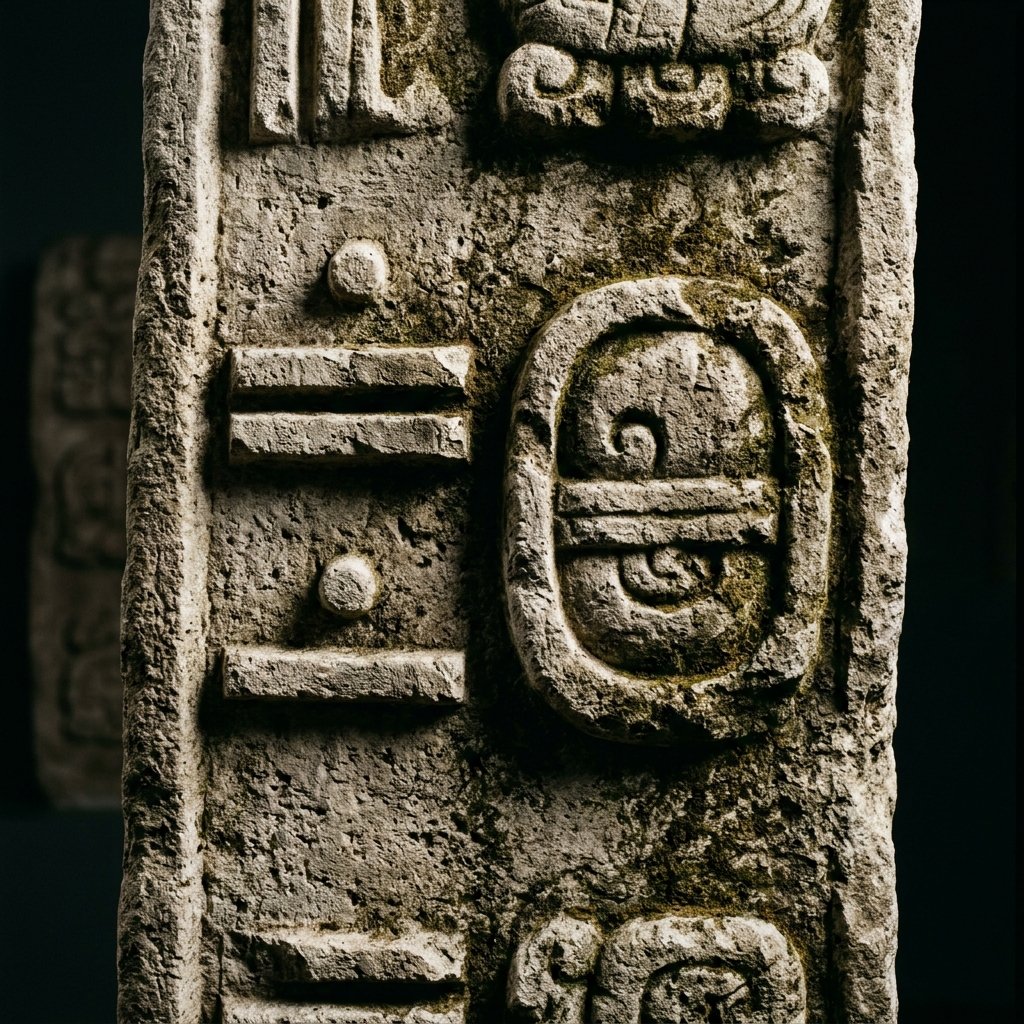
The Maya are the only ancient civilization to independently develop both a full writing system and the concept of zero — and they did both within the same ~700-year window. No other primary civilization compressed this much intellectual innovation into so short a period.
Four Frameworks for the Acceleration
Why was the Maya intellectual explosion so fast? The question is genuine and generates legitimate scholarly debate. Here are four frameworks, ranging from mainstream to speculative:
1. The Olmec Substrate Theory
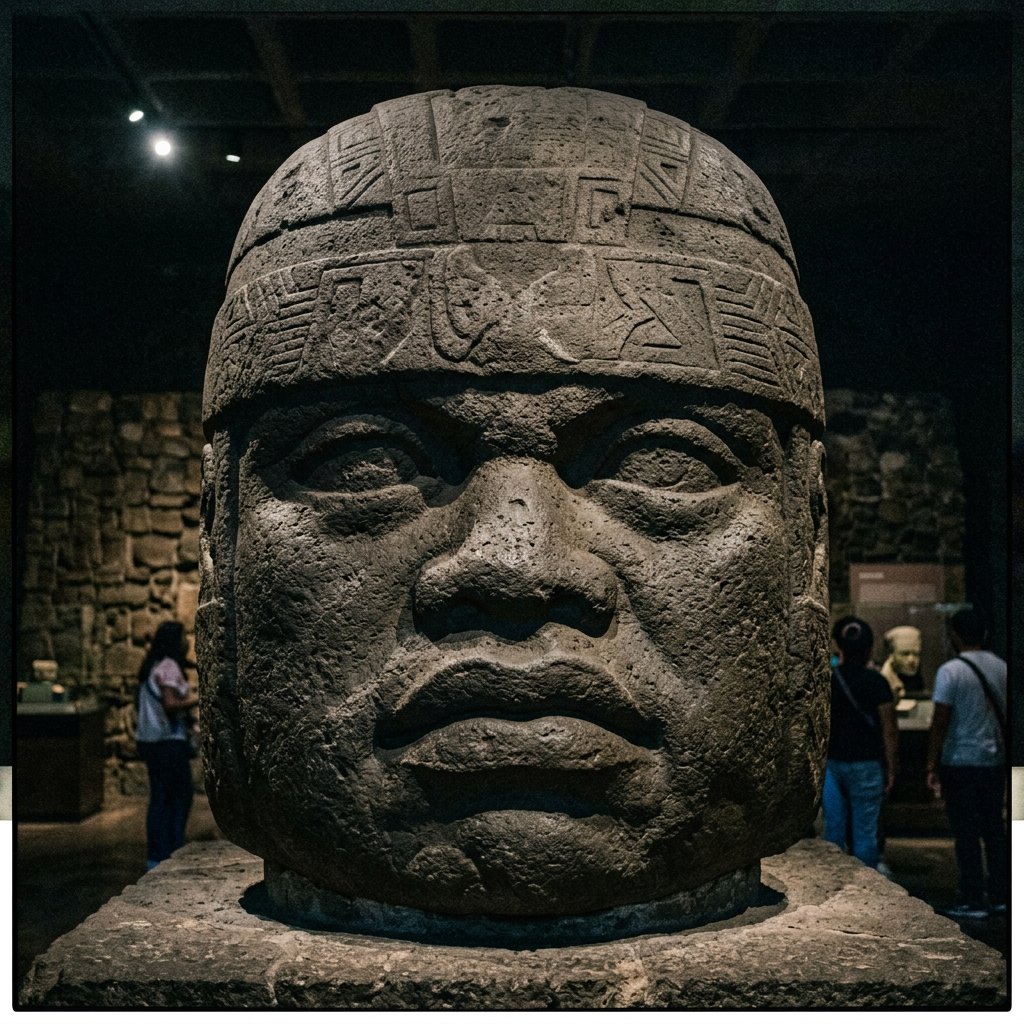
Mainstream acceptance: High. The Maya were observing and absorbing knowledge from the Olmec — Mesoamerica's "mother culture" — for centuries before producing their own innovations. The apparent "suddenness" is an artifact of measuring only visible output, not invisible absorption. When the Maya emerged as an independent civilization, they were standing on Olmec shoulders.
The limitation: this theory pushes the question back one step. The Olmec themselves appeared suddenly around 1500 BC with colossal sculpture, jade carving, and proto-writing — without clear predecessors. If the Maya learned from the Olmec, who taught the Olmec?
2. Environmental Pressure
Mainstream acceptance: Moderate. Climate shifts, volcanic events, or resource competition may have created crisis conditions that demanded rapid innovation — sophisticated water management, agricultural intensification, political centralization, and writing for record-keeping. Pressure drives invention. Necessity is the mother of mathematics.
Supporting evidence: the period of fastest Maya development (900–300 BC) coincides with documented climate variability in the Maya lowlands, including irregular rainfall patterns that would have rewarded societies capable of large-scale water management (Dunning et al., Latin American Antiquity, 2012).
3. Knowledge Import
Mainstream acceptance: Low — but not zero. The Book of Mormon describes a literate, numerate Near Eastern group arriving around 600 BC — the exact moment of fastest acceleration. The Popol Vuh describes ancestral knowledge brought from "the East." Biological evidence proves pre-Columbian transoceanic contact occurred. Whether ideas traveled with the biology is unknown.
The limitation: no epigraphic, genetic, or artifactual evidence of specific Near Eastern influence has been found in the Maya record. The correlation between external arrival stories and the acceleration timeline is intriguing but not proof.
4. The Missing Record
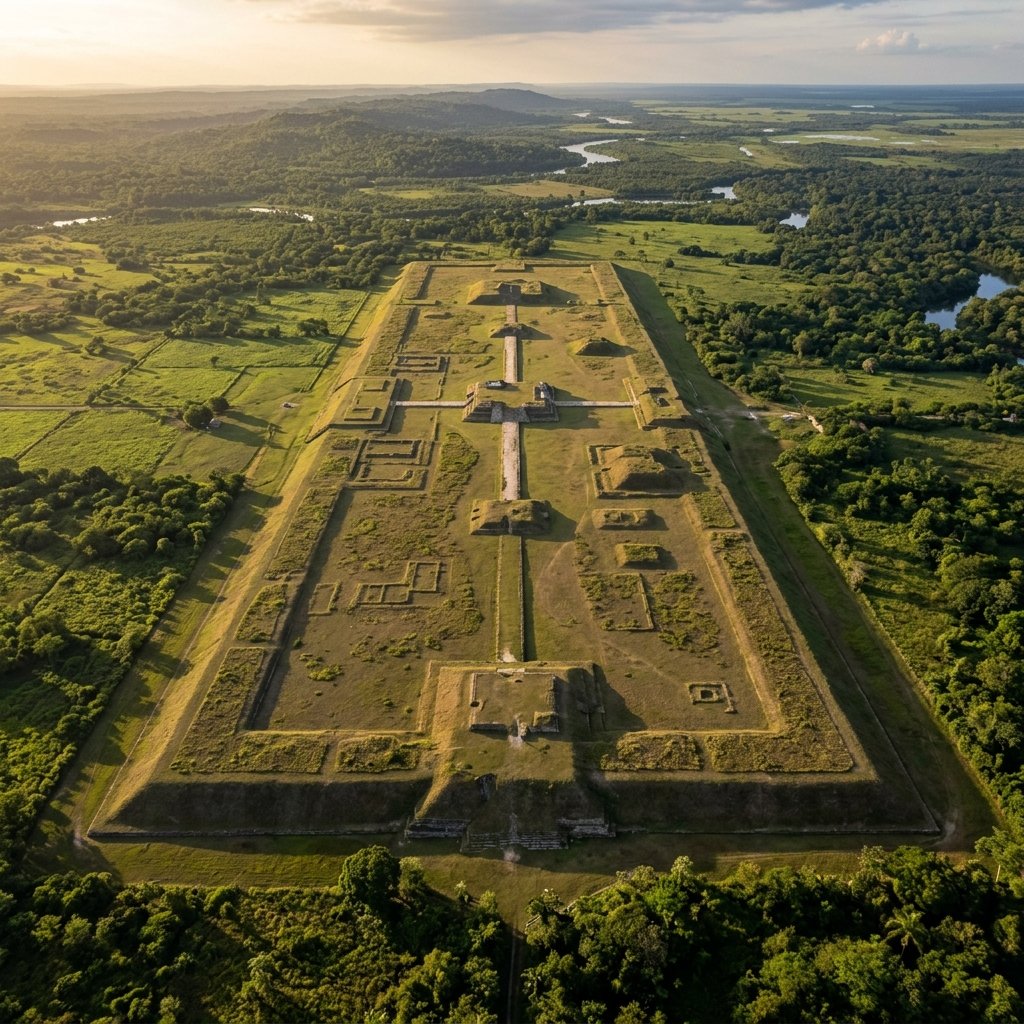
Mainstream acceptance: Growing. The apparent "suddenness" may be an artifact of our incomplete archaeological record. LiDAR surveys have already proved we were dramatically wrong about Maya population, urban scale, and infrastructure. Hansen's 2023 LiDAR analysis of the Mirador-Calakmul basin revealed over 900 previously unknown settlements.
Perhaps the gradual precursors exist — in unexcavated sites, submerged coastal settlements, or perishable-material records (bark paper, woven textiles) that didn't survive the tropical environment. We may not be seeing a "sudden" appearance but a sudden visibility in a partial record.
What the Acceleration Tells Us
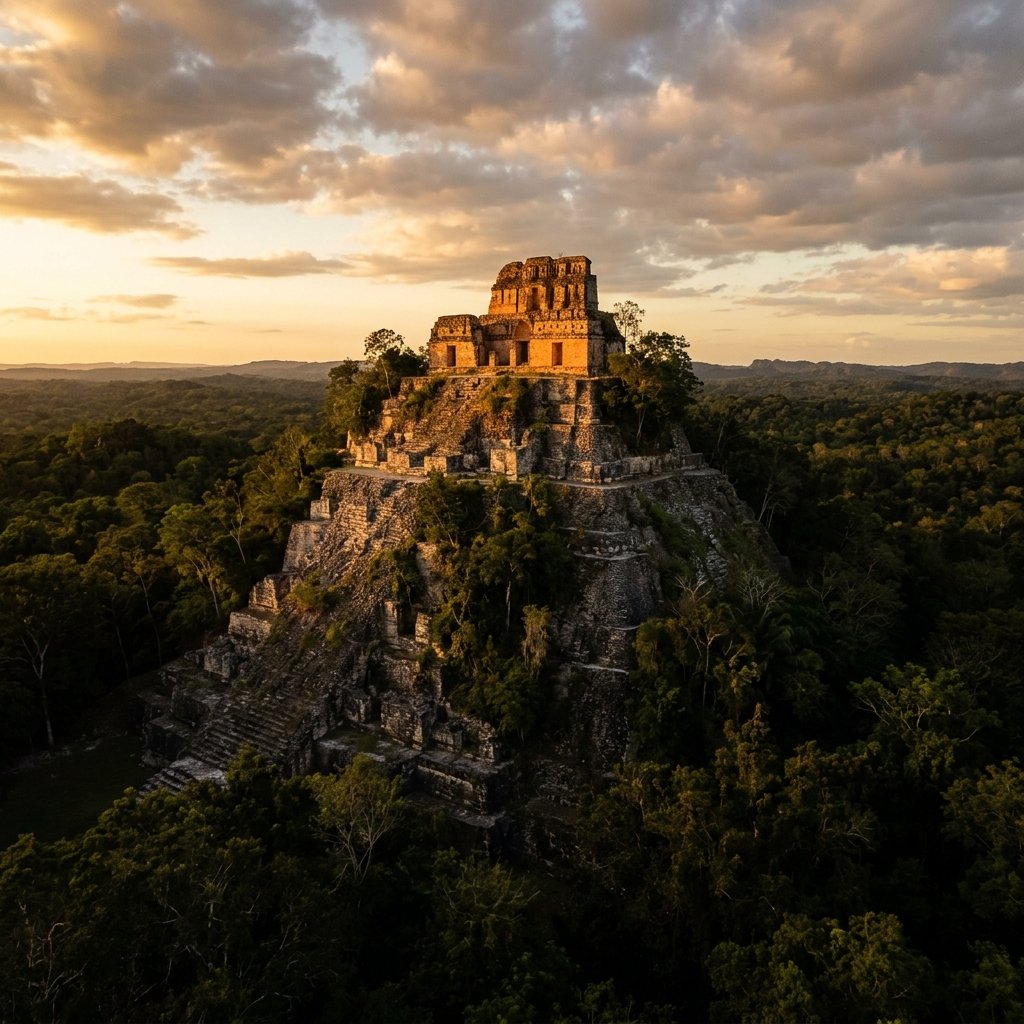
Regardless of which explanation (or combination of explanations) is correct, the Maya acceleration is real and documented. It forces us to confront several uncomfortable conclusions:
- Innovation doesn't always require millennia. Under the right conditions — social pressure, population growth, resource challenges, cultural exchange — civilizations can undergo intellectual revolutions in centuries, not millennia.
- Our understanding of the Preclassic Maya is still in its infancy. LiDAR has shown that every decade of excavation reveals that we were more wrong than we thought. The picture will change again.
- The question isn't settled. The speed of Maya civilizational development is a documented fact. The cause remains an open question. Honest scholarship requires sitting with that uncertainty rather than pretending to have the answer.
The Honest Answer
The Maya civilizational acceleration is real, documented, and anomalous compared to every other primary civilization. The cause is debated. The responsible position is to acknowledge the phenomenon, evaluate each proposed explanation on its evidence, and resist the temptation to dismiss any framework before the data is in. As archaeologist Takeshi Inomata wrote after discovering Aguada Fénix: "This changes our understanding of the beginning of Maya civilization."
Frequently Asked Questions
Is the "sudden knowledge" argument used by fringe theorists?
Yes — and that's unfortunate, because the underlying question is legitimate. The speed of Mesoamerican cultural acceleration is a documented fact acknowledged by mainstream archaeologists like Takeshi Inomata (Nature, 2020) and Richard Hansen (Cambridge Archaeological Journal, 2023). What differs is the explanation: mainstream science invokes accelerating local development, religious interpretations invoke outside sources, and fringe theorists invoke various implausible external agents. Dismissing the question because some bad answers exist would be its own failure of intellectual honesty.
Did the Maya really invent zero before India?
Yes. The earliest confirmed use of zero as a positional value in the Maya record dates to approximately the 4th century BC, predating the earliest confirmed Indian positional zero (the Bakhshali manuscript, ~3rd–4th century AD) by roughly 700 years. Both represent independent inventions. The Babylonians had a placeholder concept earlier but did not treat zero as a number in its own right.
How has LiDAR changed our understanding of the Preclassic?
Dramatically. Before LiDAR, the Preclassic Maya were widely assumed to have lived in scattered farming villages with limited political complexity. LiDAR surveys in the Mirador-Calakmul basin (Hansen, 2023), Aguada Fénix (Inomata, 2020), and the Belize River valley have revealed hundreds of monumental structures, raised causeways, water management systems, and defensive infrastructure dating to 1000–300 BC — proving that Preclassic Maya society was far larger and more organized than previously understood.
References & Further Reading
- Inomata, T., et al. (2020). "Monumental architecture at Aguada Fénix and the rise of Maya civilization." Nature, 582, 530–533.
- Hansen, R. D., et al. (2023). "LiDAR analyses in the Mirador-Calakmul Karst Basin." Cambridge Archaeological Journal, 33(4), 621–642.
- Diehl, R. A. (2004). The Olmecs: America's First Civilization. Thames & Hudson.
- Sharer, R. J. & Traxler, L. P. (2006). The Ancient Maya. 6th ed. Stanford University Press.
- Dunning, N. P., et al. (2012). "Kax and kol: Collapse and resilience in lowland Maya civilization." PNAS, 109(10), 3652–3657.
- Saturno, W. A., et al. (2006). "Early Maya writing at San Bartolo, Guatemala." Science, 311(5765), 1281–1283.