Sotz
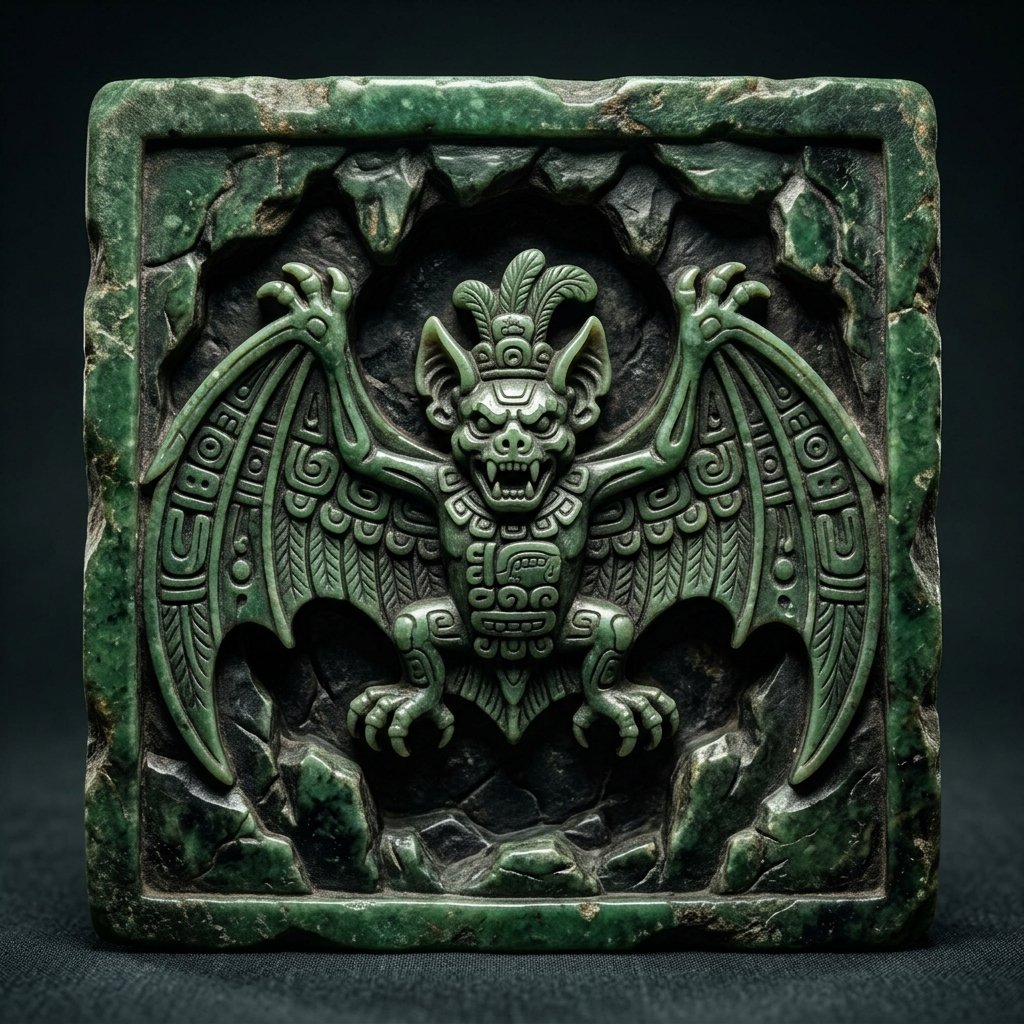
The Bat · Month 4 of 19
Etymology & Name Origin
The name "Sotz'" (also "Zotz'") directly translates to "bat" in Yucatec Maya. Bats were among the most symbolically charged animals in Maya cosmology — cave-dwelling creatures that emerged at twilight, bridging the realms of day and night, surface and underworld. The Kaqchikel Maya named one of their ruling lineages "Zotzil" (Bat House), and the Popol Vuh designates one of the houses of Xibalba as "Zotzʼi Ha" — the House of Bats.
Cultural Significance
Sotz' was considered a month of deep spiritual power and potential danger. The bat represented the liminal — existing between states, between worlds, between life and death. In the Popol Vuh, the Hero Twin Hunahpu was decapitated by Camazotz ("Death Bat") in the House of Bats, only to be restored through cleverness and supernatural intervention. This narrative established the bat as a symbol of mortal peril that could be overcome through spiritual wisdom.
Rituals & Ceremonies
During Sotz', bee-keepers performed ceremonies to protect their hives, as bats were known predators of bees. Offerings were made at cave entrances — the natural habitat of bats and the most important portals to Xibalba. Priests conducted nighttime ceremonies invoking the protective aspects of the bat, asking that its power be channeled for beneficial rather than destructive purposes.
Agricultural Cycle
Sotz' fell during the dry season, when agricultural activity was relatively limited. The month's association with caves, however, connected it to water — cenotes and underground rivers being the primary water sources during dry periods. Ceremonies during Sotz' sometimes petitioned for future rains.
Cosmological Role
The bat occupies a unique position in Maya cosmology as a creature of transformation. Neither fully of the surface world nor fully of the underworld, the bat embodies transition itself. The famous jade bat-head pectoral from Monte Albán (in Oaxaca, reflecting pan-Mesoamerican bat symbolism) shows the creature with a skeletal lower jaw, merging life and death in a single image. For the Maya, the bat was a reminder that death and rebirth are inseparable.
Patron Deity
Camazotz, the Death Bat, is the primary supernatural associated with this month. In Classic Maya art, Camazotz appears as a fearsome bat deity with a sacrificial knife, presiding over darkness and death — but also over the transformative journey through the underworld.
Key Takeaway
The Haab' month Sotz ("Bat") is month 4 of the 19-part Maya solar calendar. Spanning 20 days, it represents month of the bat and the underworld. Together with the other 17 regular months and the 5-day Wayeb' period, Sotz forms the 365-day Haab' cycle that tracked the solar year with remarkable precision.
Frequently Asked Questions
What does the Maya month name Sotz mean?
The name "Sotz" translates to "Bat" in the Haab' solar calendar. The name "Sotz'" (also "Zotz'") directly translates to "bat" in Yucatec Maya.
What ceremonies were performed during Sotz?
During Sotz', bee-keepers performed ceremonies to protect their hives, as bats were known predators of bees. Offerings were made at cave entrances — the natural habitat of bats and the most important portals to Xibalba.
Which deity is the patron of Sotz?
Camazotz, the Death Bat, is the primary supernatural associated with this month. In Classic Maya art, Camazotz appears as a fearsome bat deity with a sacrificial knife, presiding over darkness and death — but also over the transformative journey through the underworld.
How does Sotz fit into the Maya calendar system?
Sotz is month 4 of 19 in the Haab' solar calendar. It spans 20 days (numbered 0-19 in the Maya system). The Haab' consists of 18 months of 20 days each (360 days) plus a 5-day Wayeb' period, totaling 365 days — almost exactly one solar year.
Scholarly References
- Tedlock, D. Popol Vuh: The Definitive Edition. Simon & Schuster, 1996, pp. 119-123.
- Brady, J.E. & Prufer, K.M. In the Maw of the Earth Monster: Mesoamerican Ritual Cave Use. University of Texas Press, 2005, pp. 30-45.
- Coe, M.D. The Maya. Thames & Hudson, 8th ed., 2011, pp. 180-183.
- Miller, M.E. & Martin, S. Courtly Art of the Ancient Maya. Thames & Hudson, 2004, pp. 58-62.
 Sip
Sip