Sip
The Red Conjunction · Month 3 of 19
Etymology & Name Origin
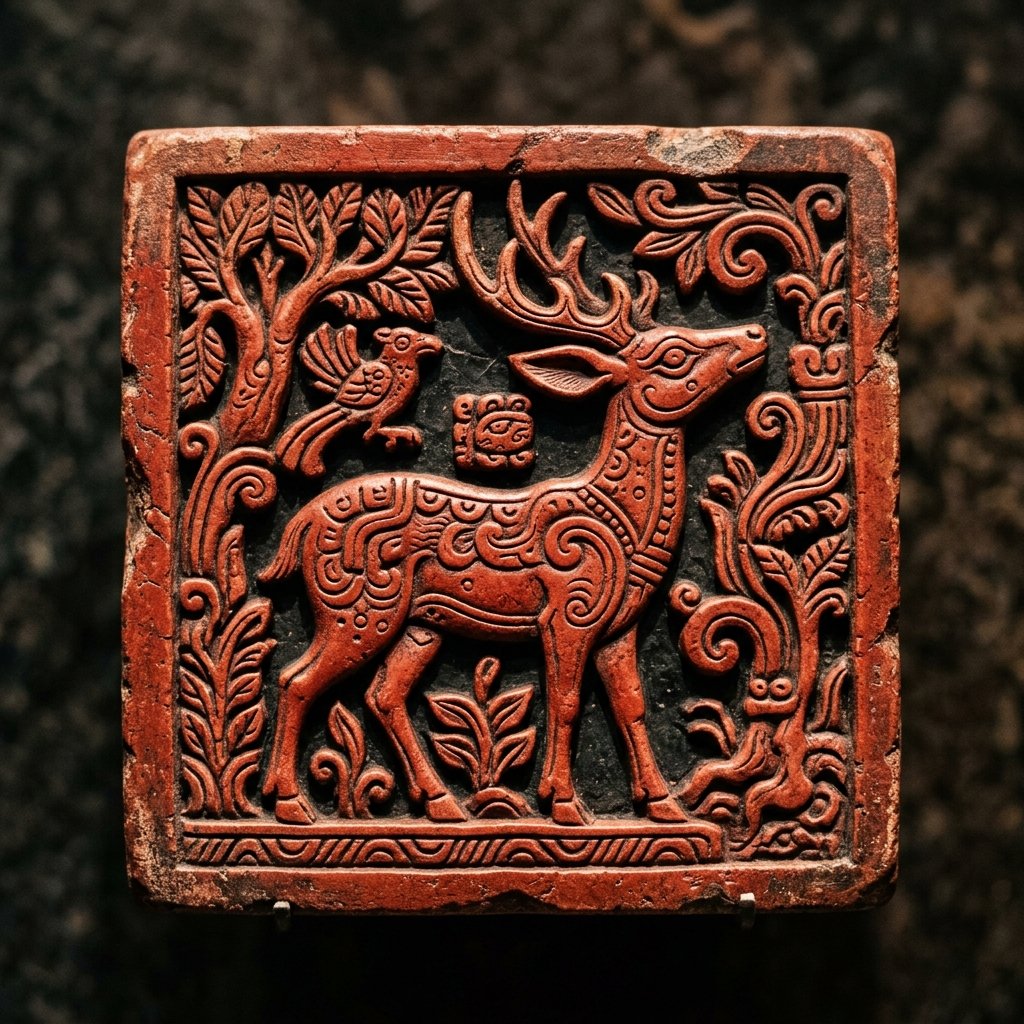
The name "Sip" (also "Zip") is associated with the color red and the deer. The "Red Conjunction" likely refers to the reddish appearance of Mars or the red-hued dawn sky during certain periods. The connection to the deer (kej) makes Sip one of the most important months for hunting rituals — the deer being the principal game animal of the Maya lowlands.
Cultural Significance
Sip was the great hunting month of the Maya calendar. Hunting was not mere subsistence activity but a sacred ritual loaded with cosmological meaning. The forest was understood as a domain governed by its own lords and spirits, and the hunter who entered it was engaging in a supernatural negotiation. Taking animal life required permission, gratitude, and ritual repayment — the concept of reciprocity that underpinned all Maya interactions with the natural world.
Rituals & Ceremonies
Bishop Landa described elaborate hunting ceremonies during Sip, where hunters blessed their weapons, anointed arrows with sacred blue pigment, and performed dances imitating the movements of deer. Offerings of copal incense, food, and drink were made to the patron deities of hunting. The bones and skulls of previously hunted deer were carefully arranged at household shrines to honor the animal spirits and ensure future hunting success.
Agricultural Cycle
While primarily a hunting month, Sip also coincided with the early stages of field preparation. The burning of cleared milpa plots often began during this period, with the rising columns of smoke understood as offerings ascending to the sky deities. Ash from the burns fertilized the thin tropical soils.
Cosmological Role
The deer hunt was a metaphor for the cosmic drama described in the Popol Vuh. The Hero Twins were blowgunner-hunters who used their skill to defeat the lords of Xibalba. Similarly, the human hunter in the forest was reenacting this mythological confrontation — penetrating the wild domain, confronting its lords, and returning with sustenance for the community. The "red" in Red Conjunction may also reference blood — the sacred substance exchanged between humanity and the divine.
Patron Deity
Sip was presided over by Sip, a deer-associated deity who was patron of hunting. This deity is distinct from the month name but closely linked, appearing in codices as a supernatural deer figure with sacrificial associations.
Key Takeaway
The Haab' month Sip ("Red Conjunction") is month 3 of the 19-part Maya solar calendar. Spanning 20 days, it represents month of the deer and hunting ceremonies. Together with the other 17 regular months and the 5-day Wayeb' period, Sip forms the 365-day Haab' cycle that tracked the solar year with remarkable precision.
Frequently Asked Questions
What does the Maya month name Sip mean?
The name "Sip" translates to "Red Conjunction" in the Haab' solar calendar. The name "Sip" (also "Zip") is associated with the color red and the deer.
What ceremonies were performed during Sip?
Bishop Landa described elaborate hunting ceremonies during Sip, where hunters blessed their weapons, anointed arrows with sacred blue pigment, and performed dances imitating the movements of deer. Offerings of copal incense, food, and drink were made to the patron deities of hunting.
Which deity is the patron of Sip?
Sip was presided over by Sip, a deer-associated deity who was patron of hunting. This deity is distinct from the month name but closely linked, appearing in codices as a supernatural deer figure with sacrificial associations.
How does Sip fit into the Maya calendar system?
Sip is month 3 of 19 in the Haab' solar calendar. It spans 20 days (numbered 0-19 in the Maya system). The Haab' consists of 18 months of 20 days each (360 days) plus a 5-day Wayeb' period, totaling 365 days — almost exactly one solar year.
Scholarly References
- Landa, D. de. Relación de las Cosas de Yucatán. Translated by A. Tozzer. Peabody Museum, 1941, pp. 158-160.
- Pohl, M. "Maya Ritual Faunas." In Civilization in the Ancient Americas, Peabody Museum Press, 1983, pp. 55-103.
- Tedlock, B. Time and the Highland Maya. University of New Mexico Press, 1992, pp. 96-102.
- Brown, L.A. "Dangerous Places and Wild Spaces: Creating Meaning with Materials and Space at Contemporary Maya Shrines on El Duende." Journal of Archaeological Method and Theory, vol. 11, 2004, pp. 31-58.
 Wo
Wo