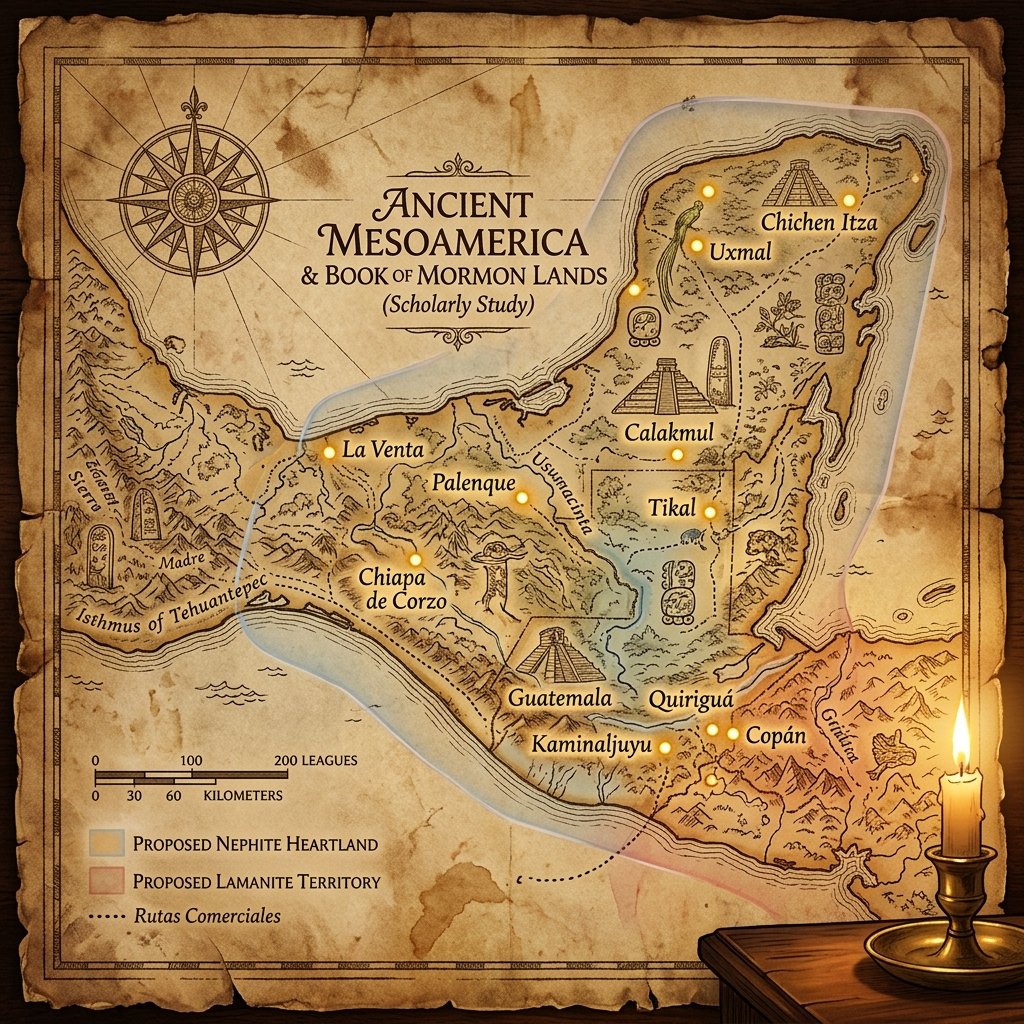
Three Models, One Central Debate
LDS geographic theories for the Book of Mormon can be grouped into three main models: the Hemispheric Model (traditional, largely abandoned), the Heartland Model (North America-focused, popular among some believers), and the Limited Mesoamerican Model (scholarly consensus among LDS researchers). Understanding these models — and why scholars favor the Mesoamerican one — illuminates how faith-based inquiry can evolve through engagement with evidence.
Model 1: The Hemispheric Model (1830–1950s)
The earliest interpretation — held by Joseph Smith and most 19th-century Latter-day Saints — placed Book of Mormon events across the entire Western Hemisphere. The Nephites occupied North America; the Lamanites became all indigenous peoples of the Americas. This model has been largely abandoned by LDS scholars because:
- DNA evidence shows no continent-wide Near Eastern genetic signature (Reich et al., Nature, 2012)
- The distances involved (thousands of km) are incompatible with the travel times described in the text
- It requires equating all Native Americans with Lamanites — a position the LDS Church has officially moved away from
Model 2: The Heartland Model (2000s–Present)
Promoted primarily by researcher Rod Meldrum, the Heartland Model places Book of Mormon events in the eastern United States — Ohio, Mississippi valley, and the Great Lakes region. Its appeal:
- The Hill Cumorah in New York — where Joseph Smith recovered the plates — becomes a literal Book of Mormon location
- Mound-builder cultures (Hopewell, Adena) provide archaeological context
- DNA haplogroup X2 distribution supports a non-Asian migration route
Its weaknesses are significant: the Hopewell culture lacks monumental stone architecture, writing systems, and the population density described in the text. Most LDS academic institutions do not endorse this model.
Model 3: The Limited Mesoamerican Model (1985–Present)
Developed by anthropologist John L. Sorenson and refined by researchers at BYU's Neal A. Maxwell Institute, this model has become the dominant LDS scholarly position. It places events in a ~600 km corridor from southern Mexico to highland Guatemala.
Key Geographic Matches
- Narrow neck of land: Isthmus of Tehuantepec (~200 km wide)
- River Sidon: Grijalva River system
- Land of Nephi: Guatemala highlands
- Land of Zarahemla: Chiapas central depression
- East sea / West sea: Caribbean / Pacific
Why It's Preferred
- Only region with full writing system
- Correct timeline (600 BC–400 AD = Preclassic–Classic)
- Population scales confirmed by LiDAR
- Monumental stone architecture present
- Volcanic/seismic activity matches text
The Limited Geography Model's most elegant solution: it proposes that Book of Mormon peoples coexisted with — and were likely absorbed into — larger indigenous populations, explaining both the cultural correspondences and the absence of clear genetic distinctiveness (Sorenson, An Ancient American Setting, 1985).
What This Means for Archaeology
Regardless of one's religious position, the LDS geographic debate has had a positive side effect: it has generated enormous amateur and scholarly interest in Mesoamerican archaeology. Book of Mormon Central and the Maxwell Institute fund research, publish academic journals, and promote public engagement with Maya studies — contributing to the broader understanding of a civilization that deserves far more attention than it receives.
Frequently Asked Questions
Does the LDS Church officially endorse a specific geographic model?
No. The Church of Jesus Christ of Latter-day Saints has taken no official position on Book of Mormon geography. Individual members and scholars are free to hold any model they find compelling. The church's 2019 Gospel Topics essay emphasized that "the Church does not take a position on the specific geographic location of Book of Mormon events."
References & Further Reading
- Sorenson, J. L. (1985). An Ancient American Setting for the Book of Mormon. Deseret Book/FARMS.
- Reich, D., et al. (2012). "Reconstructing Native American population history." Nature, 488, 370–374.
- Meldrum, R. (2009). Exploring the Book of Mormon in America's Heartland. Digital Legend.
- Gardner, B. A. (2015). Traditions of the Fathers: The Book of Mormon as History. Greg Kofford Books.