Key Takeaway
Maya medicine was not primitive folk healing — it was a sophisticated, organized medical system with specialized practitioners, an extensive pharmacopoeia of over 1,500 plants, surgical techniques, dental work, and a holistic understanding of health that integrated body, mind, and spirit. Many Maya remedies have been validated by modern pharmacological research.
The Maya Medical System
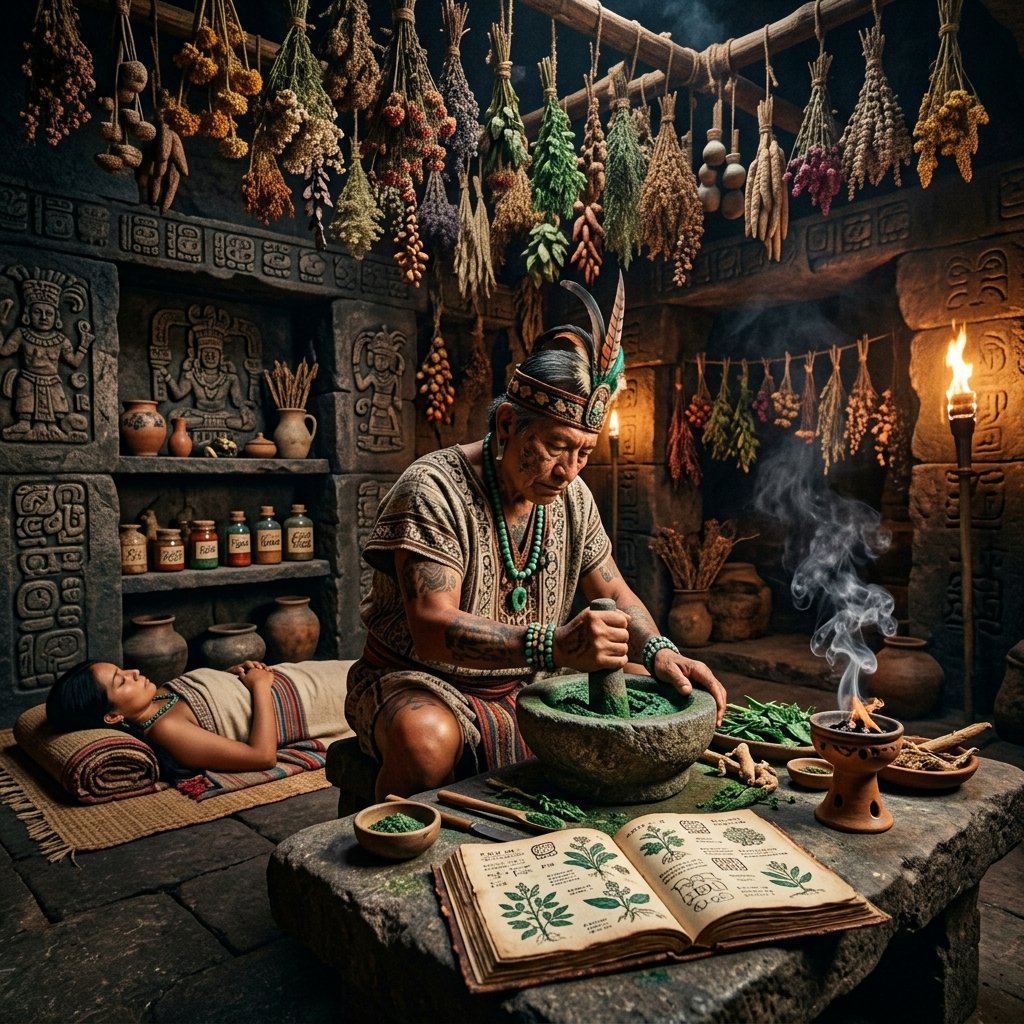
The Maya developed their medical knowledge over at least 2,000 years, creating a complex healthcare system that served millions of people. Their approach was holistic long before that became a modern buzzword — they understood that physical symptoms, spiritual balance, and environmental factors were all interconnected.
Unlike the European model that separated "body" and "spirit" medicine, Maya healing treated the whole person. A patient complaining of stomach pain might receive herbal medicine, dietary advice, spiritual cleansing, and a prescription for behavioral changes — all from the same healer. This integrated approach is remarkably similar to what modern integrative medicine is now rediscovering.
The Healers
Maya medicine was practiced by several classes of specialist healers:
- Ah Men (Shaman-Healers): The most respected medical practitioners, combining spiritual divination with herbal medicine. They diagnosed illness through prayer, observation, and reading the Tzolk'in calendar to determine which spiritual forces were at work.
- Herbalists (H'men): Specialists in plant-based medicine who maintained extensive knowledge of the region's botanical pharmacopoeia — over 1,500 medicinal plants catalogued by name and use.
- Bonesetters: Specialists in treating fractures, dislocations, and musculoskeletal injuries using splints, poultices, and manipulation techniques.
- Midwives (Ix Alanzah): Women who specialized in pregnancy, childbirth, and infant care — working under the spiritual protection of Ix Chel, the goddess of medicine and fertility.
- Tooth Workers: Dental specialists who performed tooth filing, jade inlay decoration, and the treatment of dental disease.
Herbal Pharmacopoeia
The Maya pharmacopoeia was vast and remarkably effective. Many of their plant remedies have been validated by modern pharmacological research:
Validated by Modern Science
- Chili peppers — pain relief (capsaicin, now in modern topical analgesics)
- Cacao — cardiovascular health, mood enhancement (theobromine)
- Tobacco — antiseptic wound treatment, parasite control
- Copal resin — antimicrobial wound dressing
- Guava leaves — diarrhea treatment (scientifically confirmed)
- Passionflower — anxiety relief (now FDA-studied)
Preparation Methods
- Infusions & teas — hot water extraction of active compounds
- Poultices — crushed plant material applied directly to wounds
- Enemas — for rapid drug absorption (used medicinally and ritually)
- Inhalation — burning herbs for respiratory treatment
- Sweat baths (temazcal) — steam therapy for detoxification
- Tinctures — plant compounds dissolved in fermented honey or balché
Surgery & Dental Work
The Maya performed surgical procedures using obsidian blades — volcanic glass that can be knapped to an edge sharper than modern surgical steel (3 nanometers vs. 30–50 nanometers for stainless steel scalpels). Archaeological evidence shows:
- Successful skull trepanation (drilling holes in the skull to relieve pressure) — with evidence of bone regrowth indicating patients survived
- Wound suturing using human hair, plant fiber, or ant mandibles (the ant would bite the wound edges together, then its body was snapped off, leaving the mandibles as a natural suture)
- Tooth filing into elaborate shapes — crosses, T-shapes, and serrations — for cosmetic and ritual purposes
- Jade dental inlays — small pieces of jade, pyrite, or obsidian cemented into drilled holes in the front teeth using a plant-based adhesive so strong it sometimes still holds after 1,500 years
- Cranial modification — infant skull shaping using boards, considered a mark of beauty and elite status
The Sweat Bath (Temazcal)
The temazcal (sweat bath) was both a medical treatment and a spiritual purification ritual. These stone or adobe structures — heated by pouring water over hot volcanic rocks — served as ancient saunas where patients were treated with herbal steam, massage, and prayer.
Temazcal therapy was prescribed for respiratory illness, skin conditions, arthritis, post-childbirth recovery, and spiritual cleansing. The practice continues today among Maya communities and has gained popularity in wellness tourism throughout Mexico and Guatemala.
Disease Theory
The Maya understood disease through a dual framework:
- Natural causes: They recognized that cold, heat, diet, overexertion, contaminated water, and insect bites could cause illness — a surprisingly empirical observation for any ancient culture
- Spiritual causes: Illness could also result from spiritual imbalance, divine displeasure, sorcery, soul loss, or the intrusion of malevolent winds or spirits
Treatment addressed both dimensions simultaneously. A healer treating a fever might administer an herbal antipyretic and perform a spiritual cleansing, reasoning that the physical symptom and its spiritual cause both needed treatment.
Ix Chel: The Divine Healer
Medicine in the Maya world was practiced under the spiritual patronage of Ix Chel, the Moon Goddess. In her aspect as Goddess O (Chak Chel), she is depicted as a wise old woman — the supreme healer and midwife. Maya women made pilgrimages to her shrine on Cozumel Island seeking blessings for healing, fertility, and safe childbirth.
Legacy
Maya medical knowledge didn't disappear with the Classic Period. Today, traditional Maya healers (curanderos) in Guatemala, Belize, and southern Mexico continue to practice plant-based medicine using knowledge passed down through generations. The Belize Ethnobotany Project and organizations like the Ix Chel Tropical Research Foundation work to document and preserve this living pharmacological tradition before it's lost.
Modern pharmaceutical companies have shown increasing interest in Maya medicinal plants. Several compounds from their traditional pharmacopoeia are currently under investigation for anti-cancer, anti-inflammatory, and antimicrobial properties.
Frequently Asked Questions
Did Maya medicine actually work?
Much of it did. Modern pharmacological analysis has confirmed the efficacy of many Maya herbal remedies. Their use of capsaicin for pain, guava for diarrhea, and various antimicrobial plants shows genuine empirical medical knowledge. Their surgical techniques, particularly with obsidian blades, were remarkably advanced.
Were Maya healers like modern doctors?
They were trained specialists, but their practice integrated spiritual and physical healing in a way that modern Western medicine does not. A Maya healer was part herbalist, part priest, part psychologist. Their approach is closer to modern integrative or holistic medicine than to conventional Western practice.
Is Maya medicine still practiced today?
Yes. Traditional Maya healing continues in Guatemala, Belize, and southern Mexico. Many rural Maya communities still rely on traditional healers and herbal medicines, and there are active efforts to document and preserve this knowledge through ethnobotanical research.