Wayeb
The Nameless Days · Month 19 of 19
Etymology & Name Origin
"Wayeb'" (also "Uayeb") derives from the root "way," meaning "sleep," "dream," "spirit companion," or "sorcery." The word "wayob" (plural) refers to spirit-animal companions — the supernatural alter-egos that every person was believed to carry. The Wayeb' period — only 5 days compared to the standard 20 — was considered outside normal time: a liminal gap between years when the cosmic order was temporarily suspended and supernatural dangers multiplied.
Cultural Significance
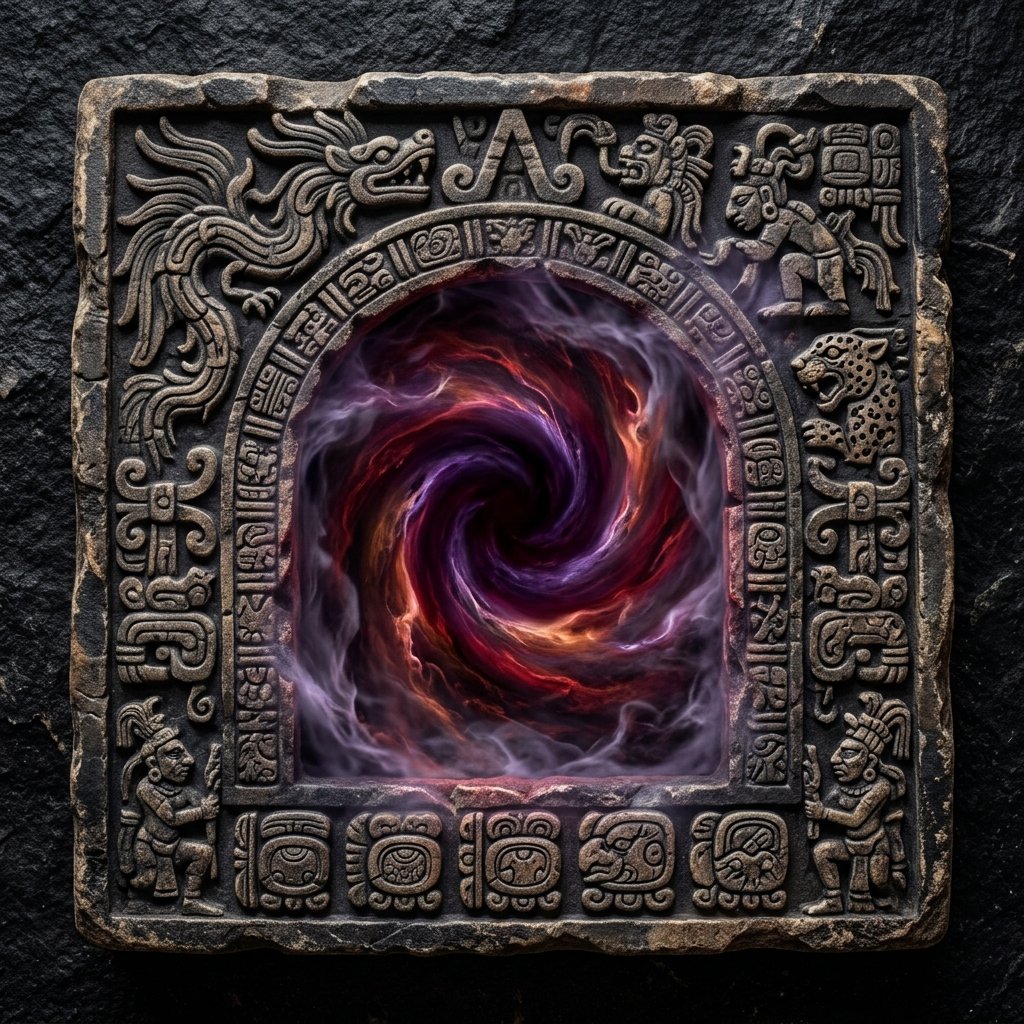
Wayeb' was the most feared period in the Maya calendar. These five "nameless days" existed outside the orderly structure of the 18 proper months, creating a dangerous void in the temporal fabric. The Maya believed that during Wayeb', the portals to Xibalba stood open, malevolent spirits roamed freely, and ordinary protective rituals lost their effectiveness. It was a time of maximum vulnerability — for individuals, for communities, and for the cosmos itself.
Rituals & Ceremonies
During Wayeb', the Maya practiced strict behavioral taboos. Landa reported that people avoided leaving their homes, did not wash their hair, did not engage in any unnecessary activity, and certainly did not undertake any new project. Community elders performed protective ceremonies at the boundaries of towns and villages, setting up four road-guardians (often clay idols placed at the four entry points) to block malevolent spirits from entering the settlement. Fasting and abstinence were universal.
Agricultural Cycle
No agricultural work was performed during Wayeb'. Fields were not visited, tools were not sharpened, and no seeds were planted. The five days were a complete pause in the productive cycle — a recognition that not all time is suitable for action. Wayeb' taught that productivity requires restraint, that creation requires rest, and that the cycle of activity must include periods of deliberate inactivity.
Cosmological Role
Wayeb' represented the gap between cosmic cycles — the moment when one year has died but the next has not yet been born. In this interstitial period, the normal rules governing reality were suspended. The spirit-companion (way) connection embedded in the month's name suggests that during Wayeb', the boundary between a person and their supernatural alter-ego dissolved, making individuals more spiritually powerful but also more vulnerable. This was a time of raw, unstructured supernatural energy.
Patron Deity
No patron deity properly governed Wayeb' — that was precisely the problem. The absence of divine sponsorship left the period "uncovered" and unprotected. The Mam, an aged and somewhat malevolent figure, was sometimes installed as a temporary guardian for the duration, but his authority was limited and his nature unpredictable.
Key Takeaway
The Haab' month Wayeb ("Nameless Days") is month 19 of the 19-part Maya solar calendar. Spanning 5 days, it represents the 5 unlucky days — a time of caution and reflection. As the five "nameless days" at the end of the solar year, Wayeb' was considered the most dangerous period of the entire calendar — a time when the cosmic order was temporarily suspended.
Frequently Asked Questions
What does the Maya month name Wayeb mean?
The name "Wayeb" translates to "Nameless Days" in the Haab' solar calendar. "Wayeb'" (also "Uayeb") derives from the root "way," meaning "sleep," "dream," "spirit companion," or "sorcery.
What ceremonies were performed during Wayeb?
During Wayeb', the Maya practiced strict behavioral taboos. Landa reported that people avoided leaving their homes, did not wash their hair, did not engage in any unnecessary activity, and certainly did not undertake any new project.
Which deity is the patron of Wayeb?
No patron deity properly governed Wayeb' — that was precisely the problem. The absence of divine sponsorship left the period "uncovered" and unprotected. The Mam, an aged and somewhat malevolent figure, was sometimes installed as a temporary guardian for the duration, but his authority was limited and his nature unpredictable.
How does Wayeb fit into the Maya calendar system?
Wayeb is month 19 of 19 in the Haab' solar calendar. It spans 5 days — making it unique as the only period shorter than the standard 20-day month. The Haab' consists of 18 months of 20 days each (360 days) plus these 5 Wayeb' days, totaling 365 days.
Scholarly References
- Landa, D. de. Relación de las Cosas de Yucatán. Translated by A. Tozzer. Peabody Museum, 1941, pp. 135-149.
- Coe, M.D. The Maya. Thames & Hudson, 8th ed., 2011, pp. 61-63.
- Stuart, D. The Order of Days. Harmony Books, 2011, pp. 182-195.
- Sharer, R. & Traxler, L. The Ancient Maya. Stanford University Press, 6th ed., 2006, pp. 120-128.
 Kumku
Kumku