Muluc
The Water · Day Sign 9 of 20
Who Is Muluc?
You flow with deep emotional intelligence and intuitive power. Like water finding its path through stone, you have an extraordinary ability to navigate complex emotional landscapes. Muluc people feel everything deeply and often serve as emotional anchors for those around them.
In the Tzolk'in — the sacred 260-day calendar of the Maya — Muluc is the 9th of twenty day signs, each representing a fundamental archetype of human experience. Your day sign is determined by the day you were born, and it shapes your personality, your purpose, and the cosmic energy you carry through life.
Muluc is associated with the East direction, the element of Water, and the color Red. In the Maya cosmological system, these associations connect you to specific natural forces, seasonal energies, and spiritual qualities.
Strengths of Muluc
Those born under the sign of Muluc carry remarkable natural gifts:
- Profound emotional intelligence
- Powerful intuition
- Natural flow and adaptability
- Purifying presence for others
- Connection to lunar and water energies
Challenges of Muluc
Every sign carries its shadow. The challenges of Muluc are not weaknesses — they are growth edges that, when worked with consciously, become your greatest sources of power:
- Emotional overwhelm
- Can be moody or unpredictable
- May drown in others' feelings
- Tendency toward emotional manipulation
- Can lack boundaries
Muluc in Love & Relationships
Muluc loves like a river — deep, constant, and shaping. You need emotional authenticity and will know instantly if someone is being false. Your partner must be emotionally honest.
Most Compatible Signs
Muluc shares the element of Water with these signs, creating natural resonance:
→ Check your compatibility with any birthday
Muluc Career & Life Path
Counseling, marine biology, water-related work, emotional healing, music, poetry, ceremonial work, nursing.
Famous Muluc People
Notable individuals believed to carry the Muluc energy: Virginia Woolf, Claude Debussy
Note: Mayan astrology as presented on this site is a modern interpretation of the Tzolk'in calendar system. It draws on both academic research and contemporary practices, and should be enjoyed as a framework for self-reflection rather than a literal prediction system.
Muluc in History & Archaeology
The Classic Glyph
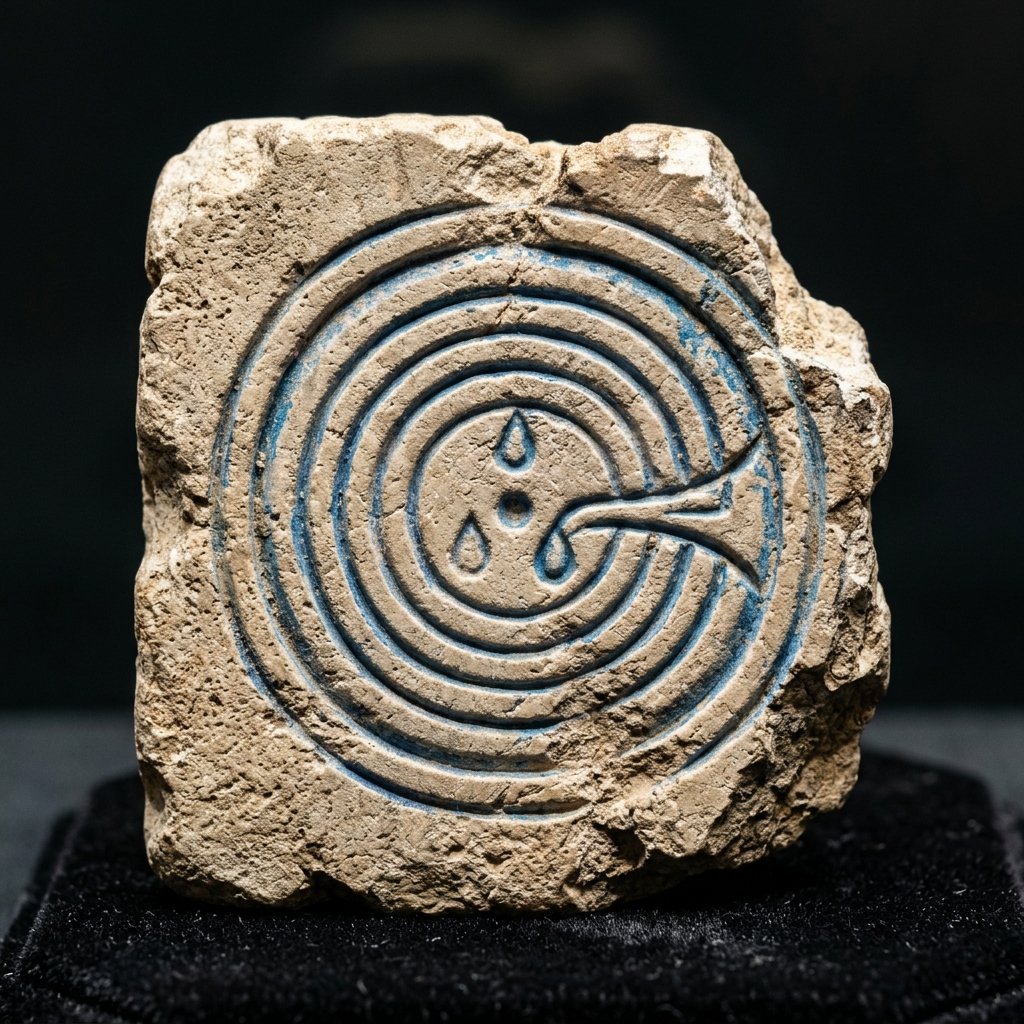
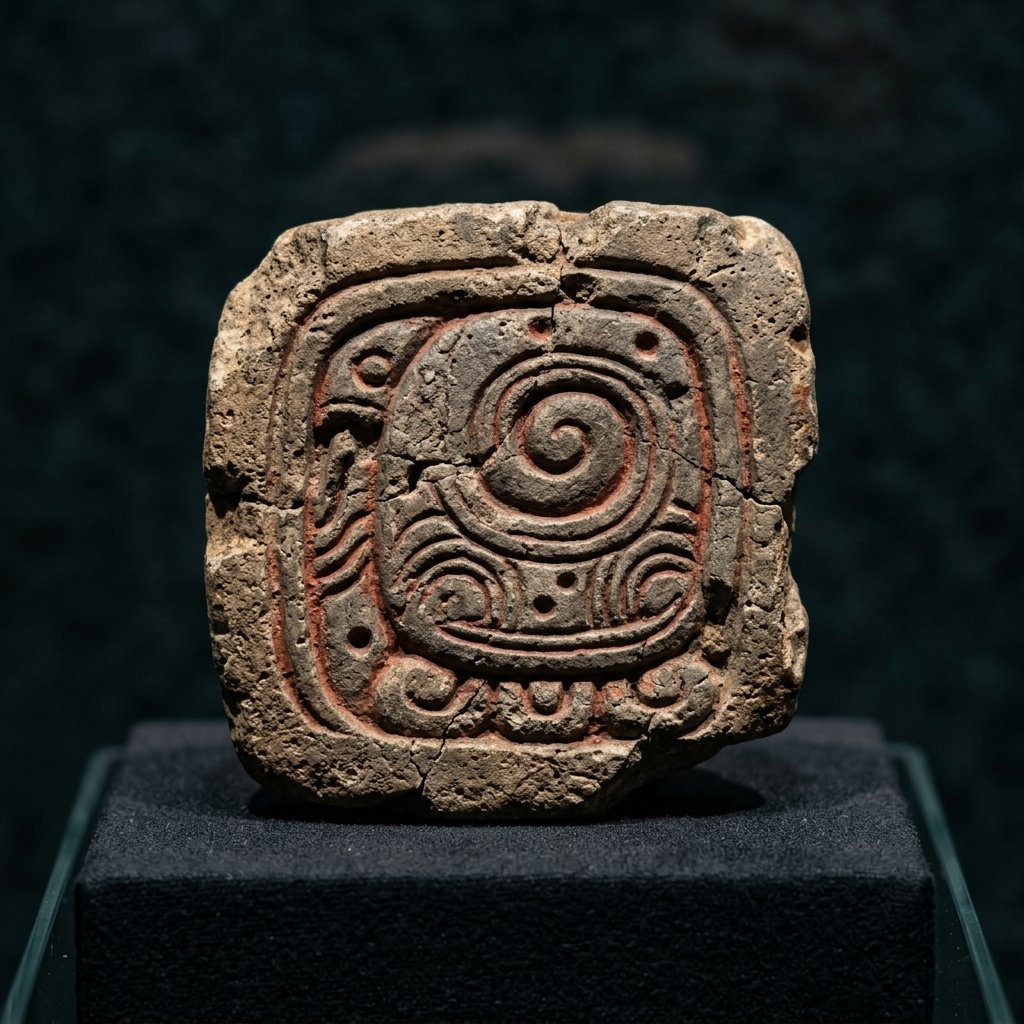
The Muluc glyph depicts a jade or water droplet — the "precious liquid" that represented both physical water and the most valuable substance in the Maya world.
Archaeological Record
Water management was a defining achievement of Maya civilization. The great reservoirs at Tikal held an estimated 900,000 cubic meters of water, sustaining a population of 60,000–90,000 in a region with no rivers or lakes. At Palenque, engineers channeled the Otolum River through a sophisticated aqueduct system — the oldest known pressurized aqueduct in the New World. These engineering feats reflected the deep spiritual significance of water: the cenotes of the Yucatán were portals to Xibalba, and the Sacred Cenote at Chichén Itzá received jade, gold, copal, and human offerings for centuries.
Cosmological Significance
Water was the boundary between worlds — the surface of a lake or pool was understood as a mirror separating the human world from the supernatural realm beneath. The Maya word for "sea" (nab) appears in the name of the city-state Calakmul ("Place of the Two Adjacent Mounds") and the title of its rulers. Bishop Diego de Landa recorded that the Maya associated this day with rain and agricultural fertility, and that offerings were made to the rain god Chaac on Muluc days. The lunar connection is also significant: the moon goddess Ix Chel was associated with water, tides, and flooding.
Scholarly References
- Scarborough, V.L. The Flow of Power: Ancient Water Systems and Landscapes. School of American Research Press, 2003, pp. 69–93.
- Lucero, L.J. Water and Ritual: The Rise and Fall of Classic Maya Rulers. University of Texas Press, 2006, pp. 1–28.
- Landa, D. de. Relación de las Cosas de Yucatán (c. 1566). Translated by A. Tozzer. Peabody Museum, 1941, pp. 140–141.
The 13 Tones of Muluc
Your day sign is only half of your Tzolk'in identity. The other half is your tone number — a number from 1 to 13 that modifies and refines the energy of your sign. If your sign is what you are, your tone is how you express it.
→ Find your exact tone number with our calculator
Frequently Asked Questions
What does it mean to be born on Muluc?
Being born on Muluc means the day you entered the world was governed by the energy of the Water. In Maya cosmology, this shapes your personality, strengths, challenges, and life purpose.
Is Muluc the same as a Western zodiac sign?
No. The Maya Tzolk'in system is completely independent of Western astrology. While Western signs are based on the sun's position among constellations, Maya day signs are based on a 260-day sacred calendar cycle.
How do I know if I'm a Muluc?
Use our Mayan Sign Calculator — enter your birth date and it will calculate your exact day sign and tone number using the same mathematical system the ancient Maya used.
What element is Muluc?
Muluc is associated with the element of Water and the East direction. This connects you to other Water signs and the energies of that element.
 Lamat
Lamat