Why This Museum Matters
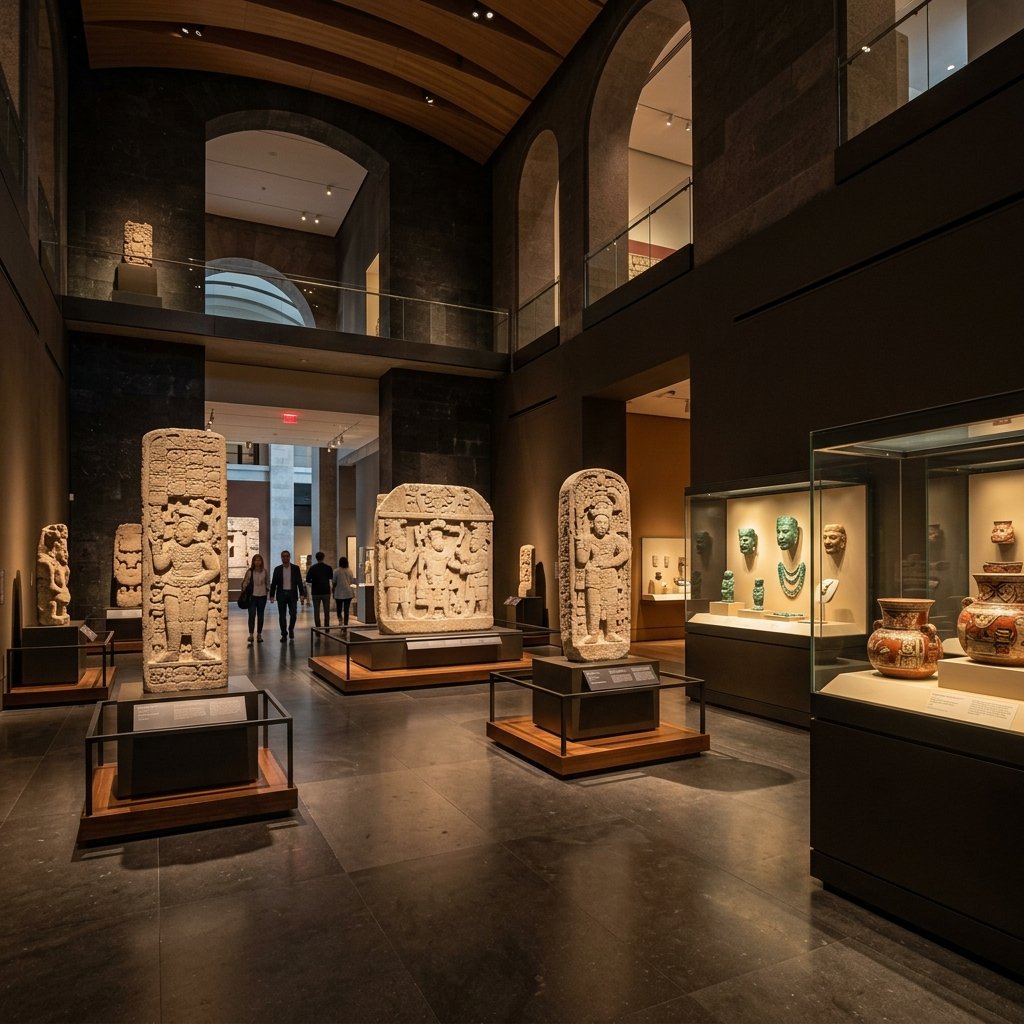
The Metropolitan Museum of Art is the largest art museum in the Western Hemisphere, and its Maya collection — housed in the Michael C. Rockefeller Wing — represents one of the finest assemblages of ancient American art anywhere. After an extensive multi-year renovation, the wing reopened on May 31, 2025, with completely redesigned galleries showcasing Maya stone sculpture, painted ceramics, jade and obsidian objects, and monumental architectural elements in a setting that emphasizes the aesthetic brilliance of Maya art alongside its cultural significance. The Met treats Maya artifacts as art — not just archaeology — and the presentation is correspondingly stunning.
Signature Artifacts

Seated Lord from the Usumacinta Region
A limestone seated figure of a Maya lord — one of the Met's most celebrated ancient American artworks. The figure sits cross-legged in a pose of royal authority, wearing a large jade necklace and elaborate headdress. The carving demonstrates the extraordinary naturalism of Late Classic Maya portraiture — the same tradition that produced the Copán stelae and the Palenque portrait heads. This single object embodies the Maya genius for capturing individual personality in stone.
Mosaic Jade Mask and Ornaments
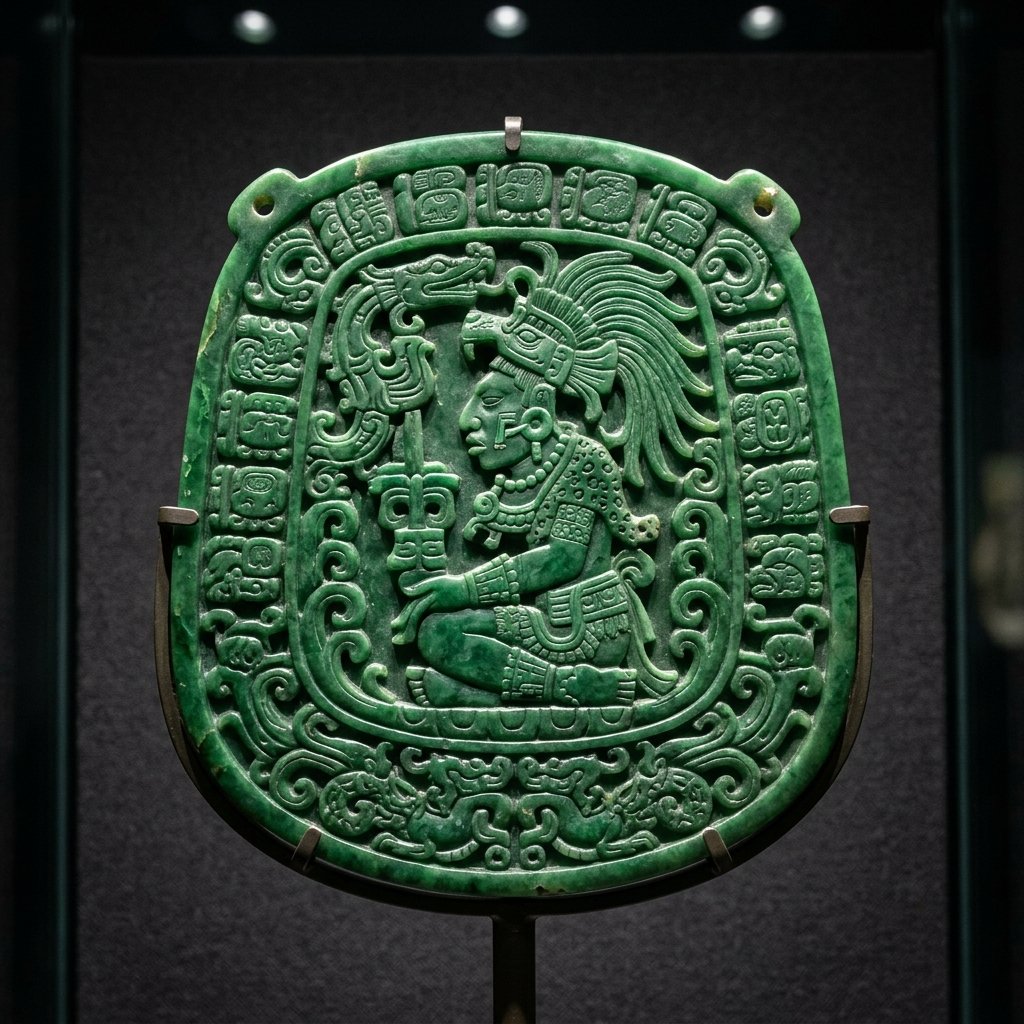
The Met possesses exquisite jade objects from across the Maya world — ear spools carved with portraits of rulers, pectoral ornaments depicting deities, and mosaic plaques assembled from dozens of perfectly fitted jade pieces. Jade (jadeite) was the most precious material in the Maya world — more valued than gold — and the Met's collection showcases the full range of Maya lapidary skill, from massive chest ornaments to tiny, intricately carved beads.
Additional Highlights
- Painted ceramics: A superb collection of Classic Maya polychrome vessels, including codex-style vases with mythological scenes painted in the "Princeton painter" style — fine black-line drawing on cream backgrounds.
- Obsidian eccentrics: Ceremonial obsidian blades chipped into the profiles of gods, serpents, and supernatural beings — some of the most technically demanding lithic work in the ancient world.
- Stone lintels and panels: Carved limestone panels with hieroglyphic texts recording royal events — wars, accessions, and ritual performances.
- Jaina figurines: Hollow clay figurines from the Jaina burial island, showing Maya nobles, warriors, and deities with vivid personality and detail.
- Gold and metalwork: Post-Classic gold and copper objects demonstrating Maya metallurgical techniques acquired through contact with South American traditions.
Scholarly References
- Miller, M. E. & Martin, S. (2004). Courtly Art of the Ancient Maya. Thames & Hudson.
- Reents-Budet, D. (1994). Painting the Maya Universe: Royal Ceramics of the Classic Period. Duke University Press.
- Kerr, J. (1989–2000). The Maya Vase Book. Vols. 1–6. Kerr Associates.
- Taube, K. A. (2005). "The Symbolism of Jade in Classic Maya Religion." Ancient Mesoamerica, 16(1), 23–50.
- Fields, V. & Reents-Budet, D. (2005). Lords of Creation: The Origins of Sacred Maya Kingship. Los Angeles County Museum of Art.
- Schele, L. & Miller, M. E. (1986). The Blood of Kings: Dynasty and Ritual in Maya Art. Kimbell Art Museum.
The Rockefeller Wing Renovation
The multiyear renovation of the Michael C. Rockefeller Wing — completed in 2025 — represents one of the most significant reimaginings of ancient American art display in museum history. The new galleries use:
- Updated lighting designed to reveal carved details invisible under previous exhibition conditions
- Expanded interpretation addressing the colonial contexts in which many objects were acquired
- Thematic groupings that emphasize artistic traditions and material culture rather than purely chronological arrangement
- Enhanced climate control protecting fragile ceramic and organic materials
Practical Information
Contact & Location
- 📍 1000 Fifth Avenue, New York, NY 10028, USA
- 📞 (212) 535-7710
- 🌐 metmuseum.org
Visitor Information
- 🕐 Sun–Tue & Thu: 10:00 AM – 5:00 PM
- 🌙 Fri–Sat: 10:00 AM – 9:00 PM
- 🚫 Closed Wednesdays
- 💰 Adults: $30 | Seniors: $22 | Students: $17 | Under 12: Free
- 🆓 Pay-what-you-wish for NY State residents & NY/NJ/CT students (with ID)
- 🚇 Subway: 86th Street (4, 5, 6 lines)
Frequently Asked Questions
Where is the Maya collection in the Met?
The Maya artifacts are in the Michael C. Rockefeller Wing, located on the ground floor of the museum. After the 2025 renovation, follow signs for "Arts of the Ancient Americas." The galleries are organized by region and theme — look for the Mesoamerica section, which includes both Maya and Aztec/Mexica material.
Can I see the Maya collection for free?
Yes — if you are a New York State resident or a student from NY, NJ, or CT, you can enter on a pay-what-you-wish basis. Bring valid ID or proof of address. Everyone else pays the standard admission, which covers the entire museum (all departments, all galleries) for the entire day.