Why This Museum Matters
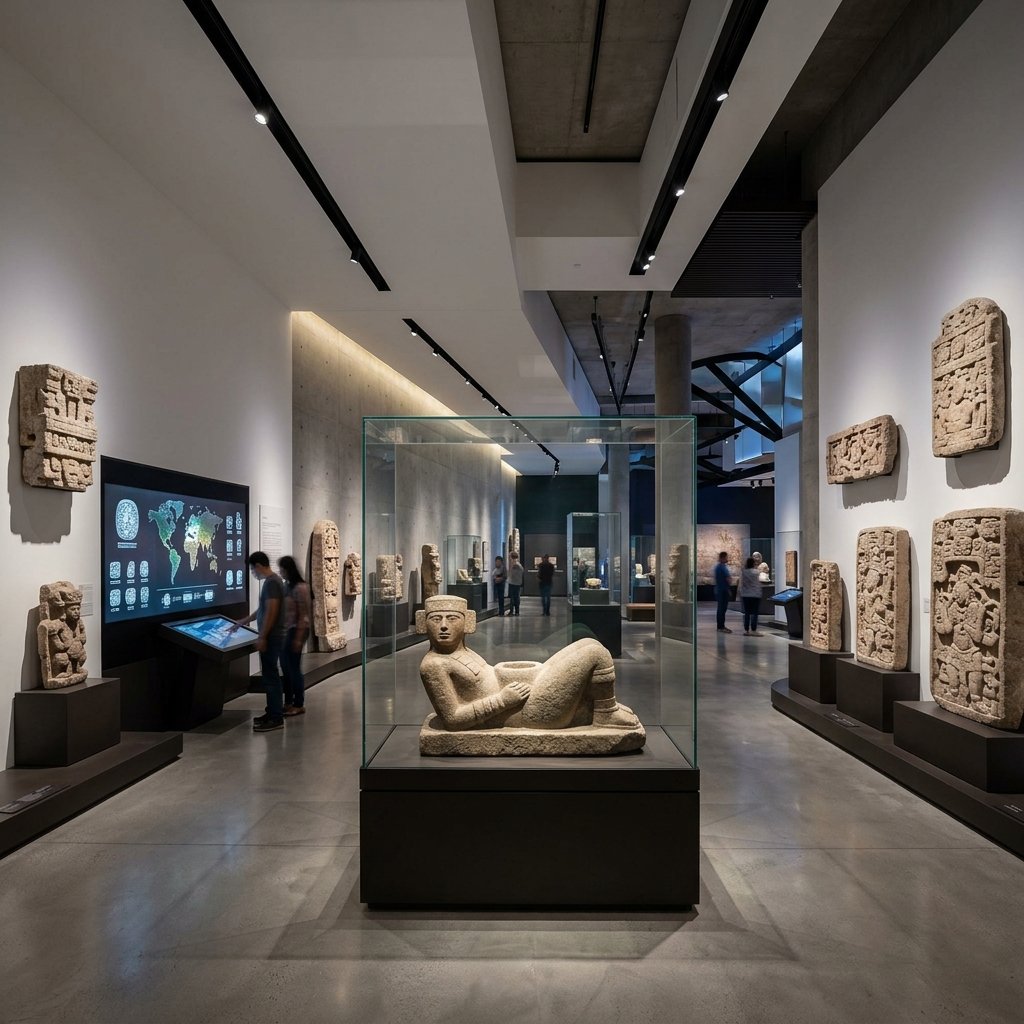
The Gran Museo de Chichén Itzá is the most significant new archaeological museum to open in Mexico in decades. Inaugurated on February 28, 2024, this ultra-modern facility sits near the entrance to the Chichén Itzá archaeological zone — one of the New Seven Wonders of the World. Over 1,000 artifacts are displayed, including objects recovered from the Sacred Cenote, carved Chac Mool figures, serpent columns from the Temple of Warriors, and materials unearthed during the construction of the nearby Maya Train railway project. The museum uses immersive technology — projection mapping, augmented reality, and interactive displays — to bring Chichén Itzá's 1,000-year history to life.
Signature Artifacts
Chac Mool Figures
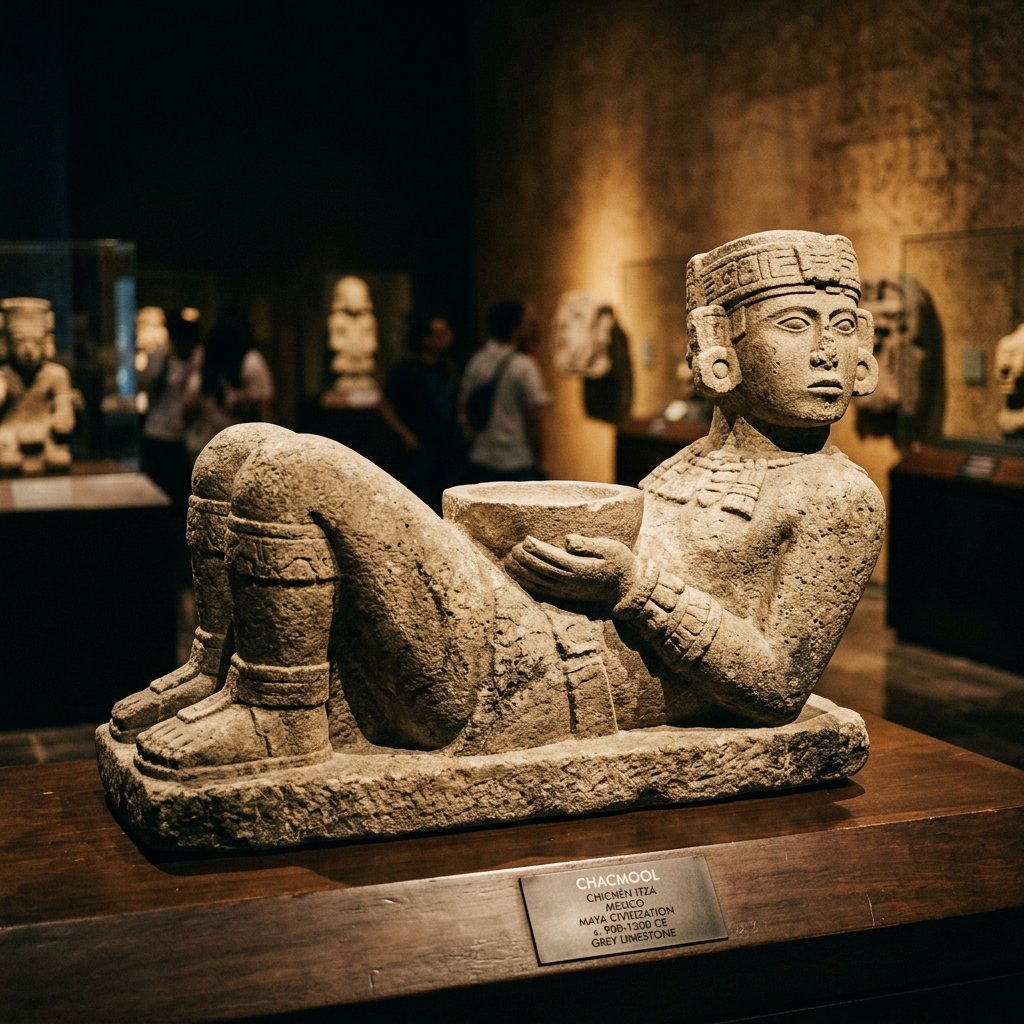
The reclining stone figures — with their turned heads, bent knees, and flat bellies holding offering dishes — are among Chichén Itzá's most iconic sculptures. The museum displays original Chac Mool figures recovered from the Temple of Warriors and other Toltec-influenced structures. These enigmatic figures, whose precise function remains debated, appear to have served as intermediaries between humans and the gods, receiving offerings on their flat stomach platforms.
Date: Terminal Classic to Early Postclassic (~AD 900–1100). Named by Augustus Le Plongeon in the 1870s.
Sacred Cenote Offerings
Objects recovered from Chichén Itzá's Sacred Cenote — the great natural sinkhole that served as a pilgrimage destination for centuries. The cenote yielded jade ornaments, gold objects, carved bone, rubber balls, copal incense, wooden figurines, and evidence of human sacrifice. Some objects originated from as far away as Panama and Colombia, demonstrating Chichén Itzá's vast trade network. Note: some cenote objects are shared with the Peabody Museum at Harvard.
Maya Train Discovery Artifacts
A unique feature of this museum: many newly discovered artifacts come from salvage excavations conducted during the construction of the controversial Maya Train railway (Tren Maya). These previously unknown objects — ceramics, stone tools, obsidian, and architectural fragments — were recovered from sites along the rail corridor and represent an entirely new dataset for understanding the broader Chichén Itzá region.
Additional Highlights
- Serpent columns and atlantean figures: Architectural elements from the Temple of Warriors showing the Toltec-Maya hybrid artistic style.
- Immersive projection room: A dedicated gallery with 360° projected animations recreating the city at its peak — including the famous equinox "serpent shadow" descending the Kukulkán pyramid.
- Ceramic collections: Hundreds of vessels, censers, and figurines from residential and ceremonial contexts.
- Stone reliefs: Carved panels depicting warriors, jaguars, and eagles consuming human hearts — the militaristic iconography that distinguishes Chichén Itzá from earlier Classic Maya sites.
Scholarly References
- Cobos, R. (2004). "Chichén Itzá: Settlement and Hegemony during the Terminal Classic Period." In The Terminal Classic in the Maya Lowlands, eds. A. Demarest et al., pp. 517–544.
- Coggins, C. & Shane, O. C. (1984). Cenote of Sacrifice: Maya Treasures from the Sacred Well at Chichén Itzá. University of Texas Press.
- Schele, L. & Freidel, D. (1990). A Forest of Kings. William Morrow. Ch. 9 (Chichén Itzá).
- Tozzer, A. M. (1957). Chichen Itza and its Cenote of Sacrifice. Peabody Museum Memoirs, Vols. 11–12.
- Schmidt, P. J. (2007). "Birds, Ceramics, and Cacao: New Investigations at Chichén Itzá." In Twin Tollans, ed. J. K. Kowalski & C. Kristan-Graham.
Practical Information
Contact & Location
- 📍 Carretera Mérida-Cancún Km 120, Col. Tinum, Pisté, Yucatán 97750, Mexico
- 📞 +52 (985) 851-0137
- 🌐 INAH Museum Page
Visitor Information
- 🕐 Daily: 8:00 AM – 5:00 PM (last entry 4:00 PM)
- 💰 ~$105 MXN (often included with archaeological zone entry)
- 🆓 Free for Mexican children under 13, students, seniors, teachers
- 🚗 Near main entrance to Chichén Itzá. Accessible via Maya Train.
Frequently Asked Questions
Is the museum included with Chichén Itzá admission?
Museum admission is typically included in the overall Chichén Itzá archaeological zone entry fee. However, verify at the ticket office as policies can change. The combined ticket covers both the ruins and the museum.
Should I visit the museum before or after the ruins?
Before — strongly recommended. The museum provides essential historical context, explanatory maps, and artifact displays that will dramatically enrich your understanding of the site. Most visitors who go straight to the ruins miss the deeper meaning of what they're seeing.