Sak
The White Storm · Month 11 of 19
Etymology & Name Origin
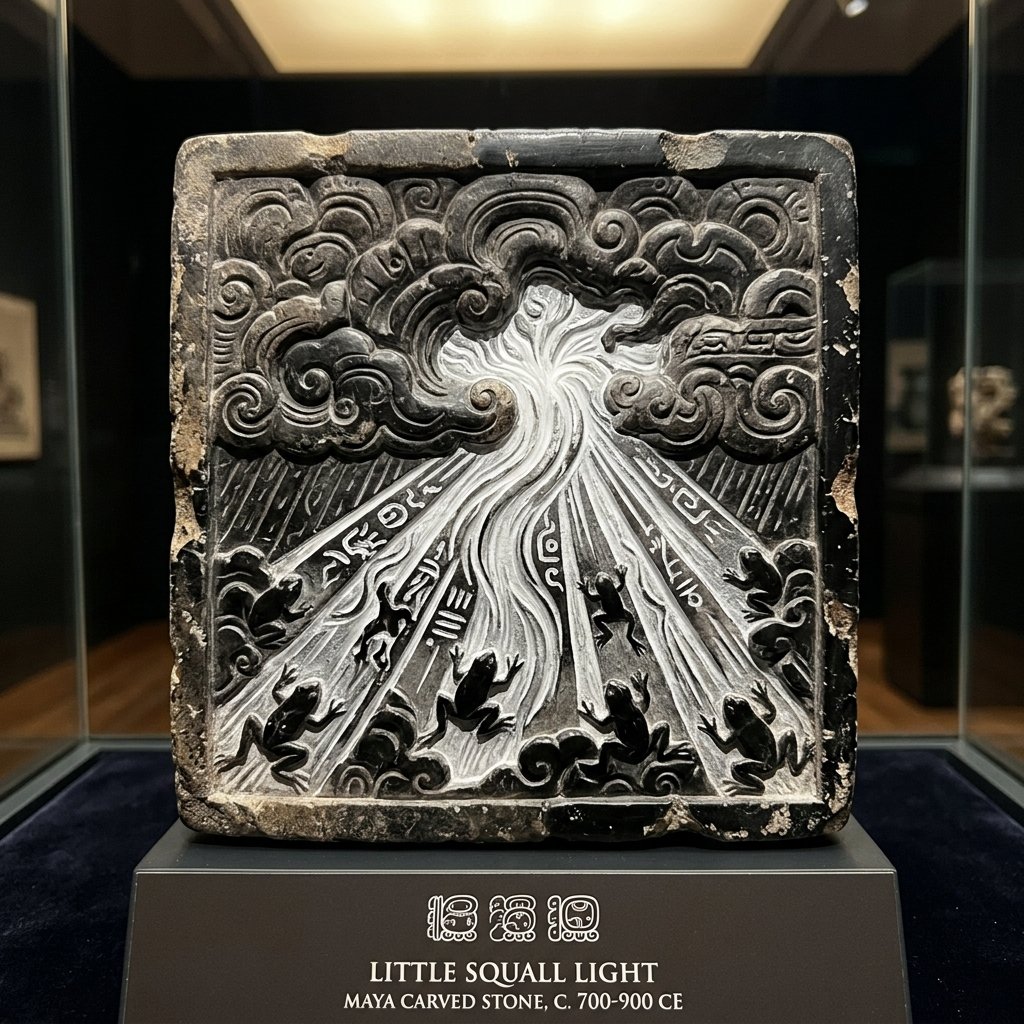
"Sak" means "white" in Yucatec Maya. White (sak) was associated with the North direction, with purity, with bone, and with the Milky Way (Sak Be — "White Road"). The "White Storm" translation suggests purification through rainfall — storms that cleanse and renew. The frog association comes from the creatures' dramatic emergence during the rainy season and their ritual significance as rain-callers.
Cultural Significance
Sak represented purification and clarity. The white of this month is the white of cleared vision — the moment after the storm when the air is clean and distances seem infinite. Frogs, which chorus dramatically during the rains, were understood as invokers of Chaac and living rain-makers. Their presence signaled the successful arrival of the waters that sustained all life.
Rituals & Ceremonies
During Sak, Landa reported that hunters performed ceremonies to atone for the blood they had spilled. This penitential aspect connects to the purification theme — after the killing of game animals, the spiritual debt had to be balanced. Offerings were made to the lords of the forest and the animal spirits, asking forgiveness and promising reciprocity. The month was also associated with ceremonies involving the four frogs (Chaac-like rain deities) positioned at the four corners of the altar.
Agricultural Cycle
Sak fell during the heart of the rainy season. The "white storm" energy was both blessing and warning — sufficient rain ensured the maize crop, but excessive rainfall could cause floods, mold, and rot. Farmers monitored their fields constantly during this period, watching for signs of disease or pest damage that the wet conditions could encourage.
Cosmological Role
The "White Road" (Sak Be) — the Milky Way — was the great pathway connecting the realms of existence. Souls traveling to Xibalba followed this celestial highway, and the Maya built physical sacbeob (raised white causeways) to mirror it on earth. The whiteness of Sak connected the terrestrial to the celestial, the human to the divine, through the color that meant purity, clarity, and passage between worlds.
Patron Deity
The four rain-frog deities (aspects of Chaac) were honored during Sak. These amphibian rain-callers were positioned at the four cardinal directions during ceremonies, croaking to summon the rain god's attention and his life-giving storms.
Key Takeaway
The Haab' month Sak ("White Storm") is month 11 of the 19-part Maya solar calendar. Spanning 20 days, it represents month of the white light, purification, and frogs. Together with the other 17 regular months and the 5-day Wayeb' period, Sak forms the 365-day Haab' cycle that tracked the solar year with remarkable precision.
Frequently Asked Questions
What does the Maya month name Sak mean?
The name "Sak" translates to "White Storm" in the Haab' solar calendar. "Sak" means "white" in Yucatec Maya.
What ceremonies were performed during Sak?
During Sak, Landa reported that hunters performed ceremonies to atone for the blood they had spilled. This penitential aspect connects to the purification theme — after the killing of game animals, the spiritual debt had to be balanced.
Which deity is the patron of Sak?
The four rain-frog deities (aspects of Chaac) were honored during Sak. These amphibian rain-callers were positioned at the four cardinal directions during ceremonies, croaking to summon the rain god's attention and his life-giving storms.
How does Sak fit into the Maya calendar system?
Sak is month 11 of 19 in the Haab' solar calendar. It spans 20 days (numbered 0-19 in the Maya system). The Haab' consists of 18 months of 20 days each (360 days) plus a 5-day Wayeb' period, totaling 365 days — almost exactly one solar year.
Scholarly References
- Landa, D. de. Relación de las Cosas de Yucatán. Translated by A. Tozzer. Peabody Museum, 1941, pp. 169-170.
- Houston, S. et al. Veiled Brightness: A History of Ancient Maya Color. University of Texas Press, 2009, pp. 65-80.
- Freidel, D., Schele, L. & Parker, J. Maya Cosmos: Three Thousand Years on the Shaman's Path. William Morrow, 1993, pp. 75-95.
- Redfield, R. & Villa Rojas, A. Chan Kom: A Maya Village. University of Chicago Press, 1934, pp. 140-145.
 Yax
Yax