Mak
The Enclosed · Month 13 of 19
Etymology & Name Origin
"Mak" means "to cover," "to enclose," or "to bury" in Yucatec Maya. This is the month of enclosure — of things hidden, protected, sealed, and preserved from harm. The concept extends from physical covering (roofing a house, sealing a tomb) to spiritual protection (covering sacred objects from profane view, enclosing ritual spaces from outside interference).
Cultural Significance
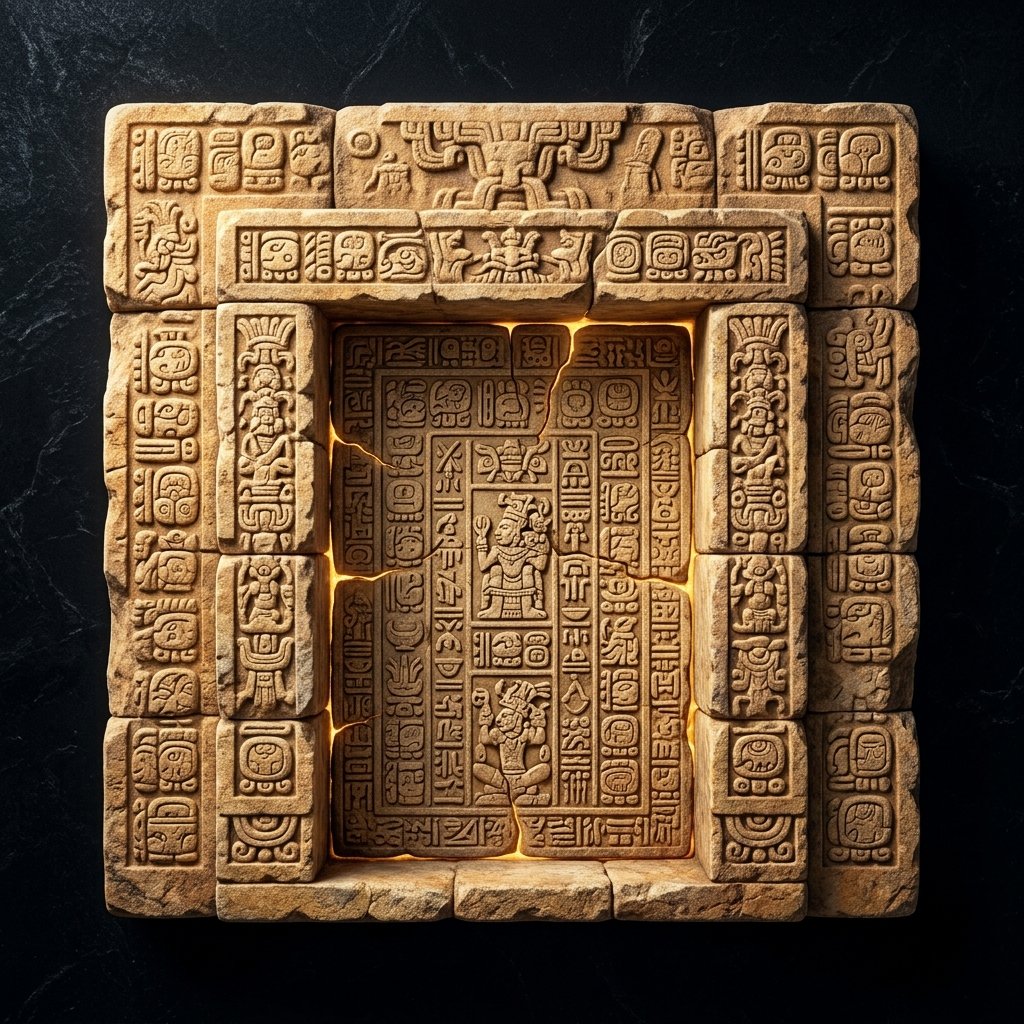
Mak represented the protective principle in Maya culture. Every sacred space was enclosed — temples were built within walled precincts, codices were wrapped in jaguar skin, jade offerings were sealed in stone cists. This act of covering was not concealment but preservation: the sacred required protection from the entropy of the ordinary world. Mak honored this guardian function.
Rituals & Ceremonies
Landa described Mak as a month when ceremonies honored both the rain god Chaac and their supreme deity Itzamná together — an unusual combination that scholars interpret as a closing or "covering" of the agricultural cycle. Offerings of copal incense were burned, hearts of birds and game animals were offered, and the community feasted together. The dual invocation of rain deity and creator deity suggested a comprehensive blessing — covering all bases, as it were.
Agricultural Cycle
Mak arrived during the transition from rainy to dry season in many parts of the Maya world. The "enclosing" energy of the month corresponded to the covering of stored food — the granaries sealed against moisture, the maize kernels dried and protected for future planting and consumption. This was a month of preservation, ensuring that the agricultural yield would sustain the community through the coming dry months.
Cosmological Role
The act of enclosure in Maya cosmology related to the fundamental structure of creation. The earth itself was enclosed — an enclosed garden floating on the primordial waters, covered by the sky-dome. Tombs enclosed the dead for their journey to Xibalba. Temples enclosed sacred images and ritual spaces. Mak honored the barriers between worlds that made ordered existence possible.
Patron Deity
Both Chaac (Rain God) and Itzamná (Creator God) were honored during Mak. This dual patronage reflects the month's comprehensive protective energy — combining the agricultural power of rain with the cosmic authority of the supreme creator.
Key Takeaway
The Haab' month Mak ("Enclosed") is month 13 of the 19-part Maya solar calendar. Spanning 20 days, it represents month of covering and protection. Together with the other 17 regular months and the 5-day Wayeb' period, Mak forms the 365-day Haab' cycle that tracked the solar year with remarkable precision.
Frequently Asked Questions
What does the Maya month name Mak mean?
The name "Mak" translates to "Enclosed" in the Haab' solar calendar. "Mak" means "to cover," "to enclose," or "to bury" in Yucatec Maya.
What ceremonies were performed during Mak?
Landa described Mak as a month when ceremonies honored both the rain god Chaac and their supreme deity Itzamná together — an unusual combination that scholars interpret as a closing or "covering" of the agricultural cycle. Offerings of copal incense were burned, hearts of birds and game animals were offered, and the community feasted together.
Which deity is the patron of Mak?
Both Chaac (Rain God) and Itzamná (Creator God) were honored during Mak. This dual patronage reflects the month's comprehensive protective energy — combining the agricultural power of rain with the cosmic authority of the supreme creator.
How does Mak fit into the Maya calendar system?
Mak is month 13 of 19 in the Haab' solar calendar. It spans 20 days (numbered 0-19 in the Maya system). The Haab' consists of 18 months of 20 days each (360 days) plus a 5-day Wayeb' period, totaling 365 days — almost exactly one solar year.
Scholarly References
- Landa, D. de. Relación de las Cosas de Yucatán. Translated by A. Tozzer. Peabody Museum, 1941, pp. 171-173.
- Coe, M.D. The Maya. Thames & Hudson, 8th ed., 2011, pp. 168-172.
- Sharer, R. & Traxler, L. The Ancient Maya. Stanford University Press, 6th ed., 2006, pp. 730-735.
- Taube, K. "The Jade Hearth: Centrality, Rulership, and the Classic Maya Temple." In Function and Meaning in Classic Maya Architecture, Dumbarton Oaks, 1998, pp. 427-478.
 Keh
Keh