Chen
The Black Storm · Month 9 of 19
Etymology & Name Origin
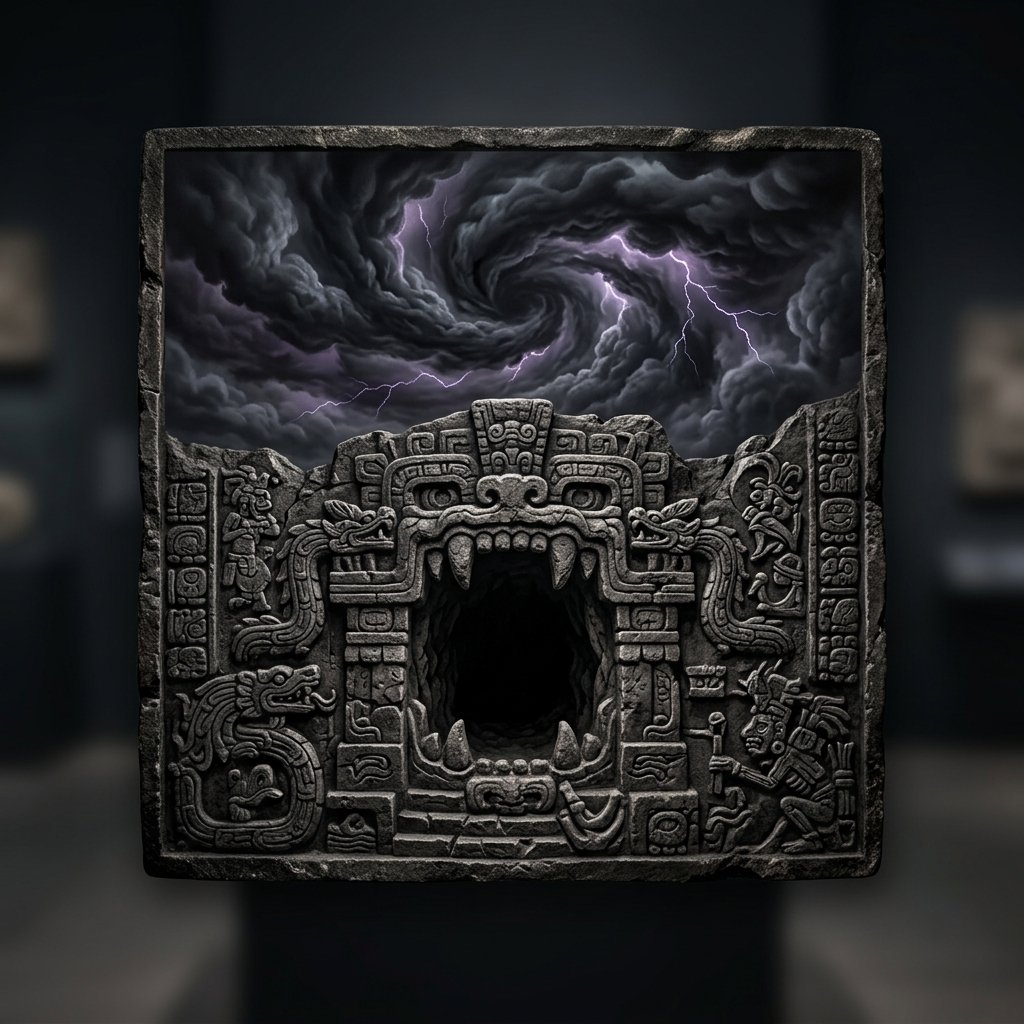
"Chen" means "well" or "cave" in Yucatec Maya, and the "Black Storm" translation captures the month's association with the dark, powerful forces of the underworld and the deepest waters. Caves (ch'en) were the most sacred natural features in the Maya landscape — portals to Xibalba where the boundary between human and supernatural worlds dissolved entirely.
Cultural Significance
Chen was a month of deep, interior power — the energy of the cave, the cenote, and the underground river. The Maya understood caves as literal mouths of the earth monster, openings through which communication with ancestors, deities, and underworld forces was possible. This was not a month of surface activity but of depth: spiritual introspection, visionary practice, and engagement with the unseen forces that shaped reality.
Rituals & Ceremonies
Chen was an auspicious time for cave rituals. Archaeological evidence from sites like Actun Tunichil Muknal (Belize), Naj Tunich (Guatemala), and Balankanche (Yucatán) reveals extensive ceremonial use of caves throughout Maya history. During Chen, priests would enter caves to perform bloodletting rituals, deposit offerings of ceramics and jade, and commune with the earth lord (Yum Kaax) and cave-dwelling supernaturals.
Agricultural Cycle
The "storm" element of Chen connected it to the dramatic thunderstorms of the rainy season. Rainfall was essential for agriculture, but violent storms could also destroy crops. Chen represented the dangerous necessity of water — the reality that the same force that gave life could also annihilate. Farmers performed protective ceremonies to ensure storms watered rather than destroyed their fields.
Cosmological Role
Caves were the axis mundi of Maya religious practice — the vertical connection between worlds. The great cave beneath the Pyramid of the Sun at Teotihuacan (a site that profoundly influenced Maya civilization) established the precedent of building temples above sacred caves. For the Maya, the cave was where the Maize God was reborn, where ancestors could be contacted, and where the raw supernatural energy of the earth itself could be accessed.
Patron Deity
The Earth Lord, often associated with Yum Kaax (Lord of the Forest) or the Kawak Monster (the animate earth), was the supernatural power invoked during Chen. Cave shrines throughout the Maya world contained offerings to this chthonic deity.
Key Takeaway
The Haab' month Chen ("Black Storm") is month 9 of the 19-part Maya solar calendar. Spanning 20 days, it represents month of the cave and deep darkness. Together with the other 17 regular months and the 5-day Wayeb' period, Chen forms the 365-day Haab' cycle that tracked the solar year with remarkable precision.
Frequently Asked Questions
What does the Maya month name Chen mean?
The name "Chen" translates to "Black Storm" in the Haab' solar calendar. "Chen" means "well" or "cave" in Yucatec Maya, and the "Black Storm" translation captures the month's association with the dark, powerful forces of the underworld and the deepest waters.
What ceremonies were performed during Chen?
Chen was an auspicious time for cave rituals. Archaeological evidence from sites like Actun Tunichil Muknal (Belize), Naj Tunich (Guatemala), and Balankanche (Yucatán) reveals extensive ceremonial use of caves throughout Maya history.
Which deity is the patron of Chen?
The Earth Lord, often associated with Yum Kaax (Lord of the Forest) or the Kawak Monster (the animate earth), was the supernatural power invoked during Chen. Cave shrines throughout the Maya world contained offerings to this chthonic deity.
How does Chen fit into the Maya calendar system?
Chen is month 9 of 19 in the Haab' solar calendar. It spans 20 days (numbered 0-19 in the Maya system). The Haab' consists of 18 months of 20 days each (360 days) plus a 5-day Wayeb' period, totaling 365 days — almost exactly one solar year.
Scholarly References
- Brady, J.E. & Prufer, K.M. In the Maw of the Earth Monster: Mesoamerican Ritual Cave Use. University of Texas Press, 2005, pp. 1-17.
- Stone, A. Images from the Underworld: Naj Tunich and the Tradition of Maya Cave Painting. University of Texas Press, 1995, pp. 15-45.
- Landa, D. de. Relación de las Cosas de Yucatán. Translated by A. Tozzer. Peabody Museum, 1941, pp. 167-168.
- Moyes, H. Sacred Darkness: A Global Perspective on the Ritual Use of Caves. University Press of Colorado, 2012, pp. 187-210.
 Mol
Mol